Tag: Plans

  • 2 Bedroom Barndominium Plans – Perfect Designs for Small Families

    With smart layouts and durable materials, 2 Bedroom Barndominium Plans – Perfect Designs for Small Families show how you can maximize living space without sacrificing comfort; you’ll find open-concept common areas, efficient storage solutions, flexible floorplans for guests or a home office, and cost-effective construction methods that keep your budget and energy bills low while delivering rugged, modern style.

    Key Takeaways:

    • Open, multifunctional layouts maximize usable space by combining kitchen, dining, and living areas and adding flexible storage and room uses.
    • Simple, metal-based construction and compact footprints lower building and maintenance costs while enabling energy-efficient systems for small-family budgets.
    • Designs prioritize customization and indoor-outdoor living-easy additions like porches, adaptable bedroom placement, and a small home office/guest nook.

    Overview of Barndominiums

    Combining barn-style post-frame construction with residential finishes, barndominiums usually span 1,000-2,000 sq ft and employ steel or timber shells with insulated panels. You get clear-span interiors, high ceilings, and faster builds-often weeks rather than months-while average costs commonly range $70-$120 per sq ft, making them a practical choice for compact, flexible family homes.

    Definition and Features

    When you choose a barndominium, expect a metal- or wood-clad exterior, concrete slab or crawlspace foundation, and open-plan interiors that often allow clear spans of 40-60 ft without load-bearing walls. Features include exposed beams, mezzanines or lofts, integrated garages or workshops, and straightforward HVAC and insulation upgrades for energy efficiency.

    Advantages for Small Families

    For small families, barndominiums deliver efficient two-bedroom layouts with flexible living space, lower construction costs, and easy expansion: you can add a 300-800 sq ft shop or future bedroom without major structural changes. You’ll also benefit from durable materials, simplified maintenance, and adaptable floor plans that support home offices or play areas.

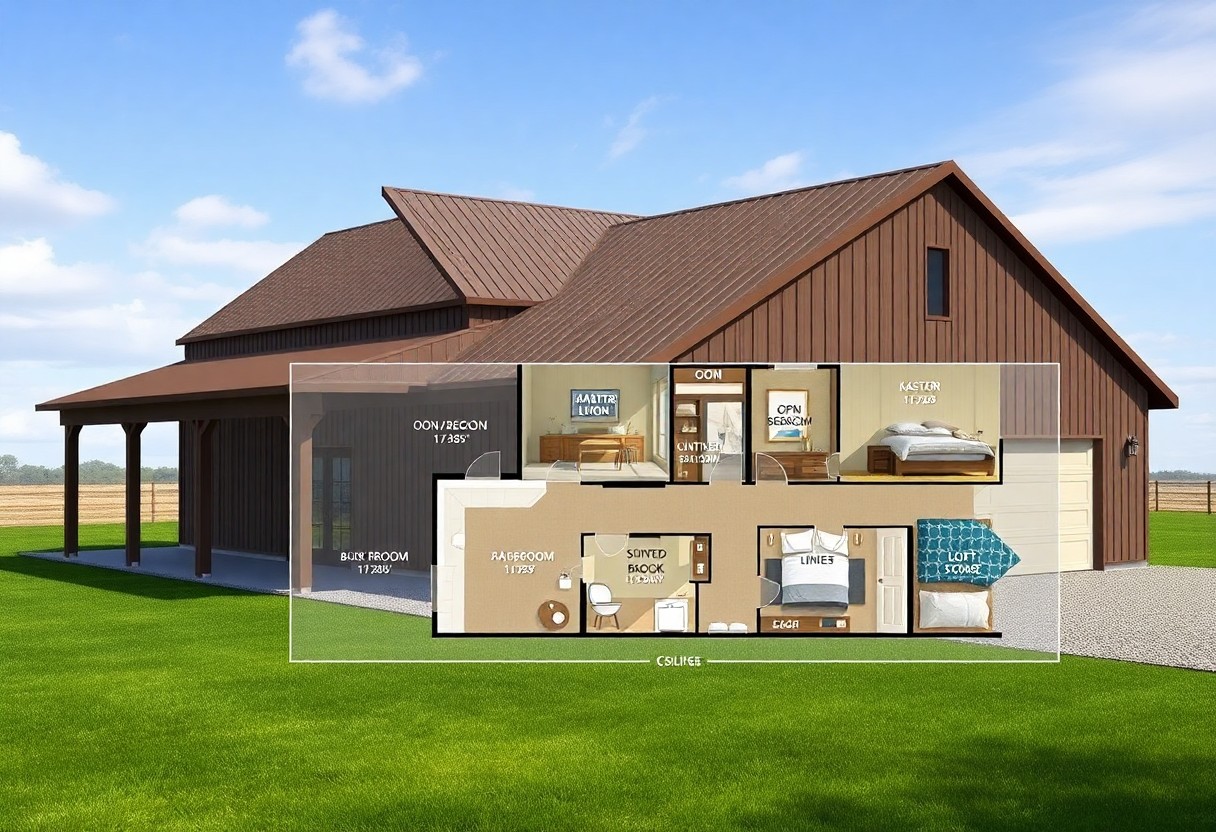
    More specifically, a typical 1,200-1,600 sq ft two-bedroom barndo can allocate 500-800 sq ft to an open kitchen/living/dining zone, with bedrooms separated for privacy and a 1-2 bath configuration optimized for family use. You can include built-in storage, a mudroom, and a 400-600 sq ft attached shop for hobbies or storage, plus options for solar panels and high-R insulation to reduce operating costs further.
    Key Considerations in Designing a Barndominium

    When designing your two-bedroom barndominium, prioritize zoning, storage, and mechanical placement to maximize livability within 1,000-1,600 sq ft. Allocate about 55-65% of the footprint to shared living (living/kitchen/dining), group wet walls to cut plumbing runs by up to 20%, and plan 3‑ft circulation paths so furniture layout flows without dead zones.

    Space Optimization

    You can reclaim square footage with built-ins, lofted storage, and multipurpose furniture; for example, a 6-8 ft kitchen island can serve as prep, dining and storage, saving around 40-60 sq ft. Use an 11×12 master and a 10×11 guest bedroom, stack laundry to free 12-16 sq ft, and prefer sliding barn doors to save 6-8 sq ft per room.

    Functionality and Flow

    Position public spaces where natural light is strongest and bedrooms on the quiet side to control noise. Keep the kitchen’s work triangle within 4-9 ft and locate laundry within 10-15 ft of bedrooms for efficient daily routines. Maintain 36‑inch hallways and 42‑inch main walkways so movement stays smooth and furniture clears easily.

    If you plan a 1,300 sq ft layout, you can reduce plumbing materials and labor by roughly 18-20% by placing the kitchen (12×10) and bathroom back-to-back on a single wet wall; a 14×18 living area with a 6-8 ft island preserves open sightlines. Include a 6×7 mudroom with bench and closet to contain entry traffic, test sightlines from entry to backyard, and keep 36-42 inches clearance around seating to support comfortable circulation and furniture placement.

    Popular Layouts for 2 Bedroom Barndominiums

    You’ll find two dominant approaches: open-plan living where the kitchen, dining and living areas share a 400-700 sq ft footprint for flexible family time, and traditional layouts that separate functions into rooms for privacy and noise control; designers commonly fit 2-bedroom plans into 900-1,600 sq ft, balancing shared space with two private bedrooms and one to two baths.

    Open Concept Designs

    In open designs you get a combined kitchen-living-dining area often anchored by a 7-10 ft island and 12-16 ft vaulted ceilings to enhance light and sightlines; this layout suits families who want visibility for kids, supports a 400-700 sq ft communal zone, and typically places bedrooms off a short corridor to keep private spaces distinct.

    Traditional Layouts

    Traditional plans separate the kitchen, dining and living rooms-kitchens commonly sized 120-180 sq ft and living rooms 150-250 sq ft-so you gain dedicated rooms for entertaining and quieter bedrooms, often configured as a 2-bed, 1-2 bath package with a foyer or hallway to improve circulation and storage placement.

    You can arrange traditional layouts to maximize privacy and function: place the master on one side (12×14 ft typical) and the secondary bedroom opposite, add a 5×7 mudroom/laundry near the entry, and use interior partitions to create a formal dining room or home office; post-frame construction lets you relocate walls without major structural changes, making future reconfiguration straightforward.

    Interior Design Ideas for Barndominiums

    You’ll maximize a 1,000-1,500 sq ft two-bedroom barndominium by embracing open-plan living, 12-16 ft vaulted ceilings, and a mezzanine for storage or a reading nook. Place the kitchen along a south wall with a 10-12 ft island and a 6-8 ft sliding barn door to separate bedrooms. Use large 6-8 ft windows to boost daylight, and zone areas with 5×7 rugs and low-profile furniture to keep sightlines clear.

    Rustic and Modern Styles

    You can combine reclaimed wood, exposed 2×10 trusses, and a farmhouse sink with matte-black steel, polished concrete floors, and minimalist cabinetry. Aim for a 60/40 wood-to-metal ratio for warmth and edge. For example, pair a 6×8 reclaimed beam over the island with a black steel staircase and 18-20 inch industrial pendants to create cohesive rustic-modern contrast.

    Color Schemes and Materials

    Start with a 70/30 neutral-to-accent split: 70% warm neutrals like SW Repose Gray or BM White Dove on walls and large furniture, and 30% accents in deep navy, forest green, or rust. Use engineered oak 6-8 inch planks for flooring, 3cm quartz counters, and corrugated metal or shiplap as accent walls to balance texture and maintenance.

    Select finishes that age well: matte or low-sheen paints hide wear, wire-brushed oak resists scratches, and honed quartz minimizes reflections. Choose 3-4 metal finishes max-matte black for hardware, aged brass for lighting, and stainless for appliances-to avoid visual clutter. South-facing rooms benefit from warmer pigments; north exposures take cooler undertones.

    Budgeting for Your Barndominium

    Budgeting for your barndominium demands a line-item approach: allocate 40-50% of your build budget to shell and structure, 20-30% to interior finishes, 10-15% to MEP (mechanical, electrical, plumbing), and 5-15% for site work and permitting. Add a 10-15% contingency; for example, a 1,200 sq ft build at $120/sq ft ($144,000) plus 12% contingency and $8,000 site work pushes the total near $170,000.

    Cost Estimation

    When estimating costs, use $90-200 per sq ft as a realistic range: basic finishes land near $90-110/sq ft, mid-range $110-150, and high-end $150-200+. Break bids into hard costs (materials, labor) and soft costs (permits, design, utility hookups). Get three contractor quotes; a 1,300 sq ft two-bedroom at $130/sq ft would be about $169,000 before contingency and site fees.

    Financing Options

    You can fund your build with construction-to-permanent loans (typical down 20-25%), conventional mortgages after completion, FHA loans with 3.5% down, USDA rural loans with 0% down in eligible areas, or VA loans for veterans with no down payment. Alternatives include HELOCs, cash-out refinance, or personal savings. Lenders will require plans, itemized budgets, and contractor bids to underwrite the loan.

    Construction loans usually offer interest-only payments during the build and convert to a permanent mortgage; expect a 6-12 month construction term, a draw schedule with inspections every 30-60 days, and higher interim interest-often 0.5-1.5% above permanent rates. You should provide detailed plans, contractor licenses, and contingency reserves, and shop lenders experienced with barndominiums to avoid appraisal or classification issues.

    Building Process and Timeline

    Expect a typical build to take 4-6 months for a 1,200 sq ft two-bedroom barndominium with a contractor-led crew; owner-builder projects often run 6-12 months. Foundation and slab work usually occupy 1-3 weeks, steel framing and shell erection 2-4 weeks, and interior finishes 6-10 weeks. Weather, permitting delays, and custom finishes can add 10-20% to the schedule, so budget contingency weeks rather than days.

    Permits and Regulations

    You’ll apply for a building permit, septic or sewer hookup approval, and any well or electrical service permits; requirements vary by county. Typical turnaround ranges from 2-12 weeks-rural counties may process permits in 2-4 weeks while coastal or high-density jurisdictions can take 8-12 weeks. Fees commonly range $500-$5,000; submit engineered plans for steel buildings to minimize review rejections.

    Construction Phases

    First, you clear and grade the site, then pour a concrete slab or pier foundation; site prep and foundation take 1-3 weeks. Next, framing and metal shell erection proceed in 2-4 weeks, followed by rough-in of plumbing, electrical and HVAC over 1-3 weeks. Finally, insulation, drywall, finishes and inspections typically span 6-10 weeks before occupancy.

    Coordinate lead times-steel kits and custom windows commonly ship in 3-8 weeks and garage doors 2-6 weeks-so order materials during permitting. Schedule inspections after foundation, rough-in and final stages; failing a rough-in can delay finishes by weeks. Sequence subcontractors carefully (HVAC rough-in before insulation, drywall after) and add a 10-20% timeline buffer for weather and supply delays.

    To wrap up

    With these considerations, you can select 2-bedroom barndominium plans that balance efficient living, flexible open layouts, and durable, low-maintenance materials to suit a small family. Prioritize smart storage, multifunctional rooms, and energy-efficient systems to lower costs and increase comfort. By aligning your lifestyle, budget, and site constraints, you’ll create a practical, stylish home that adapts as your family’s needs evolve.

    FAQ

    Q: What layout features make 2-bedroom barndominium plans ideal for small families?

    A: A successful 2-bedroom barndominium balances open living with private bedroom zones. Common layouts place an open kitchen/dining/living core for flexible family space, a master suite with closet and easy bathroom access, and a second bedroom sized for a child, guest or home office. Include a dedicated laundry near bedrooms, a mudroom or entry drop zone, and built-in storage/cubby solutions to maximize compact footprints (typical effective sizes range from 800-1,200 sq ft). Options such as a loft, bonus room over a garage, or a connected workshop provide future flexibility while keeping the main living area efficient and easy to heat/cool.

    Q: How can I control construction and operating costs without sacrificing comfort or durability?

    A: Reduce build and operating costs by prioritizing a simple rectangular footprint and a single roof plane, using a pre-engineered metal shell for the exterior, and investing in a high-performance envelope (insulated metal panels, spray foam or high-R batt insulation, quality windows) to cut HVAC size and energy bills. Choose off-the-shelf components (standard window sizes, prefab trusses), consider a slab-on-grade foundation where appropriate, and phase interior finishes if needed. Shop barndominium kits or contractor packages for labor savings. Typical cost ranges vary widely by region and finish level, commonly $80-$150 per sq ft as a planning estimate; focus spending on structure, insulation, and efficient mechanicals for best long-term value.

    Q: What site, permitting, and mechanical issues should I address before finalizing a plan?

    A: Verify zoning, setbacks, allowable uses, and required permits with local authorities; confirm septic or sewer and well or municipal water availability; assess soil bearing capacity and drainage to select an appropriate foundation. Check local wind, snow and seismic requirements that affect roof and framing design. Plan utility hookups (electric service size, gas or propane, telecom) and locate HVAC equipment and mechanical closets for efficient duct runs. Ensure egress windows, smoke/carbon monoxide detectors, and energy-code insulation/ventilation standards are met. Engage a local architect or engineer for site-specific structural or code issues and factor permit timelines and inspection steps into the schedule and budget.
  • 3 Bedroom Barndominium Plans – Modern Barndominium Inspirations

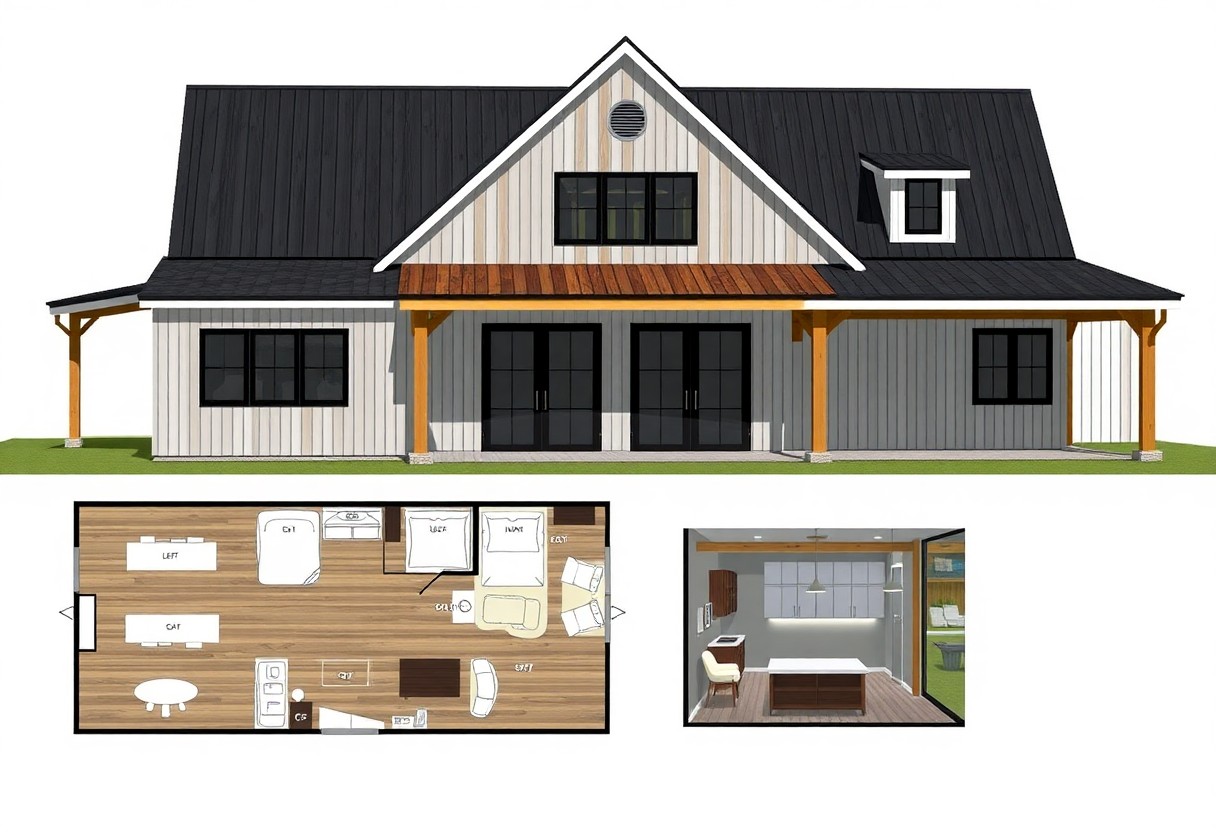
    Modern 3-bedroom barndominium plans blend open-concept living, efficient layouts, and durable construction to help you create a versatile, low-maintenance home that suits family life and remote work. This guide highlights layout variations, structural considerations, energy-efficient systems, and material choices so you can assess costs, customize floorplans, and select finishes with confidence. Use these modern inspirations to align your design with lifestyle and budget goals.

    Key Takeaways:

    • Modern 3-bedroom barndominiums favor open-concept living with vaulted ceilings and generous windows to maximize light while grouping bedrooms into a private wing for family-friendly flow.
    • Plans often combine living space with a workshop/garage or flexible bonus room, allowing customization for hobbies, storage, or rental income without expanding the footprint.
    • Using a metal barn shell lowers construction time and maintenance costs; builders can add insulation, efficient HVAC, and contemporary finishes to achieve energy-efficient, stylish homes.

    Overview of Barndominiums

    Definition and Features

    You’ll see barndominiums as hybrid homes combining a metal or wood-framed agricultural shell with finished living space, often featuring clear-span interiors, 12-18 ft main bay ceilings and open-concept great rooms. Many 3-bedroom plans range from about 1,200 to 2,500 sq ft, and commonly integrate a 20×30 to 30×40 workshop or garage bay. You can expect durable metal siding or board-and-batten exteriors, exposed timber or steel beams, and flexible floor layouts that simplify future additions or workspace conversions.

    Benefits of Living in a Barndominium

    You often gain cost and time savings: pre-engineered metal kits can shorten build timelines by roughly 30-50% and owners typically report 10-30% lower shell-and-labor costs versus comparable stick-built homes. Practicality shines through when you attach a 30×40 shop to a 1,800 sq ft, 3-bedroom layout for combined business or hobby use, and low-maintenance metal exteriors reduce long-term upkeep.

    Comfort and efficiency scale with the finishes you choose; for example, adding closed-cell spray foam and insulated metal panels brings thermal performance up to modern code, while installing a vaulted loft (300-600 sq ft) creates a private master suite without raising the footprint. You’ll also find strong resale demand in rural markets where acreage-plus-shop listings attract buyers seeking both living space and functional workspace.

    Essential Elements of 3 Bedroom Plans

    Your plan should balance square footage (typically 1,400-2,400 sq ft) with function: allocate 600-900 sq ft to the open living/kitchen area, size the master suite around 14×16 ft with a 6×8 ft walk-in closet, and keep secondary bedrooms near 10×12-11×12 ft. Include a 24×30 ft garage/shop option, a dedicated laundry/mudroom adjacent to the entry, and mechanicals tucked into a 50-80 sq ft utility zone to maximize usable living space.

    Spatial Layout Considerations

    Prioritize clear public/private zoning by placing bedrooms down a hallway at least 36″ wide or on a separate wing; use a split-plan when you want the master isolated. Maintain 3′ circulation around a kitchen island (island length often 8-12 ft) and opt for 9-12 ft ceiling heights in living areas to enhance volume. Orient large windows south or west for light, and consider clerestories or 6’×4′ fixed windows to boost daylight without sacrificing wall space.

    Design Aesthetics and Interior Design

    Blend industrial shell elements with warm finishes-exposed trusses, reclaimed wood, and matte-black metalwork-to create modern-rustic balance. Choose durable floors like wide-plank oak or stained concrete with radiant heat, and layer lighting: recessed ambient, task pendants over a 10 ft island spaced ~36″ apart, plus accent sconces. Limit your palette to two primary materials and one accent to keep cohesion.

    For practical application, pick a dominant material (metal or timber), a secondary surface (oak, concrete, or tile), and an accent (black steel or brass). Use example specs: 10-14 ft open-beam ceilings, 8″ plank oak flooring, concrete countertops in the kitchen with a 2-3″ edge, and matte-black fixtures for continuity. Plan 3 lighting zones per living space-ambient, task, accent-and test full-scale samples of finishes together to ensure the textures and colors work in your light conditions.

    Modern Barndominium Inspirations

    Modern barndominiums blend industrial materials with refined finishes to create highly livable homes. You’ll find steel frames, board-and-batten or corrugated metal siding, floor-to-ceiling windows, and R-30 or better insulation; many 3-bedroom plans fall between 1,400-2,400 sq ft. Designers often incorporate solar-ready roofs, exposed trusses, and generous overhangs to boost durability and curb appeal.

    Popular Architectural Styles

    Contemporary farmhouse and modern industrial dominate current preferences, offering clean lines or exposed structure respectively. You may choose gambrel roofs for 200-300 sq ft of loft space, gabled forms for classic porches, or minimalist boxes that emphasize large glazing and simple metal cladding; mixed-material facades-cedar plus steel-are common on show homes.

    Innovative Interior Layouts

    Open-concept great rooms measuring 20×24 ft and kitchen islands 8-10 ft long are standard for social living, while split-bedroom plans give you a private master (often 12×16 ft) separate from two 10×11 ft bedrooms. Designers add mudrooms, flexible home offices, and attached workshops (400-800 sq ft) with 8-10 ft roll-up doors to suit hobbyists and remote work needs.

    Consider a real example: a 1,850 sq ft 3-bedroom plan with a 24×18 ft great room, 10×8 ft kitchen island seating six, a 12×16 ft master with en suite, two 10×11 ft secondary bedrooms, and a 600 sq ft workshop with a 10 ft roll-up door. You can use pocket doors, sliding barn doors, or operable partitions to convert the loft or office into guest space while keeping circulation efficient and storage integrated.

    Customization Options

    Tailor your floor plan with options like vaulted ceilings over the great room, a combined mudroom/laundry, or a 24’×30′ attached shop; you can choose open-plan living or segregated zones for privacy. Specify 9-12 foot ceiling heights, built-in storage, and flexible guest suites to suit family size-three-bedroom plans often allocate 1,800-2,200 sq ft to balance living space and utility areas.

    Exterior Facades and Finishes

    Mix corrugated steel (standing-seam or ribbed) with board-and-batten or reclaimed barnwood accents for contrast; add a stone veneer around entries for permanence. Opt for fiber-cement siding for low-maintenance durability, or cedar for warmth requiring sealing every 3-5 years. Consider vertical metal panels to emphasize height, muted grays and tans with natural wood highlights, and oversized covered porches for weather protection.

    Energy-Efficient Features

    Upgrade your envelope with R-21 walls and R-38 to R-49 attic insulation, or use 2×6 framing plus 1-2″ continuous foam to reduce thermal bridging. Choose double-pane low-E windows, a ductless or central heat pump (COP 3-4), LED lighting, and an ERV for balanced ventilation to cut heating and cooling loads by 20-40% compared with minimal-code builds.

    For higher performance, target an airtightness of ≤3 ACH50, apply 4-6″ closed-cell spray foam (R≈6.5 per inch) at key junctions, and detail thermal breaks where steel framing meets exterior sheathing. Add a 3-6 kW solar PV array with optional 10-20 kWh battery storage to offset peak loads, and size HVAC and ERV systems to measured heat-loss calculations rather than rule-of-thumb estimates.

    Budgeting and Cost Considerations

    When planning your budget, separate costs into shell, interior finishes, site preparation, and permits since each can swing totals dramatically. You’ll typically see finished barndominiums average $80-$200 per sq ft; a 2,000 sq ft three-bedroom commonly ranges $160,000-$400,000 depending on insulation, HVAC, and finish level. Factor in foundation and utility hookups ($10k-$50k), detached or attached shop premiums, and a 10-20% contingency for unexpected site or material issues.

    Average Costs of Barndominium Construction

    Base-metal shell and basic interior finishes often run $80-$130 per sq ft, while mid to high-end finishes push $150-$220 per sq ft. For example, at $120 per sq ft a 1,800 sq ft three-bedroom totals about $216,000; upgrading to an upscale kitchen and HVAC can send the same footprint past $350,000. Land, septic, driveway and permits are typically billed separately and can add $10k-$60k.

    Financing Options

    You can pursue construction-to-permanent loans, conventional mortgages post-completion, USDA or VA loans in eligible rural areas, or owner-builder financing if you act as GC. Lenders generally require detailed plans, contractor bids, proof of builder experience, 20-25% down or equity, and a draw schedule with inspections. Disclose mixed-use spaces early, since attached shops may trigger commercial underwriting rules.

    Construction loans usually carry interest-only payments during the build and convert to a permanent mortgage after final inspection and appraisal, often within 3-12 months. Expect draw fees, inspection costs, and to maintain a 10-20% contingency reserve; for instance, a $300,000 project with 20% down needs $60,000 up front. Because some banks limit metal-building financing, seek lenders experienced with barndominiums or work with a builder who has established lender relationships.

    Frequently Asked Questions

    You can expect straightforward answers on cost, timeline, and permits: average barndominium builds run $90-$150 per sq ft, typical sizes 1,200-2,400 sq ft, and timelines of 12-20 weeks depending on finishes. Financing options include construction-to-perm loans, FHA 203(k), or conventional mortgages after final inspection. Permit scopes and utility hookup lead times vary by county, so contacting your local building department early can save weeks.

    Common Concerns about Barndominium Living

    You’ll hear questions about insulation, noise, and resale value; for metal shells aim for R-21 walls and R-38-R-49 roof assemblies or closed-cell spray foam to minimize thermal bridging and sound transfer. HVAC should be sized for open-plan volumes-typically 3-4 tons for 2,000-2,500 sq ft with high ceilings. Insurance and HOA restrictions can affect siting and exterior choices, so verify both before you finalize plans.

    Tips for First-Time Builders

    Begin with engineered plans, get three competitive bids, and prioritize contractors who’ve completed at least five similar builds with verifiable references. Lock material prices when feasible, stage purchases for long-lead items, and allow a 10-15% contingency for change orders and supply hiccups. The safest route is a fixed-price contract with a 10-15% contingency.

    • Obtain stamped structural and foundation plans
    • Compare three or more full bids (not estimates)
    • Verify contractor portfolios and local references
    • Confirm permit list and inspection schedule

    Plan a realistic schedule: slab/foundation 2-4 weeks, steel shell erection 1-3 weeks, exterior finishes 2-4 weeks, interior build-out 6-12 weeks-total 4-6 months for a 2,000 sq ft turnkey build. Decide early on slab vs. pier foundations, insulation type (closed-cell vs. cavity + continuous), and HVAC capacity; order windows and doors ahead to avoid 8-12 week lead times. The typical build-to-occupancy timeline you should plan is 4-6 months including inspections and final permits.

    • Choose foundation type (slab, pier, crawlspace)
    • Select insulation strategy and target R-values
    • Size HVAC for open-plan volumes (3-4 tons for ~2,000-2,500 sq ft)
    • Confirm utility hookup schedules and permit milestones

    Conclusion

    Hence you can confidently select a 3-bedroom barndominium plan that balances open living, smart zoning, and durable materials; prioritize flexible layouts, abundant natural light, energy-efficient systems, and built-in storage to maximize comfort and resale value. Collaborate with experienced designers and builders to adapt modern styling to local codes and your budget, ensuring a practical, long-lasting home.

    FAQ

    Q: What are typical 3-bedroom barndominium floor plan layouts and how can I optimize living space?

    A: Common layouts center on an open great room that combines kitchen, dining, and living areas for a spacious, social core. Place the master suite on one side for privacy and two guest/children’s bedrooms on the opposite wing or in a split-bedroom arrangement. Plan for at least one full and one half bathroom (or two full baths) depending on household needs. Include a dedicated laundry/mudroom with direct exterior access, a pantry or walk-in storage near the kitchen, and built-in closets to maximize usable square footage. Consider vaulted ceilings in the main area, a compact foyer to reduce heat loss, and window placement to capture natural light while preserving wall space for furniture. Typical three-bedroom barndominiums range from about 1,200 to 2,400 sq ft; choose an overall footprint that balances construction cost with desired room sizes and circulation space.

    Q: What modern design features and finishes work best for a contemporary barndominium aesthetic?

    A: Popular modern elements include a metal exterior paired with warm wood or vertical board siding accents, exposed steel or timber beams inside, and large insulated windows or sliding glass doors to blur indoor/outdoor lines. Interior finishes often mix polished concrete or engineered hardwood floors with matte cabinetry and quartz or concrete countertops. Open-concept kitchens with oversized islands, integrated appliances, and minimalist hardware create a clean look; consider a walk-in pantry for clutter control. Incorporate energy-efficient HVAC, LED lighting, smart thermostats, and high R-value insulation to improve comfort and lower operating costs. Outdoor living spaces-covered patios, porches, or a metal-roofed pergola-extend usable space and complement the modern-industrial vibe.

    Q: What should I know about permits, construction methods, timeline, and costs for building a 3-bedroom barndominium?

    A: Confirm local zoning, setback, and permitting requirements early; some rural zones favor pole-frame (post-frame) construction while urban areas may require conventional stick framing. Foundation options typically include slab-on-grade or crawlspace; slab is common for cost efficiency and thermal mass. Construction methods vary: metal building shells and kit packages speed up enclosure, while custom stick-built or hybrid approaches offer greater finish flexibility. Budget factors: site prep, utilities (septic, well, electrical), foundation, shell, finishes, and insulation. Broad cost ranges are roughly $120-$250+ per sq ft depending on finish level, with simpler builds at the low end and high-end custom finishes at the high end. Typical build timelines run 4-9 months after permitting, but weather, subcontractor availability, and change orders affect duration. Investigate builders experienced with barndominiums, obtain multiple bids, and plan contingencies of 10-20% for unforeseen expenses; explore construction loans or manufacturer financing if using kits.

  • Shop-House Barndominium Plans – Live and Work in Style

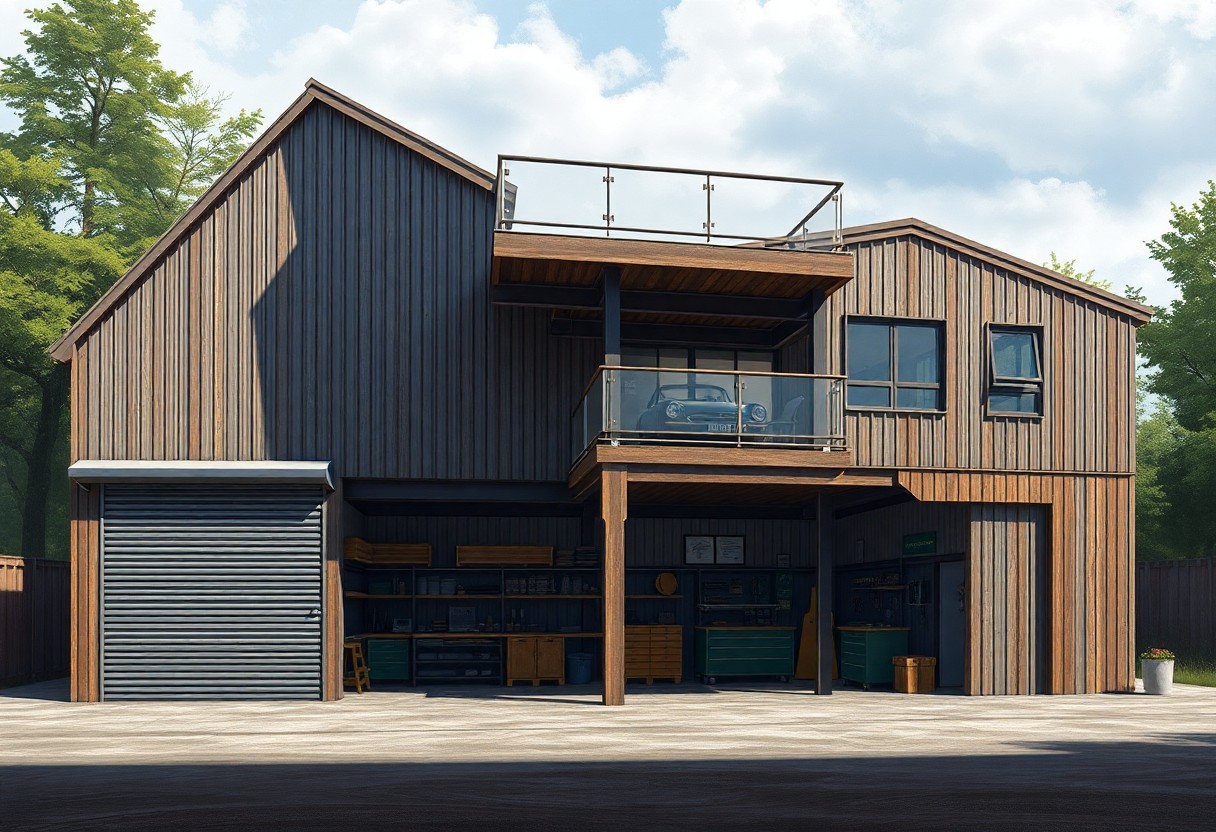
    Barndominium design merges durable shop space with comfortable living, giving you flexible layouts that support business operations and daily life under one roof. With smart zoning, efficient systems, and customizable floor plans, you can optimize workflow, storage, and family areas while maintaining aesthetic appeal and resale value. These plans guide you to create a functional, stylish base for both work and home.

    Key Takeaways:

    • Blend a functional shop and comfortable living quarters under one roof to streamline operations and reduce commute time for small-business owners and makers.
    • Choose barndominium-friendly construction (metal or post-frame) and open-plan layouts to lower build and maintenance costs while allowing flexible workspace customization.
    • Address zoning, utilities, ventilation, noise separation, and separate entrances early in design to meet code requirements and create a safe, efficient live-work environment.

    What is a Shop-House Barndominium?

    Combining a full-scale workshop and comfortable living under one roof, a shop-house barndominium integrates open-span shop bays (commonly 1,200-3,000 sq ft) with attached living quarters (typically 800-1,800 sq ft), shared utilities or separately metered systems, and durable metal or timber framing. You get garage doors 12-16 ft high, 12-20 ft clear ceilings for equipment, and often mezzanine storage; typical build costs range roughly $100-$200 per sq ft depending on finishes and mechanical complexity.

    Definition and Key Features

    In practical terms, a shop-house barndominium is a single-structure solution that prioritizes a functional, code-compliant workspace plus livable amenities: insulated residential envelope, separate entrances, ADA-capable layouts, commercial-grade electrical and ventilation in the shop, and engineered foundations to support heavy equipment or vehicles.

    • Open-span shop bays: clear spans up to 60 ft to eliminate interior columns for unobstructed workflow.
    • Ceiling height and doors: 12-20 ft clearances with 12-16 ft roll-up doors for trucks, RVs, or lifts.
    • Square footage split: common configurations include 2,400/1,200 (shop/living) or 3,000/1,500 sq ft for small contractors.
    • Structural systems: steel post-frame or timber framing with insulated metal panels (R-19 to R-30) for energy efficiency.
    • Mechanical upgrades: 200-400 amp service, dedicated HVAC for living space, and localized ventilation and dust collection in the shop.
    • Zoning and permits: mixed-use or rural zoning often required; septic and well systems commonly paired with off-grid electrical options.
    • Any project can be customized with mezzanines, loft apartments, office suites, or client-showroom areas to match your business needs.

    Benefits of Living in a Shop-House Barndominium

    You gain significant time and cost savings by eliminating daily commutes-often 15-45 minutes each way-while keeping tools and inventory securely onsite, which reduces rental overhead and insurance complexity. You can also monetize unused shop space (typical local rental rates range $500-$2,000/month), improving cash flow and helping offset mortgage or operating expenses.

    For example, a builder operating from a 2,400 sq ft shop attached to 1,200 sq ft of living saved roughly $1,200/month in external rent and reclaimed 10-15 hours weekly previously spent commuting; resale appeal is high in rural markets where multifunctional properties command premiums, and flexible layouts allow you to scale workspace or living finishes as your business evolves.

    Design Considerations

    When planning your barndominium you should balance shop function and living comfort: allocate 600-2,000 sq ft for a working bay with 10-16 ft ceilings, and position mechanicals to limit fumes and noise transfer. Fire-rated walls, dedicated ventilation and separate electrical panels meet code while protecting living areas. Site orientation affects daylight and vehicle access, and local zoning often dictates setbacks, maximum height and allowed commercial activity-check those limits early to avoid costly redesigns.

    Layout Options

    Choose between side-by-side or stacked programs: a 24-40 ft wide shop with 12-14 ft bays suits heavy equipment, while a 1,500-3,000 sq ft living module supports 2-4 bedrooms. You can add a 200-600 sq ft mezzanine office overlooking the shop for client meetings, incorporate drive-through bays for RV storage, and separate entries and HVAC zones so living areas stay quiet and conditioned independently.

    Aesthetic Choices and Customization

    Mix materials to define your style: corrugated metal paired with cedar or board-and-batten gives modern-rustic contrast, while stucco or painted fiber cement yields a refined look. Roof pitches between 2:12 and 6:12 influence interior volume, and adding 6-12 ft porches or frameless glass doors creates seamless indoor-outdoor flow that boosts curb appeal and year-round usability.

    Inside, you can specify a 4-6 in polished concrete slab in the shop and wide-plank hardwood or engineered flooring in living spaces to delineate zones; aim for wall insulation R-13-R-21 and attic R-38+ for comfort and efficiency. Add clerestory windows, skylights or 6-8 ft sliding doors to flood deep plans with daylight, and choose durable finishes-epoxy in work zones, stainless counters and sealed wood trim-to cut maintenance and preserve resale value.

    Construction Guidelines

    Materials and Sustainability

    Prioritize high-performance envelopes: structural insulated panels (SIPs) provide R‑23 to R‑40 wall assemblies and can shorten framing time 30-50%. Choose standing-seam metal roofing (40-70 year life) and recycled-steel framing for durability and lower embodied material use. You can integrate reclaimed wood for interiors and size a rainwater tank (1,000-5,000 gallons) for shop washdown. Plan a south-facing roof zone for a 4-6 kW PV array to offset combined shop and living loads.

    Building Codes and Regulations

    Audit local zoning for mixed-use allowances because many jurisdictions classify a shop-house as an accessory or commercial use; that affects permitting, setbacks, and parking. You’ll often follow the IRC for living areas but the IBC or NFPA standards may apply to the shop, especially for hazardous processes. Common requirements include a 1‑hour fire separation between work and living spaces, separate utility meters for commercial activity, and ADA compliance if the shop is public.

    Expect plan submittal to include stamped structural drawings, an IECC energy-compliance report, NEC/NFPA 70 electrical layouts, and site plans showing setbacks and lot coverage (often limited to 20-40%). Typical permit review takes 2-8 weeks depending on jurisdiction; inspections occur at footing, framing, MEP rough, and final stages. You should engage a licensed architect or engineer and consult the local building official early to avoid costly redesigns.

    Functional Spaces

    Living Areas

    You can plan living areas as an open 1,000-1,500 sq ft envelope with 10-12 ft ceilings and zoned radiant floor heating for comfort and efficiency. Incorporate a 12-ft clerestory or 8-ft sliding glass door to flood the space with daylight, and separate the shop with a 6-inch insulated wall plus a solid-core door to achieve STC 50+ for quiet. Built-in storage, a compact mudroom, and a 200-400 sq ft master suite keep daily life streamlined.

    Workspaces and Storage Solutions

    You should design the shop at 400-800 sq ft with 12-16 ft clear span, two 10×12 overhead doors, and 240V circuits for heavy tools. Include a dedicated dust-collection line, 3-5 outlet drops, and compressed-air service. Use a 200-300 sq ft mezzanine for long-term storage and install heavy-duty shelving, pegboards, and a 6-8 ft laminated workbench to maximize workflow and tool access.

    For example, allocate a 600 sq ft shop with a 200 sq ft mezzanine engineered to 40 psf live load; add 200 linear feet of adjustable shelving and a 6-drawer 54-inch rolling tool chest. Factor in a 1,500-3,000 CFM dust-collector, a 10-12 ft bench run with integrated power, and a separate HVAC zone-fit-out costs typically range $8,000-$25,000 depending on equipment and racking choices.

    Cost Analysis

    Breaking down upfront and ongoing expenses reveals where your money goes: metal shell and framing typically run $60-$120/ft², conditioned living finishes add $70-$150/ft², and outfitting a shop bay (hoists, compressed air, 3-phase) can cost $10,000-$50,000 depending on scale. Site prep, utility extensions and permits often add 8-15% to the total. You should factor a 10-20% contingency and lifespan-based maintenance costs-roof, HVAC and equipment replacement-into a 10- to 30-year ownership budget.

    Budgeting for Construction

    Allocate line items early: structure and envelope 30-40% of budget, interior finishes 15-25%, sitework and utilities 10-15%, mechanicals and electrical 10-12%, design/permits 3-6%, and a 10-20% contingency. For example, a 2,000 ft² build at $160/ft² equals $320,000; using these percentages gives clear targets for bids and helps you decide where to value-engineer without sacrificing shop functionality.

    Potential Return on Investment

    Consider income and value uplift: a finished shop you lease for $1,200-$2,500/month or a short-term rental of a live-work suite can shorten payback periods significantly. If you spend $50,000 to outfit a shop and earn $1,500/month, your equipment payback is about 33 months. Meanwhile, energy-efficient upgrades and durable metalshells often raise resale comparables by 10-20% in rural markets, improving long-term ROI.

    To maximize returns, analyze local market comps and use cap-rate thinking: if comparable rental properties trade at an 8% cap rate, a $18,000 annual net income could support about $225,000 in asset value. Increase net operating income by adding separate entrances, ADA restrooms, or dedicated HVAC zones to justify higher rents, and lower operating costs with LED lighting and insulated panels-those measures both shorten payback and raise buyer appeal when you sell.

    Maintenance and Longevity

    Plan routine checks: inspect roofing, flashing and gutters twice yearly and after storms, change HVAC filters every 90 days, and service mechanicals annually to avoid costly downtime. Use corrosion-resistant fasteners and touch up coatings on metal panels every 7-12 years; galvalume or painted steel roofs commonly last 40-60 years. With steady preventive effort you reduce major repairs and preserve resale value over decades.

    Care Tips for Your Barndominium

    Stay proactive: walk the perimeter quarterly, clear debris from shop bays to prevent trapped moisture, lubricate overhead doors every three months, and log maintenance dates so you can track trends and budget replacements.

    • Inspect roof, flashing and sealants twice a year and immediately after heavy weather.
    • Change HVAC and dust-collection filters every 60-90 days and schedule annual HVAC tune-ups.
    • Lubricate door tracks and hinges quarterly; retorque anchor bolts and check slab cracks yearly.
    • Recoat exposed steel every 7-12 years depending on UV and salt exposure; touch up scratches promptly.
    • After significant storms, document damage with photos, dry wet insulation within 48 hours, and file any insurance claims within 30 days.

    Longevity of Materials and Structure

    SIPs and metal shells require different care: properly installed SIPs retain R-value for decades, while a well-maintained metal roof often reaches 40-60 years. You should plan for exterior paint refreshes every 7-12 years and expect treated wood members to last 20-30+ years with good drainage and periodic sealant replacement. Controlling interior humidity prevents mold and extends finishes.

    Expect mechanicals to be the first major replacements: HVAC systems typically run 12-15 years, water heaters 8-12 years, and garage door openers 10-15 years. You can extend the envelope lifespan by ensuring positive site drainage, installing vapor barriers under slabs, and using stainless or hot-dipped galvanized fasteners in corrosive environments; these choices often halve corrosion-related repairs over 20-30 years.

    Summing up

    Conclusively, Shop-House Barndominium Plans let you seamlessly combine living and workspaces, offering adaptable layouts, efficient floor plans, and strong ROI for entrepreneurs seeking style and function. With thoughtful zoning, durable materials, and customizable façades, you can tailor workspace capacity, privacy, and aesthetic to match your brand and lifestyle. You’ll benefit from streamlined workflows, lower commute times, and an architect-designed balance between residential comfort and commercial practicality.

    FAQ

    Q: What is a shop-house barndominium and who benefits most from this style?

    A: A shop-house barndominium combines a residential living area with an attached or integrated work/shop space, typically in a post-frame, steel, or timber “barn” structure. It appeals to contractors, artisans, small-business owners, makers, and hobbyists who want on-site workspace with easy access to tools, storage, and vehicle bays. Advantages include cost-effective shell construction, high ceilings for equipment or mezzanines, simple open plans for flexible layouts, and fast build times. Configurations range from fully finished homes with insulated, climate-controlled shops to more rustic shells where the living quarters are insulated and finished separately from the workshop.

    Q: How should I plan the layout to balance comfortable living and a functional, safe workspace?

    A: Prioritize physical and functional separation: place bedrooms and quiet living spaces on the opposite end or on a different level from noisy shop operations, and provide separate entries for clients or suppliers to avoid walking through private areas. Design a dedicated mechanical/utility room that serves both zones while keeping fumes, dust, and noise isolated-use sealed floor transitions, vestibules, soundproofing between shop and living areas, and a proper HVAC zoning strategy. Include adequate electrical capacity and dedicated circuits for heavy equipment, a dust-collection system, proper ventilation for paints or chemicals, and fire safety measures (smoke detectors, fire-rated separations, and extinguishers). Plan workflow with convenient vehicle access, overhead doors, loading areas, and interior storage/mezzanines so tools and inventory don’t encroach on living space.

    Q: What should I budget for and what permitting or financing issues should I expect?

    A: Budget items include site preparation (grading, driveways, utilities), foundation, the building shell, insulation and interior finishes for the living area, shop outfitting (concrete floor, electrical upgrades, specialized ventilation), and permits/inspections. Regional costs vary widely: basic barndominium shells can be economical, but fully finished living spaces and a properly equipped shop raise costs significantly. Check local zoning and building codes early-mixed-use structures may require conditional-use permits, commercial electrical or plumbing inspections, septic/well approvals, or setbacks that affect placement. Financing can differ: loans for mixed-use properties may require commercial or construction-to-permanent financing rather than standard residential mortgages; some lenders permit combination financing if the owner-occupied portion meets residential loan criteria. Consult a local architect or contractor and your lender to estimate realistic costs, ensure code compliance, and determine the best loan structure for your project.