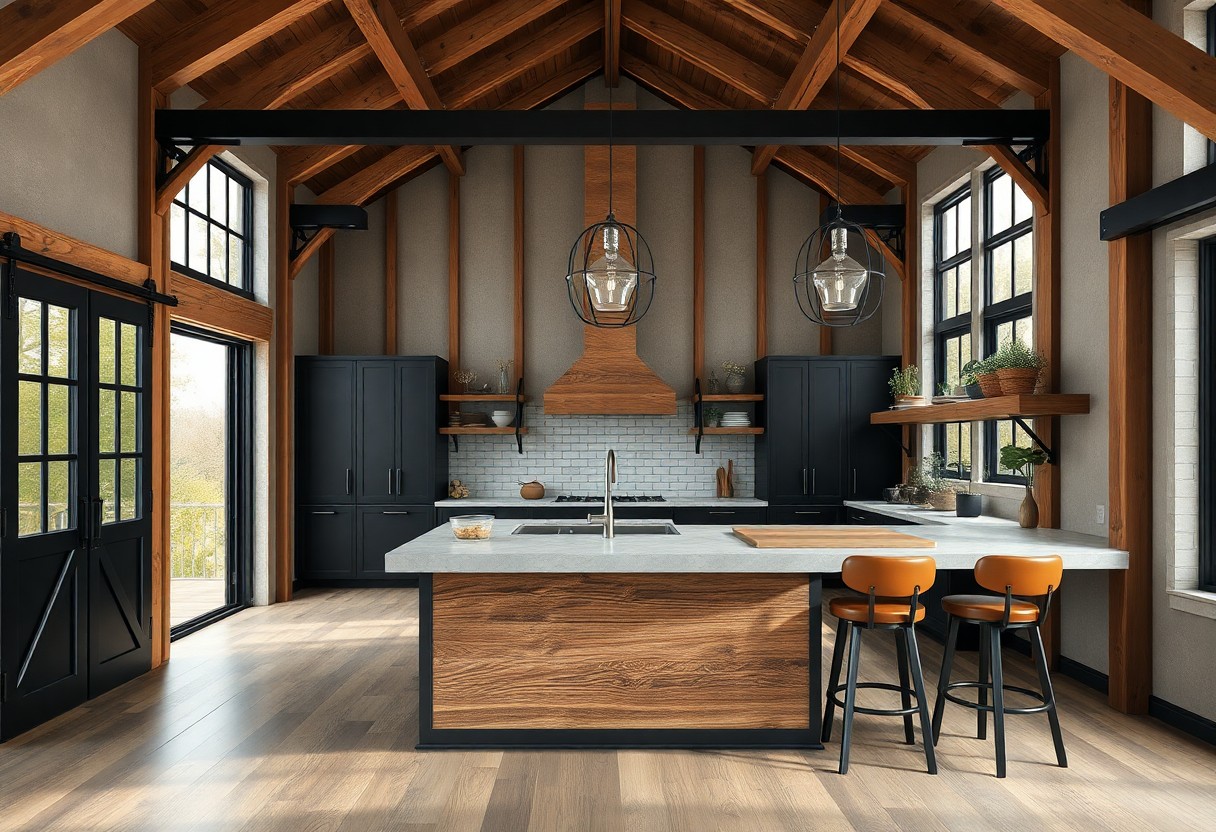
There’s a curated gallery of barndominium ideas to guide your choices for creative interiors and exteriors, showing how you can combine open-plan layouts, reclaimed wood, industrial metals, and light-maximizing windows to craft functional living spaces; the examples and tips help you plan finishes, storage, and energy-smart upgrades.
Key Takeaways:
- Fusion of rustic and modern styles: open-plan interiors, exposed beams, reclaimed wood combined with sleek finishes and industrial accents.
- Highly customizable, functional layouts: versatile lofts, integrated workshops, and multi-use rooms tailored to lifestyle and budget.
- Striking exteriors and outdoor living: metal siding, large windows, covered porches, and intentional landscaping enhance curb appeal and usability.
Overview of Barndominiums
You’ll find barndominiums blend utilitarian shells with polished living spaces, often lowering construction costs to roughly $50-$150 per sq ft and trimming build time to 3-6 months; typical footprints range from 1,200-3,500 sq ft, letting you scale from weekend retreats to fully finished family homes while reusing steel frames or reclaimed timbers for character and savings.
Definition and History
You can trace the modern barndominium back to mid-20th-century barn-to-home conversions, but the contemporary form-steel or timber shells fitted with full residential systems-accelerated in the 2000s with prefab kits and surged during the 2010s thanks to social media; notable examples include Midwest timber conversions and Texas metal-shell homes adapted for year-round living.
Popularity and Trends
You’ll see popularity driven by affordability (commonly $50-$150/sq ft), fast timelines (3-6 months), and flexible rural zoning; Instagram and Pinterest exposure amplified interest in the 2010s, and states such as Texas, Oklahoma, and Pennsylvania report higher concentrations of new builds and conversions.
Beyond cost, you should note design and tech trends: open-plan great rooms, lofted bedrooms, exposed trusses, and mixed-material façades; prefab steel kits can cut labor by up to 30%, while SIPs, spray foam, and PV systems boost efficiency-many owners also convert extra space into Airbnbs or home offices to offset mortgage costs.
Creative Interior Ideas
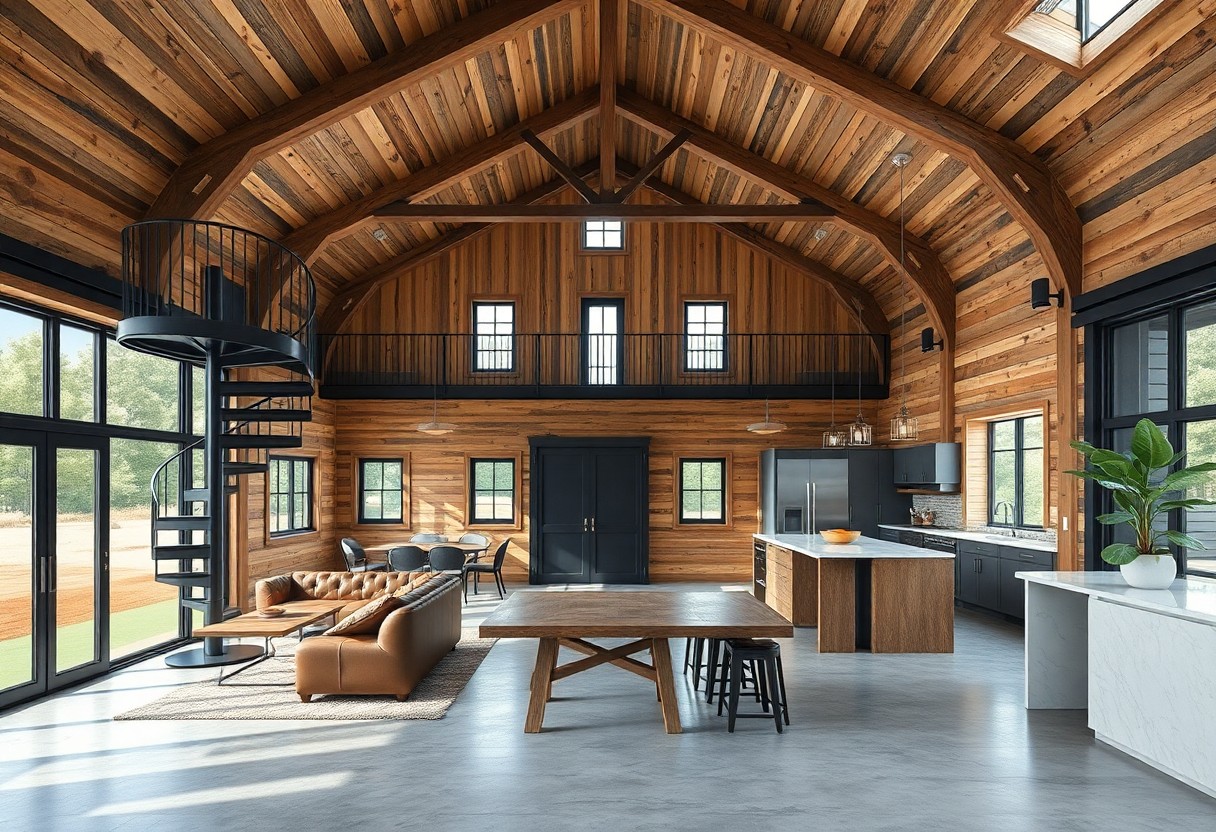
Within your barndominium you can blend form and function by combining exposed timber, mezzanines, and strategic glazing to boost natural light; try 10-20 ft ceiling heights, a lofted office, and built-in storage under stairs to make a 1,200-2,000 sq ft footprint feel expansive while keeping heating costs down with zoned thermostats and insulated metal walls.
Open Floor Plans
Open layouts often span 1,200-2,500 sq ft and rely on an 8-10 ft kitchen island as the visual anchor; you can define zones with area rugs, a 6-8 person dining table, and a sectional facing a focal fireplace while using sliding barn doors and acoustic panels to control echo without breaking sightlines.
Rustic vs. Modern Decor
Balance rustic and modern by using a 60/40 split-60% warm textures like reclaimed oak beams and leather seating, 40% sleek elements such as polished concrete floors, matte-black hardware, and minimal LED lighting-so your spaces feel layered yet streamlined and your finishes read as intentional rather than cluttered.
For example, in a 1,800 sq ft Texas barndominium designers used 18 ft vaulted ceilings, 10 in. reclaimed beam accents, a 9 ft walnut island, and polished concrete with in-floor radiant heat; you get tactile warmth from a shiplap feature wall and the efficiency of sealed concrete, while matte-black fixtures and simple pendant lighting keep the aesthetic contemporary and resale-friendly.
Innovative Exterior Designs
You can push a barndominium’s curb appeal by mixing classic barn proportions with modern elements: oversized sliding glass doors that open a 12-16 ft living wall, wraparound porches with exposed trusses, and covered patios that extend living space by 200-400 sq ft. Combining a low-maintenance metal roof with stone accents and integrated outdoor kitchens gives a layered look while keeping maintenance low and resale appeal high.
Architectural Styles
When choosing a style you can pick gambrel roofs to boost loft area by roughly 40% compared with simple gables, or favor clean-lined modern gables and shed roofs for abundant clerestory light. Industrial aesthetics pair exposed steel and clear-span trusses up to 40-60 ft, while farmhouse or rustic looks use board-and-batten, cupolas, and porches to create familiar, approachable facades.
Material Choices
You’ll often balance longevity and aesthetics by pairing standing-seam metal roofs (40-60 year lifespan) with fiber-cement siding or reclaimed wood accents. Stone veneer and concrete bases add thermal mass and durability, while insulated metal panels speed assembly and improve energy performance-common choices when you want low upkeep and a striking exterior.
In practice you should match materials to climate and budget: standing-seam metal resists hail and wind, fiber-cement handles moisture and requires little painting, and reclaimed wood delivers unique character but needs treatment for pests and UV. Insulated metal panels can provide R-values from moderate to high depending on thickness, letting you meet local code targets more easily while cutting construction time.
Functional Spaces
You optimize everyday use by zoning for specific functions-plan a 6×8 mudroom, a 12×16 workshop, and a 24×24 garage in a 1,200-3,000 sq ft barndominium to balance living and utility. Specify 40-60 psf live loads for living areas and 100-150 psf for workshops, route HVAC and plumbing through a central utility chase, and reserve a 10-12 ft ceiling bay for mechanical access or loft storage to keep systems serviceable without sacrificing open-plan aesthetics.
Home Offices
For a productive home office, give yourself a 10×12 footprint with a 30″-deep desk and 60″ of storage wall shelving; add a 4×6 clerestory or 3×5 operable window for daylight and a dedicated 20A circuit plus wired Ethernet (1 Gbps) for reliability. Use STC-45 partition assemblies or a 4″ double-stud wall to reduce noise from adjacent workshops, and incorporate recessed task lighting with 300-500 lux at the work surface.
Indoor-Outdoor Living
Sliding or folding glass systems-12-16 ft openings-transform a central great room into an alfresco extension, connecting to a 200-400 sq ft deck with a 10 ft overhang for shade. Include a 36″ outdoor grill module and service runs for a mini-kitchen, and spec low-threshold, thermally-broken frames to maintain energy performance when closed.
Detail matters: specify a 1/4″ per foot deck slope for drainage, marine-grade stainless for exterior appliances, and motorized screens or retractable awnings for insect control and sun management. In one case study, a 2,400 sq ft barndo used a 16′ bi-fold wall and composite decking to create a year-round living area with integrated radiant heat beneath the indoor tile extending to the threshold for a seamless transition.
Sustainable Barndominium Options
Your barndominium can hit low-energy or near net‑zero performance by combining a 4-10 kW solar array and 10-20 kWh battery storage with high‑performance insulation (attic R‑49, walls R‑20) and passive solar orientation. Add a 300-500 gallon rainwater tank for irrigation and graywater use, plus a green roof or reflective metal roofing to cut roof surface temperatures by 10-20°F. These measures lower operating costs while preserving the barn aesthetic you favor.
Energy-Efficient Features
You reduce heating and cooling loads dramatically by installing a cold‑climate air‑source heat pump (HSPF 9-11) or a ground‑source system (COP 3-4), paired with an ERV/HRV achieving 70-90% heat recovery. Target airtightness under 3 ACH50, use LED lighting and smart thermostats to shave 10-15% from energy bills, and zone HVAC with mini‑splits for 20-30% efficiency gains in open plan layouts.
Eco-Friendly Materials
You can specify reclaimed barn siding, FSC‑certified lumber, CLT panels or SIPs to reduce embodied carbon and speed construction; SIPs often improve envelope performance by 20-50% compared with stick framing. Choose low‑VOC paints (≤50 g/L), recycled‑content steel for the shell, and hempcrete or cellulose insulation for healthier indoor air and better moisture buffering.
You should vet material sources with Environmental Product Declarations (EPDs) and certifications like FSC or GREENGUARD, and prefer manufacturers offering recycled content and end‑of‑life takeback. For roofing choose metal with a 40-70 year lifespan and high solar reflectance; for interiors favor formaldehyde‑free cabinetry and cork or reclaimed hardwood floors to cut lifecycle impacts while keeping maintenance needs low.
Cost Considerations
Expect total costs to vary widely based on size, finishes and site work: basic metal-shell barndominiums often run $70-$150 per sq ft, while fully finished homes commonly reach $120-$200+ per sq ft. You should factor in foundation, utility hookups and site prep, which typically add $10,000-$50,000, and budget a 10-15% contingency for unforeseen expenses.
Budgeting for a Barndominium
Break your budget into clear line items: allocate 35-50% for shell and exterior, 25-35% for interior finishes and cabinetry, 15-25% for mechanical, electrical and plumbing, and 5-10% for site work and permits. You should set a 10-15% contingency and obtain at least three detailed bids, then track change orders and compare contractor allowances to estimated costs to avoid surprises.
Financing Options
Explore construction-to-permanent loans, USDA rural loans if your property qualifies, and VA or conventional mortgages once the build is complete. Many lenders require 20-25% down for construction loans and offer interest-only payments during the draw period. You can also consider tapping home equity or personal loans for smaller budgets, but compare interest rates and repayment terms before committing.
When you apply, be prepared to submit detailed plans, a signed builder contract and a draw schedule; lenders typically require periodic inspections before each disbursement. Typical setups include monthly draws with 5-10% retainage and conversion to a permanent mortgage within 30-60 days after completion-for example, a $300,000 construction loan might carry interest-only payments during a 12‑month build and then convert to a 30‑year fixed loan at closing.
Summing up
From above, the Barndominium Ideas Gallery equips you with diverse interior and exterior solutions-efficient layouts, rustic-modern finishes, energy-wise upgrades, and adaptable spaces-so you can tailor aesthetics and performance to fit your lifestyle and budget. Apply these concepts to make confident design choices that maximize comfort, curb appeal, and long-term value for your barndominium.
FAQ
Q: How can I use the “Barndominium Ideas Gallery – Creative Interiors & Exteriors” to plan my own interior design?
A: Use the gallery as a visual checklist and reference library. Start by saving images that appeal to you and grouping them by room (kitchen, living, bedroom, bath), feature (open lofts, exposed beams, mezzanines), or element (flooring, lighting, cabinetry). For each saved image note specifics: ceiling height, window placement, visible finishes (metal, reclaimed wood, concrete), and furniture scale. Translate those observations into measurable goals-sample ceiling heights, aisle widths, and cabinet depths-so you and your designer/contractor can assess feasibility. Pay special attention to repeated themes across images (e.g., mixed metal and wood, sliding barn doors, integrated workshop space); those indicate design motifs that work together. Finally, create a prioritized list: must-haves, nice-to-haves, and deal-breakers to guide budgeting and phasing of the build.
Q: What exterior styles and materials featured in the gallery work best for durability and curb appeal in different climates?
A: The gallery showcases several durable, attractive exterior approaches-corrugated metal with painted steel panels for low maintenance and modern-rustic appeal; board-and-batten or reclaimed timber for warm, farmhouse character; and stone or masonry accents for visual weight and weather resistance. In wet or coastal climates, choose galvanized or coated steel panels and corrosion-resistant fasteners, and specify high-grade sealants and drainage details. For cold climates prioritize raised foundations, insulated metal panels or thick cavity insulation, and robust roof snow load design; in hot sunny regions use reflective roof coatings, deep overhangs, and strategically placed shading. Combine materials for curb appeal-metal siding for the main volume, vertical wood or stone at entryways-and ensure flashing, trim, and window systems are specified for the local climate to prevent moisture and air infiltration.
Q: How can I adapt gallery ideas to fit a tight budget, obtain permits, and hire the right team for a barndominium project?
A: Start by selecting a few high-impact, cost-effective design choices from the gallery-open-concept floors that reduce partition costs, exposed structure that saves on finishes, and standardized window sizes to lower glazing expenses. Create a phased plan so vital systems (foundation, envelope, mechanicals) are prioritized and decorative elements can be deferred. For permits: research local zoning for accessory dwelling, agricultural, or mixed-use structures; prepare dimensioned floor plans, structural notes, and site plans showing setbacks and utilities for permit submissions. When hiring, seek contractors and architects experienced with metal-frame or post-and-beam buildings; ask for references and recent barndominium projects, verify licensing and insurance, and request itemized bids to compare scope. Consider a design-build firm or an owner-builder consultant if you plan partial self-management. Factor in hidden costs-utility hookups, septic or well, grading, and insulation upgrades-and add a contingency (typically 10-20%) to your budget.