Tag: DIY

  • DIY Small Barndominium – Easy Projects for Your Tiny Barn Home

    Over the years, you can transform your small barndominium into a stylish, highly functional home with manageable projects that maximize storage, light, and comfort; this guide provides proven DIY builds, layout strategies, and budget-friendly finishes you can tackle step-by-step to boost livability and resale value while preserving rustic charm.

    Key Takeaways:

    • Plan layout, insulation, plumbing and electrical first and secure necessary permits before starting projects.
    • Maximize functionality in tiny spaces with lofts, built-in storage and fold-down or multi-use furniture.
    • Cut costs using reclaimed materials and DIY finishes (flooring, countertops, cabinets); prioritize projects by skill level and budget.

    Benefits of a Barndominium

    You get a durable, low-maintenance shell with flexible interior space that adapts to changing needs: steel or wood frames often allow finishes to be changed without major structural work, a metal exterior can last 40-60 years, and many owners report completing basic builds in 3-6 months. You’ll also reduce long‑term upkeep and, with proper insulation and orientation, cut energy bills substantially compared with similarly sized older homes.

    Cost Efficiency

    You can build a barndominium for roughly $60-$120 per sq ft depending on finishes, often lower than conventional stick‑built costs once labor and time are accounted for. By using a pre‑engineered shell, doing interior finishes yourself, and grouping plumbing/electrical runs, you’ll shave weeks and thousands of dollars; some DIY owners report 20-35% savings versus hiring a full contractor package.

    Versatile Design Options

    You benefit from wide, open spans that let you configure living, workshop and storage areas however you want: a 30×40 shell converts easily into a 1,200 sq ft home with two bedrooms plus a loft, or into a combined garage/live space with a dedicated workshop. You can mix rustic reclaimed wood, exposed trusses, sliding barn doors and modern glass walls to match farmhouse, industrial or minimalist styles while keeping construction straightforward.

    You should plan layout moves that maximize that flexibility: place wet walls together to limit plumbing runs, use a 10-12 ft clearspan to add a 150-300 sq ft mezzanine, and specify large overhead doors if you want vehicle access. Incorporate built‑in storage, pocket doors and modular furniture so rooms can switch function-home office today, guest suite tomorrow-without costly renovations.

    Planning Your DIY Barndominium

    When mapping your build, prioritize systems and layout together: aim for R-20+ wall and R-38+ roof insulation, a 100-200 amp service with dedicated circuits for workshop tools, and plumbing runs that minimize long traces to the septic or municipal hookup. You should perform a Manual J load calc or hire an HVAC pro to right-size equipment, plan storage and loft access for a 400-1,200 sq ft shell, and place wet walls adjacent to one another to reduce piping complexity and cost.

    Choosing the Right Location

    Pick a site that balances sunlight, slope, and utility access: south-facing exposure boosts passive solar, slopes under 10% reduce grading expense, and having power/water within 200-400 ft can save thousands-running service commonly costs $3-10/ft, while well drilling ranges $5,000-15,000. You should perform a perc test for septic suitability, confirm driveway access for delivery trucks, and plan setbacks of roughly 50-100 ft from property lines if your county requires them.

    Understanding Zoning Regulations

    Zoning controls whether you can place a barndominium on a parcel, covering permitted uses (residential vs. agricultural), minimum lot sizes-often 1-5 acres in rural districts-setbacks (commonly 10-50 ft), lot coverage limits (typically 20-40%), and height caps. You should verify if an agricultural exemption, conditional use permit, or variance is needed; noncompliance can halt construction and trigger costly changes.

    Start by contacting the county planning department for a zoning verification letter and review the parcel’s recorded covenants. Expect to submit a site plan, survey, and permit application; review timelines vary widely (2-12 weeks) and fees range from roughly $100 to $2,000 depending on jurisdiction. If a variance or conditional use is required, prepare neighborhood notices and a case showing mitigation (landscaping, screening, reduced lighting) to improve approval odds.

    Essential Materials for Construction

    Stock your build with steel framing (12-14 gauge for posts, 14-16 gauge for studs), 4″ concrete slab at 3,000-4,000 psi over a polyethylene vapor barrier, galvanized fasteners and neoprene-washer screws, 24-26 gauge metal roofing, 1″-2″ polyiso or mineral wool exterior continuous insulation, Tyvek or ZIP sheathing for weather barrier, PEX for plumbing, a 100A electrical panel with GFCI/ARC protection, and quality window flashing and sealants to prevent air and water intrusion.

    Steel Frame Advantages

    Steel gives you straight, dimensionally stable members that resist rot, termites and fire; 12-14 gauge columns and cold-formed studs at 16″ o.c. let you span larger bay widths with fewer interior posts, enabling open layouts common in barndominiums. Galvanized finishes (G90) extend life in humid climates, and you install them with self-drilling screws, bolting or welding for fast, repeatable framing-many DIY builds cut framing time by 20-30% versus stick framing.

    Insulation and Weatherproofing

    Aim for your specified R-20+ walls and R-38+ roof using a mix: closed-cell spray foam (~R-6.5/in), mineral wool batts (~R-3.1/in) or fiberglass batts (~R-3.4/in) combined with 1″-2″ continuous polyiso to reduce thermal bridging. You should pair an air barrier (taped ZIP or housewrap) with proper flashing, seam tape, and sealed penetrations; use canned spray foam at window frames and through-roof penetrations to maintain airtightness and moisture control.

    For sizing, closed-cell foam needs roughly 3.1″ to hit R-20 and about 5.8″ for R-38; fiberglass batts require ~5.9″ for R-20 and ~11.2″ for R-38. Because steel studs create thermal bridges, add 1″ of polyiso (≈R-6) outside the studs or use insulated sheathing to preserve effective R-value. Seal all seams with tape and use a continuous air barrier system (ZIP/taped sheathing or taped housewrap) to prevent convective heat loss and moisture migration through the assembly.

    Design Ideas for Small Barndominiums

    Focus on layout moves that extend perceived space: orient the long axis south for passive solar gain, install 6-8 windows (24-36″ wide) on that facade, and pair metal siding with cedar accents for texture. You can add a 6-8 ft covered porch to extend living outdoors and plan a 600-900 sq ft footprint to keep mechanical and circulation runs efficient.

    Maximizing Space

    You can use a sleeping loft (120-160 sq ft) and a mezzanine to free ground-floor square footage; install a Murphy bed, 30″ deep kitchen base cabinets, and an 18″ bench with under-seat storage. Keep your main aisles at 36″ for circulation, choose pocket or barn doors, and design stairs with 12-16 cu ft built-in drawers to add storage without expanding the footprint.

    Minimalist Interior Ideas

    You should adopt a 2‑tone palette-white or soft gray walls with warm wood ceilings-and limit furnishings to multi‑use pieces like a sofa bed, nesting tables, and a 24″ deep wall‑mounted desk; favor open shelving over upper cabinets to maintain clear sightlines and reduce visual clutter.

    You can specify compact systems-24″ refrigerator, 24″ dishwasher, stacked washer‑dryer-and plan a 5‑ft kitchen run with a 30″ cooktop and 24″ prep counter. Choose 3000K LED strips under shelves for task lighting, 6-8″ wide floor planks to elongate sightlines, and limit decor to three focal elements per room so your interior stays breathable and easy to maintain.

    DIY Projects for Your Barndominium

    Tackle projects that add function and value quickly: build a 6×4′ kitchen island for $300-$1,200, install a sliding barn door for $150-$400, or create loft storage accessed by a ladder to gain 40-80 sq ft of usable space. You should prioritize projects tied to insulation and systems-keep wall R-20 and roof R-38 targets-then add built-ins, lighting upgrades, and waterproofing; many weekend projects take 6-16 hours and can raise resale appeal by 5-10% in rural markets.

    Custom Shelving Solutions

    You can maximize vertical space with floating shelves, built-ins, or ladder units using 1×10 or 2×12 boards for 12-24″ depths; anchor to studs at 16″ centers with 3/8″ lag bolts for 50-100 lb/ft load capacity. Try reclaimed barn wood for character or birch plywood for clean lines, and incorporate cubbies sized 12×12″ for baskets. For heavier loads, sister a 2×8 ledger to studs and use metal brackets rated for 200+ lbs.

    Outdoor Living Spaces

    Consider a 12×12 deck using composite decking ($8-$12/ft²) or pressure-treated pine ($3-$5/ft²) on 16″ joist centers, with a 6×6-post pergola (10×12′) for shade. You should follow local setback rules and get permits when adding structures; position a 36-44″ fire pit at least 10′ from the house and plan clearances for grills and storage. These additions expand usable living area and increase property appeal.

    For more functionality, run a dedicated 20A GFCI circuit (12/2 cable) to the deck for outlets and 120V appliances and allow 2″ clearance for through-wall transitions. Add integrated bench storage, LED step lighting, and a slight deck slope of roughly 1/8″-1/4″ per foot away from the house for drainage. Use composite hidden fasteners on 16″ joist spacing and choose footings sized to frost depth for your zone to ensure durability.

    Maintenance Tips for Your Barndominium

    Seasonal maintenance keeps your systems running and prevents costly repairs: inspect gutters twice yearly, change your HVAC filters every 90 days (or monthly if you have pets), test smoke and CO alarms quarterly, and service your furnace/AC every fall and spring. Check your foundation and slab for 1/8″ cracks and seal them, monitor moisture in gaps, and service well pumps every 2-3 years. Recognizing routine upkeep saves you from major rebuilds and preserves resale value.

    • Gutters – clean yours twice yearly and inspect for loose hangers or standing water.
    • HVAC – change filters (MERV 8-11) every 60-90 days and schedule annual tune-ups.
    • Plumbing – inspect under sinks and around appliances every 6 months for slow leaks.
    • Septic/Well – pump septic tanks every 3-5 years; test well output annually.

    Roofing and Exterior Care

    Inspect your roof at least twice a year and after storms; look for loose screws, rust, bent panels, and failing sealant around penetrations. Tighten or replace exposed 14-16 gauge fasteners as needed, touch up scratched metal with manufacturer-matched paint to prevent corrosion, and reseal vents/skylights every 5-10 years. Clean your gutters biannually and keep 2-3 feet of cleared perimeter around the shell to reduce moisture and pest entry.

    Interior Upkeep Essentials

    To keep your interior healthy, monitor humidity at 30-50% and use a 30-70 pint dehumidifier in damp climates; inspect behind appliances and under sinks every 6 months, test GFCI outlets and breakers annually, and re-caulk window and door frames every 3-5 years to maintain airtight performance and energy efficiency.

    You should swap HVAC filters (MERV 8-11) every 60-90 days and schedule duct cleaning every 3-5 years; flush your water heater annually to remove sediment and extend life by up to 30%, and pump septic tanks every 3-5 years for a family of four (shorter intervals if you use a garbage disposal). Refinish wood floors every 5-7 years with 2-3 coats of polyurethane, patch hairline drywall cracks with setting-type joint compound, and use low-expansion foam around oversized gaps-these steps often reduce drafts and can lower heating bills by 10-20% in retrofit cases.

    To wrap up

    The practical projects presented empower you to optimize your small barndominium’s layout, improve energy efficiency, and infuse personality using basic tools and affordable materials. By prioritizing insulation, modular cabinetry, lofted sleeping spaces, and multifunctional furniture, you can phase work to fit your budget and skill level. Plan each step, measure precisely, and you’ll achieve durable, stylish results that make your tiny barn home both comfortable and functional.

    FAQ

    Q: What are the easiest space-saving storage projects for a small barndominium?

    A: Use vertical space and multi-purpose builds: install floor-to-ceiling shelving anchored to studs, build a sleeping loft with storage drawers underneath, and add built-in bench seating with lift-up lids. Repurpose sliding barn doors with recessed shelving on the jamb side and mount pegboards or slatwall panels in the workshop or kitchen area for tools and utensils. For garages or work zones, add overhead racks for seasonal items and use ceiling-mounted pulleys for bulky items like kayaks. Construction tips: use 3/4″ plywood for shelves, metal brackets for heavy loads, and confirm fasteners hit studs; seal or use exterior-grade materials in damp locations. Finish with paint or clear coat for durability and label boxes for quick access.

    Q: How do I build a simple, safe loft sleeping area in a tiny barn home?

    A: Plan around ceiling height and load: ensure at least 36-40 inches of usable loft headroom if possible and design joists to carry a minimum 30-40 psf live load. Anchor a ledger to load-bearing studs or use a free-standing timber frame; use 2×8 or 2×10 joists spaced 16″ on center with plywood decking. Include a secure guardrail at least 36″ high and a fixed ladder or compact stairs with handholds-stair treads can double as storage. Provide lighting and ventilation: install LED reading lights, a skylight or vent fan, and proper insulation above the loft to control temperature. Finish with non-slip flooring, mattress platform fasteners, and test structural connections; consult local code for egress and handrail requirements if unsure.

    Q: What are practical tips for installing a compact kitchenette and vital utilities in a tiny barndominium?

    A: Choose compact appliances (24″ fridge, two-burner induction cooktop, combination microwave/convection oven) and plan a galley or single-wall layout to conserve space. Prioritize utility placement: cluster water-using fixtures near the same wall to minimize plumbing runs and place the water heater or tankless unit close to points of use. Run dedicated circuits for major appliances, add GFCI outlets where required, and size the main panel for future expansion. Install a ducted or high-quality recirculating range hood for ventilation and use moisture-resistant cabinets or open shelving. Steps: measure and sketch the layout, rough-in plumbing and electrical to code (hire licensed pros for mains and gas), install cabinets and pantry units, mount appliances, then connect and test systems. Use durable, low-maintenance surfaces like laminate, stainless, or sealed butcher block for counters to extend lifespan in a small-space kitchen.
  • DIY Barndominium Remodels – Transform Your Space Like a Pro

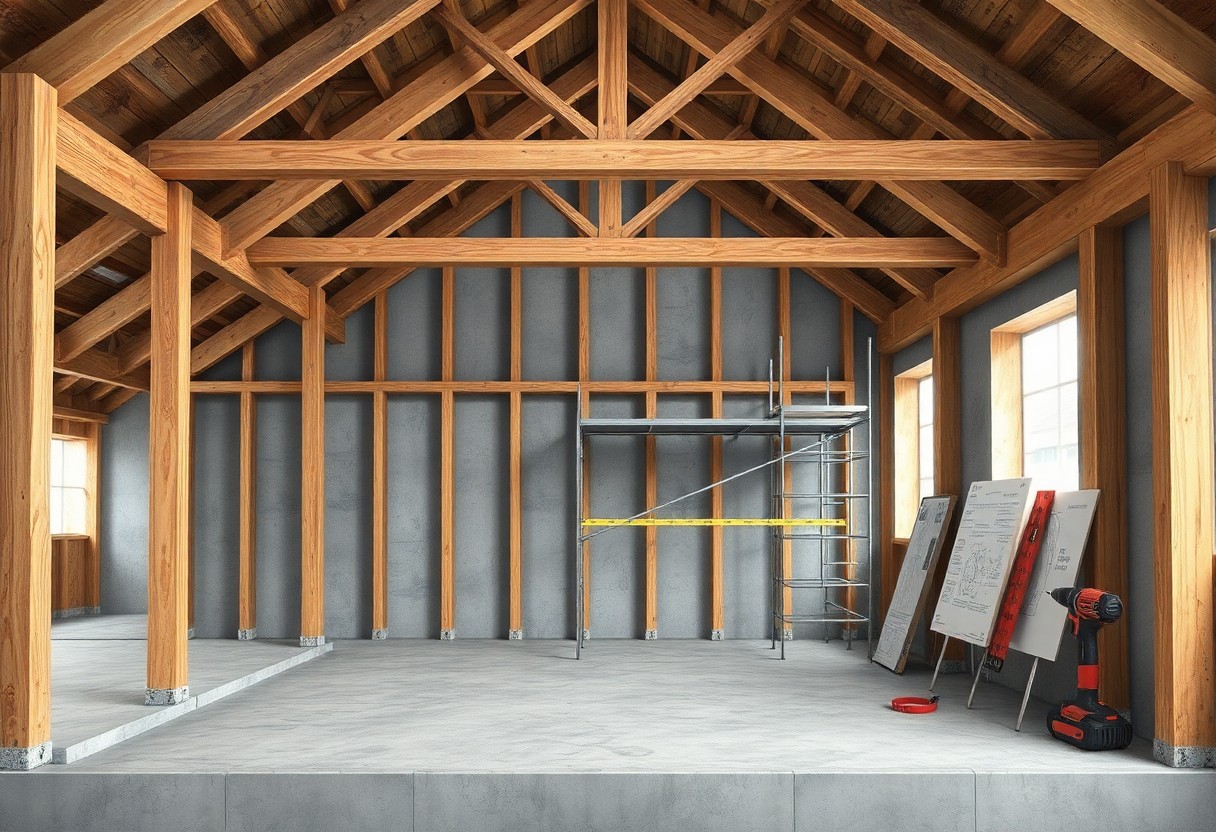
    You can transform a barndominium into a stylish, efficient living space by combining clear planning, prioritized tasks, and proven techniques; this guide shows you how to assess structure, allocate budgets, select materials, and tackle framing, insulation, flooring, and finishes with pro-level results. With step-by-step strategies and safety-minded tips, you’ll manage timelines and contractors to deliver lasting value and comfort to your home.

    Key Takeaways:

    • Start with a thorough structural and layout assessment-confirm foundation, framing, roof condition and involve a structural engineer for any load-bearing changes.
    • Prioritize insulation, moisture control, ventilation and properly sized HVAC to ensure year-round comfort and prevent long-term damage.
    • DIY finish work to save money, but hire licensed pros for electrical, plumbing and major structural tasks; secure permits and budget a contingency fund.

    Planning Your Barndominium Remodel

    Plan permits, structural inspections and load calculations early: hire a licensed engineer for beam and post sizing and request a Manual J HVAC load to right-size equipment. Expect 3-6 months for a shell-to-finish remodel and obtain 2-3 bids per trade so you can compare scopes. Prioritize airtightness and insulation-aim for ceiling R‑38 and walls R‑13 to R‑21-to lower your heating/cooling loads, and factor in site prep, utility hookups and local permit lead times when you schedule work.

    Setting a Budget

    Allocate your budget by system: 30-40% for structure and envelope, 20-30% for HVAC/electrical/plumbing, 15% for finishes, 5-10% for appliances/fixtures, plus a 10-15% contingency. Use per-square-foot estimates to sanity-check: remodels often range $75-$200/ft², so a 2,000 ft² remodel at $100/ft² equals about $200,000. Track every line in a spreadsheet, lock fixed-price bids for major trades when possible, and adjust allocations based on which elements you prioritize.

    Determining Your Style

    Identify a primary style and two supporting elements you’ll repeat throughout: modern farmhouse with shiplap and matte-black hardware, industrial with exposed steel and polished concrete, or rustic with reclaimed wood and leather accents. You should pick a 3-color palette and 2 main materials to maintain cohesion across 1,500-2,500 ft² plans; let lighting, flooring and cabinetry choices reinforce the look so each room reads as part of a single design story.

    You should build a mood board of 10-12 images, then order 3-5 material samples (wood, metal, tile) at $5-$50 each and test them under different light. Commit to one focal element-exposed beams, a masonry wall, or an island-and scale fixtures to it; for instance, use 18-24″ pendants over a 6-8′ island. As a case study, a homeowner transformed 2,000 ft² into modern-industrial with polished concrete and steel finishes for roughly $60,000 and achieved consistent visual cohesion across all spaces.

    Structural Considerations

    Assessing the Current Structure

    Begin by scanning foundation for cracks wider than 1/4 inch, uneven settlement, or moisture intrusion; check floor deflection against an L/360 target and note joist spacing-many barns have 2x8s at 24″ o.c. that won’t meet living loads. Inspect truss connections, metal plates, and sill plates for rot or insect damage. If you plan a loft or heavy equipment, have a structural engineer verify bearing capacities and design live loads (typically around 40 psf for residential floors).

    Necessary Upgrades and Repairs

    Address weakened framing by sistering joists with 2x10s or LVLs, installing glulam or double-LVL beams to close wide bays, and replacing decayed sill plates with pressure-treated timber or steel posts. Tie the shell to the foundation using anchor bolts or plate anchors, add shear walls or moment frames for lateral resistance, and upgrade roof connectors for increased snow or insulation loads. Always submit engineered plans and permits for major beam or foundation work.

    For example, converting a 40’×60′ barn often requires two roughly 30-foot glulam beams supported on steel columns, sistering existing 2×8 joists to 2×10 at 16″ o.c. to meet a 40 psf live load and L/360 deflection, and installing anchor bolts per the engineer’s layout; using Simpson Strong-Tie connectors and proper sill-to-footing straps prevents uplift and ties the retrofit into code-compliant detail.

    Interior Design Ideas

    Balance your barndominium’s industrial bones with warm textures and layered lighting to create five functional zones-kitchen, dining, living, workspace, and mudroom-within a typical 1,800-2,400 sq ft shell; use built‑ins, rugs and pendant grouping to define areas while keeping sightlines open.

    Open Concept Living

    Prioritize 10-12 ft ceilings and anchor the plan with an 8-10 ft kitchen island or a fireplace wall; when removing non‑loadbearing partitions, have a structural engineer size headers and beams, expose trusses as a feature, and mitigate echo using rugs, curtains and upholstered seating to improve acoustics.

    Choosing the Right Materials

    Pair insulated metal panels or SIPs with closed‑cell spray foam (≈R‑6.5/in) for airtight envelopes, specify double‑pane low‑E windows with U‑factor ≤0.30, and combine reclaimed barn wood or engineered hardwood over slab floors to add warmth while matching the barndo aesthetic.

    Match materials to climate and use: engineered hardwood tolerates 20-50% seasonal relative humidity swings better than solid planks, porcelain tile performs in mudrooms and entryways, and polished concrete over a standard residential slab (≈2,500-4,000 psi) is low‑maintenance; also verify VOC ratings, compatibility with steel framing, and manufacturer warranties before final selection.

    Utility Considerations

    When upgrading utilities, focus on capacity and routability: a 200‑amp service is common for barndominiums with workshops or EV chargers, 240‑V circuits handle dryers and welders, and water pressure should sit between 40-60 psi to protect fixtures. 1/4″ per foot drain slope prevents backups, while placing the main panel near future expansions saves conduit runs. You should also map existing septic capacity (750-1,500 gal typical) versus household demand before altering layouts.

    Electrical and Plumbing Updates

    You should plan dedicated 20‑amp circuits for kitchen small appliances, 30-50‑amp circuits for ranges and EV chargers, and AFCI/GFCI protection for bedrooms and wet zones; upgrading from 100 A to 200 A often avoids costly subpanel work. For plumbing, use PEX for long runs and easier bends, size water heaters 40-80 gallons to match household use, and verify septic drainfield sizing against bedroom count and local code.

    Energy Efficiency Tips

    Seal air leaks and prioritize insulation: aim for R‑49 in ceilings and at least R‑13 to R‑21 in walls, insulate rim joists with closed‑cell spray foam, and consider a ductless heat pump with COP ≥3.5 and SEER ≥18 to cut heating loads. LED retrofits cut lighting load by ~75%, and triple‑pane windows with U‑factor ≈0.20 improve winter performance in cold climates.

    • Upgrade to a 200‑amp main if you plan heavy tools, EV charger, or future ADD‑ons.
    • Route GFCI/AFCI circuits to kitchens, bathrooms, and workshops to meet code and reduce fire risk.
    • Use PEX for easier routing and fewer fittings on long barn runs.
    • Knowing your peak load profile (HVAC, workshop, EV) lets you right‑size service and avoid costly panel rework.

    For performance gains, combine air‑sealing with staged insulation: a blower‑door guided retrofit that reduces leakage to under 3 ACH50 can cut heating demand by 30-50%. You can pair R‑49 attic insulation with a 2-3 ton heat pump (SEER 18-20) to achieve paybacks in 3-7 years depending on local rates; check local utility rebates and federal incentives for heat pumps and insulation upgrades.

    • Install continuous ridge and soffit ventilation to protect roof assemblies while insulating.
    • Swap incandescent and CFL bulbs for LEDs to reduce lighting energy by ~75% immediately.
    • Invest in programmable thermostats or zoning for a 10-20% reduction in HVAC runtime.
    • Knowing the expected payback (for example, 3-7 years for a properly sized heat pump in many regions) helps prioritize which efficiency upgrades to fund first.

    Outdoor Spaces

    Extend your living area outdoors by planning a covered porch 8-12 ft deep, a 12×14 ft patio for an outdoor dining set, and a 10×20 ft concrete apron for equipment or RV parking. Use 1/8-1/4 in per ft slope for drainage away from the foundation, and place shade trees 20-30 ft from the shell to cut summer cooling loads by roughly 20-25%. You should prioritize durable hardscapes where you need low maintenance and high use.

    Landscaping Ideas

    Prioritize native species to reduce water and maintenance; grouping plants by water need (hydrozoning) helps you run drip irrigation that can cut water use 30-50% versus spray systems. Apply a 3 in mulch layer to retain moisture and suppress weeds, and use permeable pavers where runoff matters. For pollinators, dedicate a 50-100 sq ft garden of flowering natives that bloom across spring-fall to boost biodiversity and curb pesticide needs.

    Creating Functional Outdoor Areas

    Define zones-cooking, dining, play, storage-and size them: a six‑person dining area needs about 10×10 ft, a fire pit seating circle is typically 8-12 ft diameter. Choose materials by use: poured concrete or pavers for heavy equipment, composite decking for low maintenance seating areas. Plan electrical (20A lighting circuits, GFCI receptacles) and water access early so you avoid retrofits that add thousands of dollars.

    For utilities, allocate a dedicated 50-60A 240V circuit if you plan a hot tub, and a 30A RV outlet for hookups; position outdoor kitchens within 20-30 ft of the main house gas line or plan for a 1/2‑in gas stub to avoid long runs. Consider 3‑4 ft wide walkways for accessibility, 6-8 ft clearances around grills for safety, and LED task lighting at 300-400 lux for prep zones to make the space truly functional year‑round.

    Common Mistakes to Avoid

    Avoidable mistakes derailing projects often stem from poor budgeting, skipped permits, inadequate insulation, and improper load redistribution; in one Midwestern case a 2,400 ft² barndominium overran budget by 40% after hidden rot and electrical upgrades. You should prioritize contingency funds, phased inspections, and realistic timelines to prevent similar setbacks.

    Underestimating Costs

    You might use generic $100-$140/ft² estimates, yet full remodels often hit $150-$220/ft² once structural fixes, HVAC upsizing, and sprayed-foam insulation are included; set a 15-25% contingency, get two contractor bids, and budget for unexpected items like replacing sill plates or upgrading a 100 A panel to 200 A.

    Skipping Permits and Regulations

    Skipping permits to save time can trigger stop-work orders, fines ranging from $500 to $5,000, and insurance denials; you must pull structural, electrical, and septic permits for major changes, and plan for required inspections at footing, rough, and final stages to keep your remodel legal and insurable.

    Plan for 2-8 week plan reviews and permit fees typically $200-$2,000 depending on jurisdiction; when you alter beams or add bedrooms submit engineered drawings, have licensed trades pull trade permits, and schedule inspections for footings, framing, electrical, plumbing, and final occupancy. If you close a sale with unpermitted work the buyer’s lender or appraiser may require costly retrofits or stop the loan, so address permits upfront.

    To wrap up

    Hence you can complete a barndominium remodel like a pro by developing a clear plan, mastering important carpentry, electrical, and plumbing basics, prioritizing structural integrity and energy efficiency, budgeting for quality materials, scheduling inspections, and hiring licensed contractors for complex systems; with careful planning and disciplined execution your finished space will be functional, stylish, and built to last.

    FAQ

    Q: How do I plan a DIY barndominium remodel and secure the necessary permits?

    A: Start by defining your project scope, must-have features, and a realistic budget with a 10-20% contingency for unexpected issues. Photograph and document the existing structure, then get a basic structural assessment from a licensed inspector or engineer if you’ll alter load-bearing walls, rooflines, or foundations. Create rough drawings or a simple floor plan, then check local zoning, building codes, and permit requirements with your county or city planning department; many jurisdictions require stamped plans for structural, electrical, and plumbing changes. Submit permit applications with required drawings, pay fees, and schedule inspections at staged milestones (footing, rough-in, insulation, final). Maintain a project timeline that sequences demolition, structural work, utilities, insulation, and finishes to minimize rework. Track materials, receipts, and inspection reports to avoid delays at sign-off.

    Q: Which structural and utility tasks can I safely tackle myself, and when should I hire licensed professionals?

    A: Suitable DIY tasks: demolition (with proper safety gear), non-load interior framing, insulation, drywall hanging and finishing, painting, flooring, trim, cabinetry, basic carpentry, and installing fixtures. Minor electrical work like replacing outlets or fixtures may be DIY in some areas if you follow code, but major electrical (service upgrades, new circuits, panel work), gas lines, full plumbing rough-in and sewer work, structural alterations to beams or foundation, roof framing, and HVAC system design/installation should be handled by licensed pros. Hire an engineer for beam sizing or when altering load paths. Always pull required permits and schedule inspections for work that affects safety systems; doing otherwise can void insurance and complicate resale.

    Q: How can I achieve professional-looking finishes on a budget during a barndominium remodel?

    A: Maximize impact with thoughtful material choices and prep work: invest in a few high-visibility finishes (entry, kitchen countertops, lighting) and choose durable, cost-effective materials elsewhere (laminate, engineered hardwood, prefinished trim). Rent specialty tools (floor sanders, compactor, finish nailer) to speed work and improve results. Use prefinished or panel products for ceilings and walls to save time, and buy trim and doors in bulk to reduce cost. Prioritize proper surface prep-flat, clean, and primed surfaces lead to better paint and finish results. Learn and practice finishing techniques (caulking, feathering joint compound, sanding between coats, correct paint roller nap) to avoid contractor-level expenses. Phase upgrades to spread cost, and shop surplus, wholesale, or reclaimed-material sources for beams, barn doors, and decorative hardware that match the barndo aesthetic while saving money. Seal and insulate properly to reduce long-term energy costs and preserve finishes.

  • DIY Barndominium Interiors – Creative Ideas for Stunning Rooms

    Many DIYers like you can transform a barndominium’s raw shell into stunning, livable rooms by combining efficient layouts, layered lighting, durable materials, and personalized finishes; this guide outlines practical techniques for planning zones, maximizing storage, tackling finishes, and adding character so you can create comfortable, stylish spaces that reflect your lifestyle and budget.

    Key Takeaways:

    • Embrace the open-plan layout and create distinct zones with area rugs, furniture placement, sliding barn doors, or half-walls to keep the airy barn feel while defining rooms.
    • Mix raw, rustic materials (reclaimed wood, exposed beams, metal accents) with sleek modern finishes and statement lighting to balance warmth and contemporary style.
    • Use budget-friendly DIY solutions and multifunctional pieces-built-ins, upcycled furniture, modular storage-and layer lighting and textiles to achieve a personalized, high-impact interior.

    Understanding Barndominium Design

    In practice, designing a barndominium blends industrial shell efficiency with residential comfort: you’ll often work around a steel or post‑frame shell, 30-60′ bays, and open interiors that favor 10-14 ft ceilings. Many plans are 1,200-3,000 sq ft; finish level drives costs-roughly $80-$150/ft²-while insulated metal panels and spray foam can cut heating loads significantly. Plan zoning, storage, and utilities early so your open layout functions like distinct rooms.

    What is a Barndominium?

    A barndominium is a hybrid barn-home where living quarters occupy a metal or timber post-frame building; you get an expansive open plan often paired with an attached shop, garage, or studio. Typical builds combine 40×60 or 30×40 bays, and you can outfit raw shells with drywall, reclaimed wood, or exposed trusses to achieve farmhouse, modern, or industrial styles.

    Benefits of Barndominium Living

    You gain affordability, flexibility, and durability: barndominiums commonly finish faster (3-6 months), cost less per square foot than custom stick‑built homes, and feature long‑lasting metal roofs (40-70 years). Energy efficiency improves with spray foam insulation and insulated metal panels, while the open plan makes it easy to adapt spaces for guests, workshops, or rental suites.

    For example, you can design a 1,800 sq ft barndo with a two‑bay workshop and separate ADU for rental income, boosting ROI; closed‑cell spray foam at about R‑6-7 per inch tightens the envelope, and proper roof overhangs plus passive solar orientation reduce HVAC loads. Maintenance falls lower too-metal siding resists rot-and mechanicals are simpler to service in open cavities.

    Choosing a Color Palette

    Pick a palette that ties your steel, concrete and wood elements into a cohesive whole by using the 60-30-10 rule: 60% dominant neutral, 30% secondary tone, 10% accent. You should match neutrals to your flooring LRV and choose lighting around 2700-3000K for warm paint perception. Test swatches on north- and south-facing walls, and note how metal finishes-black powder coat vs. galvanized-shift perceived color before committing.

    Neutral Tones for Versatility

    You can rely on greige, warm taupe or soft gray as a base to make zones flow and brighten an open plan; aim for mid-tone neutrals with LRVs around 30-60 to avoid washout. Pair those walls with raw wood (oak at 10-12% warm undertone) and black or bronze hardware for contrast, then layer texture-wool rugs, linen curtains-to prevent a flat look while keeping flexibility for future color swaps.

    Bold Colors for Accent

    You should use bold hues sparingly-on a feature wall, kitchen island, or entry door-keeping them to roughly 10% of visible surfaces per the 60-30-10 rule. Try barn-red, deep navy, or teal to echo exterior siding or vintage signage; these choices add depth without overwhelming the volume of an open barndominium.

    When dialing in accent colors, test 12″x12″ swatches at eye level and view them at morning and evening light to check undertones. Choose finishes strategically: satin for cabinets, eggshell for walls, semi-gloss for trim and doors. Also, consider complementary materials-deep navy pairs well with walnut and brass, while mustard or ochre livens pale oak and matte black fixtures-so your accents read intentional and integrated.

    Flooring Options

    Because your barndominium blends industrial shell and home comfort, match flooring to function: sealed or polished concrete for workshop entries, LVP with a 12-20 mil wear layer for moisture-prone living areas, and engineered or reclaimed oak (7-9″ planks) for bedrooms. Factor in subfloor insulation, a vapor barrier under slab-on-grade, and typical concrete specs of 3,000-4,000 psi when planning finishes and long-term performance.

    Durable Flooring Choices

    Choose commercial-grade vinyl plank (20 mil wear layer) for garage-to-home transitions, porcelain tile (water absorption <0.5%, PEI 4-5) for mudrooms, and sealed/polished concrete (3,000+ psi) or epoxy coatings for work zones. These resist abrasion, chemicals, and heavy loads; epoxy systems often last 10-20 years with proper prep, while well-sealed concrete floors can exceed 30 years before major refurbishment.

    Aesthetic Appeal

    For visual impact, pair 7″-9″ wide engineered or reclaimed oak for a rustic-modern vibe, or install large-format porcelain with narrow grout joints for a sleek industrial look. You can stain concrete from warm taupe to charcoal, add inlaid metal strips, or lay herringbone and chevron patterns to create focal areas that soften the building’s raw edges.

    Also consider performance with radiant floor heating-tile and concrete conduct heat best, while engineered hardwood tolerates moderate radiant temps; check manufacturer limits (some LVP allows surface temps up to 85°F/29°C). Coordinate finishes with your metal accents and cabinetry using a 2-3 color palette, vary plank widths for scale, and plan transitions plus underlayment to control sound in your open-plan spaces.

    Open Concept Layouts

    With vaulted ceilings often between 12-16 feet and footprints from 1,200-2,500 sq ft, you can make an open-plan barndominium feel intentional by zoning rather than enclosing. Place the kitchen as the central hub, anchor seating with a 5×8 or 8×10 rug, and align lighting runs over an 8-foot island to define function. Use consistent flooring-wide-plank hardwood or polished concrete-to preserve sightlines and boost perceived space.

    Maximizing Space

    You gain usable square footage by choosing built-ins, multiuse furniture, and clear circulation: aim for 36-42 inch walkways and a 42-48 inch-deep island with seating to avoid bottlenecks. Install 12-18 inch-deep floating shelves, under-stair drawers, and a lofted mezzanine for a 100-300 sq ft bonus area. In smaller barndominiums, switchable Murphy beds and nesting tables preserve openness while adding function.

    Creating Flow Between Rooms

    You preserve flow by aligning primary sightlines and circulation along the building’s long axis and keeping transition widths at least 36 inches; use 6-8 foot sliding barn doors or 42-inch half-walls to allow visual connection while providing acoustic separation. Coordinate material palette-same trim, flooring color, and 2700-3000K lighting-to make movement between zones feel seamless.

    For deeper impact, use layered lighting and consistent horizontal lines to guide the eye: a 3-foot-wide runner, staggered pendant spacing of 24-30 inches, and area rugs that overlap thresholds by 6-12 inches. You can also angle furniture to create natural pathways, place a console table at a 36-inch clearance to funnel traffic, and employ glass transoms or clerestory windows to maintain daylight continuity while defining separate functions.

    Kitchen Inspiration

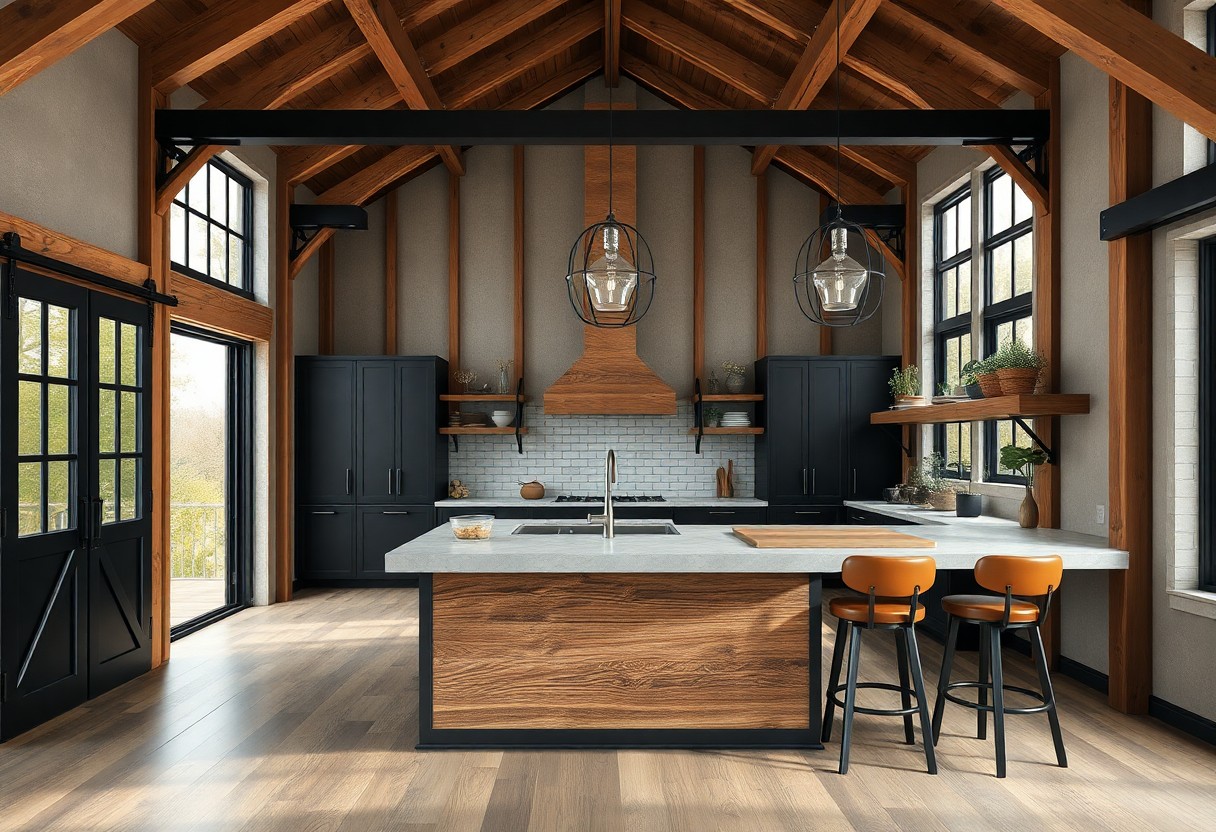
    Turn your kitchen into a functional showpiece by pairing a 7×4 ft island with 36″ counter-height seating for three, 3cm quartz countertops, and a 30-36″ professional range. You can preserve flow in an open-plan barndominium by keeping the work triangle (sink, stove, fridge) between 12-26 feet total and using a low-profile bench or pendant grouping to anchor the dining area. Use warm metals and reclaimed wood to balance industrial beams with a refined finish.

    Modern Fixtures and Finishes

    Choose matte black or brushed brass faucets, 3cm quartz or honed granite countertops, and 3000K LED undercabinet strips at roughly 300 lumens/ft for effective task lighting. You can install a 33-36″ farmhouse or undermount sink and pair it with a 30-36″ stainless hood to match pro-style ranges. Coordinate hardware in 2-3 finishes to keep the palette intentional while highlighting rustic elements.

    Functional Design Elements

    Optimize your layout with 24″ deep base cabinets, 18-21″ deep drawers for pots, and a 30-36″ pantry walkway to ease traffic. You should place the dishwasher within 24″ of the sink and allow 42-48″ of circulation around islands for comfortable entertaining. Add pull-out spice racks, vertical tray dividers, and a dedicated baking drawer to free countertop space and speed up meal prep.

    In a recent 1,800 sq ft barndominium remodel you can replicate, the designers used a 7’×4′ island with nine deep drawers, a 36″ dual-fuel range, and a 6′ walk-in pantry with adjustable shelving every 3″ to maximize storage; overhead pot racks and toe-kick drawers increased usable space by about 20%. Consider integrated charging drawers, pull-out trash/compost bins, and tile laid on a diagonal to visually widen aisles while keeping everything within reach.

    Living Room Ideas

    Cozy and Inviting Spaces

    Anchor your living room with an 84″ sofa and an 8×10 rug to create a clear seating zone; add a 36-48″ coffee table and two 22-26″ side tables for balance. Layer lighting with 3000K recessed LEDs for ambient light, a 12-14″ pendant over the coffee table, and a floor lamp providing 1,200-1,600 lumens for reading. Use 4-6 mixed-texture throw pillows and a 60-80″ bench near the entry to make the space feel lived-in and welcoming.

    Incorporating Rustic Elements

    Mix reclaimed wood accents-8-10″ wide ceiling beams or a 6-8″ shiplap accent wall-with matte-black hardware and industrial lighting to get an authentic barndominium look. You can install a 36″ sliding barn door for room separation, add wrought-iron sconces spaced 6-8 ft apart, and choose distressed oak or pine planks in 6-8″ widths to ground the room visually without overwhelming the open plan.

    You should balance rustic textures with smooth surfaces: pair a reclaimed-wood mantel (4-6 ft) with a 48″ gas or electric fireplace, and contrast a rough plank wall with polished concrete or sealed 3/4″ hardwood floors. For DIY economy, source 100-200 sq ft of salvaged barn wood for an accent wall, prefinish boards with a clear matte polyurethane, and use hidden fasteners or Simpson straps where visible connections are needed for a clean, professional finish.

    Conclusion

    From above, you can apply practical design strategies-mixing reclaimed materials with clean fixtures, maximizing light and storage, and tailoring layouts to your lifestyle-to create cohesive, stylish barndominium interiors; by prioritizing durable finishes, layered lighting, and thoughtful zoning, you ensure each room is both beautiful and functional, reflecting your tastes while optimizing comfort and long-term value.

    FAQ

    Q: How can I blend rustic and modern elements in a barndominium interior?

    A: Start by establishing a balanced palette: warm, natural woods and matte blacks or charcoal grays for a modern edge, with neutral walls to keep the space light. Retain structural features-exposed trusses, steel posts, or reclaimed wood beams-and pair them with streamlined furniture (clean lines, low profiles) to avoid visual clutter. Mix materials selectively: a metal-framed sofa with leather upholstery, a live-edge wood dining table with minimalist metal legs, or concrete countertops softened by wood shelving. Use modern lighting (linear pendants, recessed cans) to highlight rustic focal points like a stone fireplace or reclaimed-wood accent wall. Anchor rooms with area rugs and textiles that introduce texture and warmth-wool, linen, woven jute-while keeping patterns subdued. Keep finishes cohesive by repeating two or three materials/tones throughout the home so transitions feel intentional, and choose hardware and fixtures in consistent metals (black, oil-rubbed bronze, or brushed nickel).

    Q: What are high-impact, budget-friendly DIY upgrades for barndominium rooms?

    A: High-impact, low-cost projects include: 1) Accent walls using reclaimed wood or tongue-and-groove boards-cut, sand, and finish with Danish oil or stain for a custom look; 2) Painting cabinets and swapping hardware for kitchens and bathrooms-use a durable bonding primer and satin or semi-gloss paint; 3) Installing open shelving with metal brackets and stained wood planks for both storage and display; 4) Building a sliding barn door from plywood or reclaimed boards and a simple track kit to save space and add character; 5) Updating lighting with energy-efficient LED fixtures and layered lighting (ambient, task, accent) to transform mood; 6) Creating built-in seating with storage (window bench or dining banquette) from plywood and paint; 7) Laying affordable vinyl plank flooring that mimics wood for durability and easy upkeep. For each project, plan measurements, buy quality fasteners/adhesives, and test finishes on scraps. Typical budgets: accent wall $50-$300, cabinet refresh $100-$600, barn door $150-$400, shelving $30-$200 depending on materials.

    Q: How do I design flexible, multifunctional rooms in an open barndominium layout?

    A: Begin by mapping primary functions (sleeping, cooking, working, entertaining) and traffic flow. Define zones with furniture placement-sofas and shelving that act as visual dividers, rugs to delineate seating areas, and back-to-back counters for kitchen vs. living separation. Use movable elements: rolling islands, folding tables, and lightweight screens to reconfigure space quickly. Integrate vertical storage and built-ins to keep clutter controlled and maintain openness. Employ layered lighting: zone-specific fixtures plus dimmers to adapt ambiance. For acoustic control, add soft surfaces-ceilings baffles, heavy curtains, rugs-to reduce echo in high ceilings. Plan utilities early: locate plumbing and large appliances where future layout changes are feasible, and design HVAC with zoning in mind. For privacy, incorporate sliding doors, pocket walls, or lofted partitions while preserving sightlines. Create clear circulation paths (minimum 36-42 inches where possible) and test layouts with cardboard templates or painter’s tape on the floor before committing.