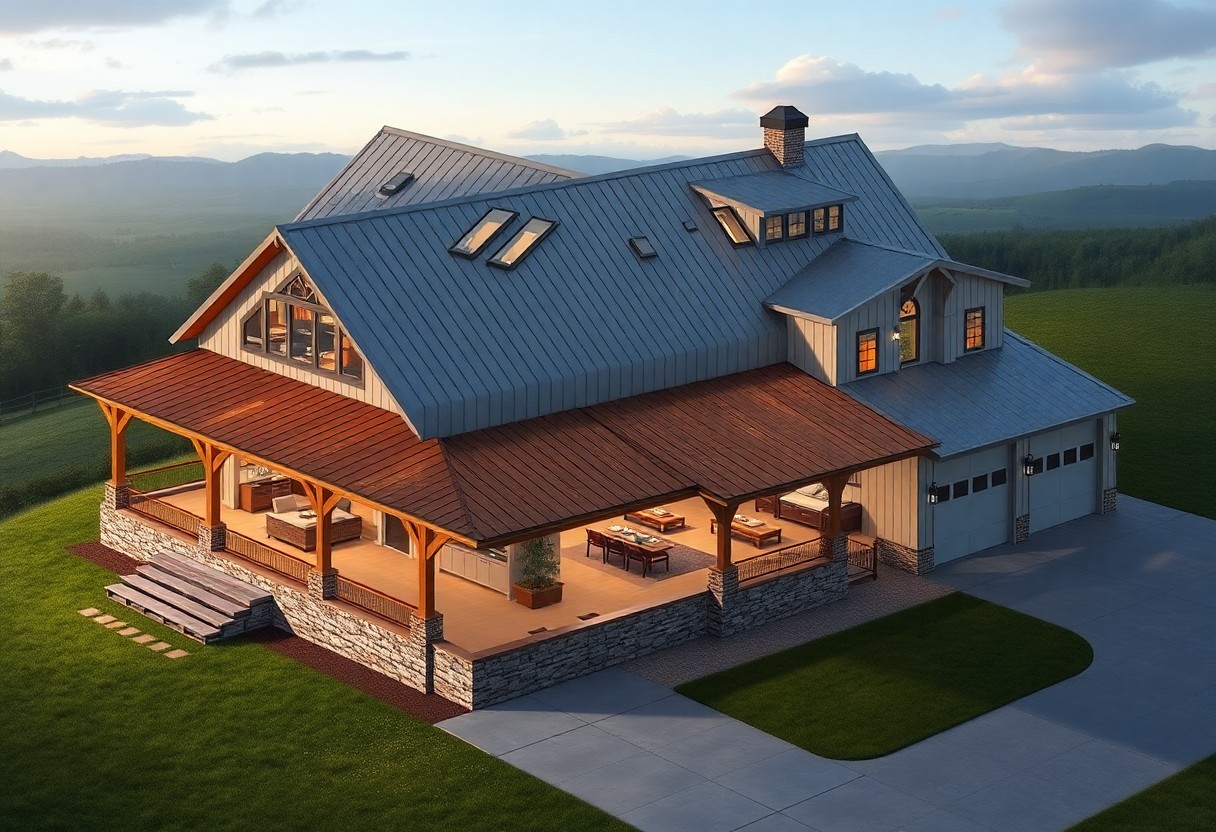
Luxury barndominiums combine rugged practicality with high-end finishes, offering you flexible plans that support vaulted interiors, expansive windows, and custom materials tailored to your lifestyle. This concise guide highlights upscale design elements, efficient layouts, and premium material choices so you can confidently evaluate floor plans, budget priorities, and customization options. With expert tips on integrating modern amenities and maximizing natural light, you’ll be equipped to turn a barn-inspired shell into a sophisticated, comfortable home that reflects your tastes.
Key Takeaways:
- Marries rugged barn architecture with upscale interiors-open plans, exposed beams, and high ceilings create dramatic, livable spaces.
- Flexible layouts and multifunctional zones (lofts, workshops, guest suites) allow tailoring for family life, entertaining, or hobbies.
- Luxury finishes, large windows, indoor‑outdoor connections, and smart material choices deliver comfort and curb appeal while helping control cost and efficiency.
Understanding Barndominiums
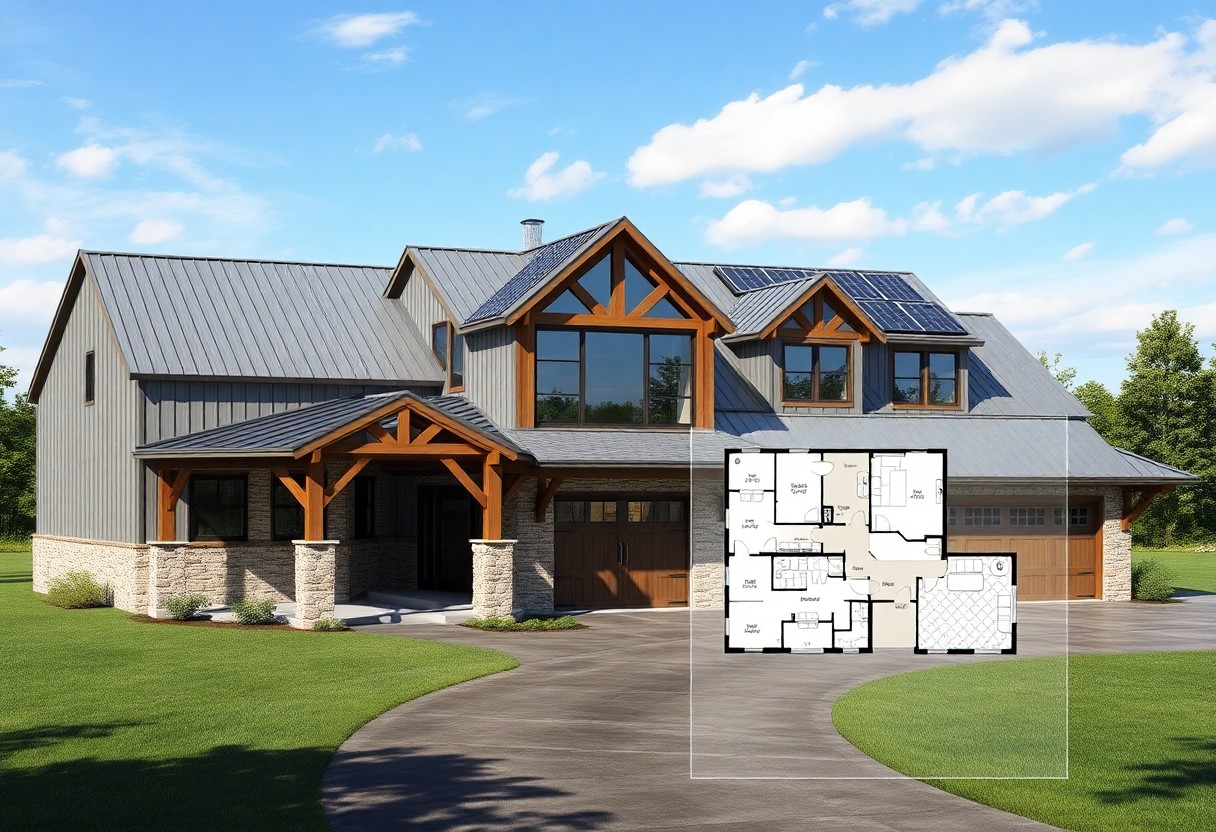
You’ll examine structural systems, material choices, cost ranges and design strategies that make barndominiums distinct, from post‑frame or steel framing to metal roofs and expansive open plans; expect concrete examples like 2,400 sq ft layouts with 12-20 ft ceilings, attached 800-1,200 sq ft workshops, and typical finish timelines of 3-9 months depending on scope.
Definition and Features
A barndominium combines a barn‑style exterior-often steel or post‑frame construction and metal siding-with a fully finished residential interior, so your space typically features open floor plans, exposed trusses, lofts, 10-20 ft ceilings, large garage/shop bays and durable finishes that simplify conversions between living, work and storage areas.
Benefits of Barndominiums
You gain cost and time advantages: shells can run roughly $50-$100 per sq ft and finished builds commonly $100-$200 per sq ft, while construction often finishes in 3-9 months; durable materials reduce maintenance and wide, flexible bays let you adapt 20-30% of square footage for workshop, rental or multi‑gen use.
More specifically, metal roofs and steel framing often provide 40-70 years of service life and resist pests and fire better than wood, spray‑foam insulation boosts thermal performance for lower utility bills, and an attached 1,000 sq ft shop can double income potential if you lease it or support a home business, improving long‑term ROI on rural properties.
Luxury Design Elements
You’ll see barndominiums fuse industrial scale with refined details: 12-14 foot ceilings, exposed steel trusses, reclaimed oak or wide-plank European white oak floors, and custom millwork that transforms a 2,500-4,000 sq ft shell into a luxury residence; integrated lighting design and layered textures-leathered granite, honed marble, and hand-forged iron-anchor the aesthetic while enhancing resale value.
High-End Finishes
Specify materials like quartzite or Calacatta marble countertops, leathered granite island tops, 8-10 foot custom cabinetry with soft-close hardware, and herringbone tile backsplashes to create impact; upgraded finishes typically add $50-$150 per sq ft depending on brands (Sub-Zero, Wolf, Miele) and bespoke elements such as reclaimed beam treatments or artisan plaster walls.
Modern Amenities
Outfit your barndominium with smart-home platforms (Control4, Savant), 240V EV charging, a whole-house generator or Tesla Powerwall backup, and zoned HVAC-mini-splits or geothermal-to balance comfort with efficiency; integrated AV, fiber internet, and security systems are now standard in high-end plans to support remote work and entertainment.
For deeper implementation, plan a 7.1 home theater with acoustic insulation and a dedicated 200-400 sq ft wiring closet, a 50-200 bottle climate-controlled wine cellar, and radiant floor heating beneath tile and stone in baths and kitchens; in one Texas build, adding radiant heat and a 240V EV charger increased perceived luxury and reduced annual heating costs by enabling lower thermostat setpoints.
Popular Luxury Barndominium Styles
Among upscale barndo options you’ll encounter Rustic Elegance, Contemporary Chic, Industrial Modern and Farmhouse Luxe-each leveraging open plans, exposed structure and custom millwork. Typical footprints range from 1,500-4,000 sq ft with ceiling heights of 14-20 ft; designers often add floor-to-ceiling glazing, mezzanines and built-ins. Expect upscale finishes to increase costs by roughly $40-$120 per sq ft depending on stone, metal, and custom carpentry choices, and plan mechanical upgrades (ERVs, radiant heat) to optimize comfort in large-volume spaces.
Rustic Elegance
You can emphasize reclaimed timbers, wide-plank flooring and hand-forged iron hardware to create Rustic Elegance that feels authentic yet refined. Many projects use reclaimed barn siding, 10-14 inch exposed beams, soapstone or honed granite countertops and integrated mudrooms; a 2,800 sq ft build might allocate 15-20% of the budget to millwork and premium wood finishes to preserve warmth while upgrading performance with modern insulation and mechanicals.
Contemporary Chic
You’ll find Contemporary Chic barndominiums use clean steel lines, expansive glazing and minimalist materials-polished concrete, white oak and matte black metalwork-creating a gallery-like interior. Typical strategies include 12-18 ft vaulted ceilings, 8-12 ft sliding glass walls for indoor-outdoor living, and cantilevered mezzanines to maximize views; budgeting often shifts toward high-performance glass and bespoke lighting, which can add $10,000-$40,000 depending on scale.
You should prioritize thermal performance and detailing when executing Contemporary Chic: use steel I-beams with thermal breaks, high-efficiency low-E glazing (U-values below 0.30) and continuous insulation (wall R-values of R-30-R-40, roof R-50-R-60 in colder zones). Integrate concealed track lighting, LED architectural fixtures and zoned HVAC or ductless mini-splits for precise comfort in open volumes. Consider polished concrete with radiant tubing or large-format porcelain for clean floors, and allocate design dollars to custom stair systems and glass balustrades to maintain the minimalist aesthetic while meeting structural and code requirements.
Floor Plans and Layouts
When configuring your layout, think in terms of square footage and flow: many luxury barndominiums span 1,800-3,000 sq ft with 10-14 ft ceilings and open living cores, while master suites often occupy 300-500 sq ft with private patios. Place service zones-kitchen, laundry, mudroom-along one wall to simplify plumbing and lower build costs by up to 15%. You can allocate a 400-600 sq ft loft or office above the garage for flexibility.
Open Concept Designs
Open-concept designs maximize the barn aesthetic by combining living, dining, and kitchen into uninterrupted space often 30-40 feet across, with islands 8-12 feet creating anchored zones. You can incorporate exposed steel trusses and 10-14 foot ceilings to emphasize volume, while acoustic panels and recessed shelving control echo. In a 2,400 sq ft plan, dedicating 800-1,200 sq ft to the great room creates a dramatic entertaining core without sacrificing private bedrooms.
Multi-Story Options
Choosing multi-story options lets you stack private suites above the living core, creating 2-3 levels with floor-to-floor heights of 10-12 feet and saving up to 20% of footprint compared to single-story plans. You should locate stairs and elevator cores adjacent to mechanical chases to streamline HVAC and plumbing, and consider long-span trusses or interior load walls to maintain open ground-floor spaces.
If you plan a second floor, expect structural and code implications: adding a full second floor often requires reinforced foundations and shear walls that can raise costs 10-25%. You can mitigate this by using prefabricated floor trusses and steel beams, or by opting for a partial loft-example: a 600 sq ft mezzanine for a home office and two bedrooms above a 2,400 sq ft great room preserves volume and trims material needs by roughly 15%. For accessibility, budget $30,000-50,000 for a residential elevator.
Interior Design Inspiration
You’ll elevate your barndominium by focusing on scale and material contrasts: pair 6-8″ reclaimed oak planks with matte black steel, use a 60/30/10 color split, install layered lighting (pendants 30-36″ above islands, wall sconces 60″ from floors), and ground seating with 8×10 or 9×12 rugs; built-in cabinetry and concealed storage keep the open plan airy while highlighting structural beams and high ceilings.
Color Palettes
Adopt a 60/30/10 approach: 60% warm neutrals (example: Benjamin Moore Revere Pewter HC-172, LRV 55), 30% mid-tones like slate blue or olive green, and 10% accents in brass, terracotta, or matte black; choose eggshell for walls and satin for trim to balance light reflection, and test samples on 12″ squares since natural light shifts color perception by up to 20% across the day.
Furnishing Tips
Scale pieces to your room: in a 20×25 ft great room pick sectionals 120-140″ wide, coffee tables 16-18″ high, and maintain 18-24″ between seating and tables; favor low-profile silhouettes under beams, mix leather and wool for texture, and fix large pieces to floor plans rather than centering on walls to preserve flow.
- Anchor seating with rugs at least 8×10 ft so front legs sit on the rug.
- Choose a sectional depth of 36-42″ for a lounge feel, or 30-34″ for upright seating.
- Any oversized furniture should be balanced with open shelving or a 36″ walkway to maintain circulation.
For circulation and function plan 36″ minimum clear paths in main corridors, allow 42-48″ behind dining chairs for service, and size dining tables to occupancy-36×72″ seats six comfortably, 48×96″ seats eight to ten; you’ll keep living zones wearable and comfortable while showcasing the barn’s volume.
- Use modular storage units (24-36″ deep) to hide HVAC and utilities without losing floor area.
- Layer lighting: 300-400 lux for task zones, dimmable ambient at 100-150 lux for lounges.
- Any large accent pieces should repeat a color or material from another zone to create cohesion.
Building Considerations
You should start with structural decisions like clearspan steel frames versus timber post-and-beam-steel allows 40-60 ft spans for dramatic open rooms without interior columns. Factor in insulation targets (R‑21-R‑30 walls; R‑30-R‑60 roof) and waterproofing details for metal envelopes. Expect permit, utility hookup, and site-prep to add 5-10% to schedules and budget, and plan mechanical routing early to avoid costly mid-build relocations.
Budgeting for Luxury
When aiming upscale, you should plan $180-$350 per sq ft depending on finish level and custom systems; a 3,000 sq ft build at $220/sq ft totals about $660,000. Allocate 10-15% contingency and 15-20% for soft costs (engineering, permits, design). Prioritize spending on envelope performance, high-efficiency HVAC, and a chef-grade kitchen to maximize long-term value.
Selecting the Right Contractor
You should get at least three bids and compare detailed scopes, not just totals; require licensing, insurance, five recent references, and a portfolio with similar metal- or timber-framed projects. Demand a clear timeline-many 2,500-3,500 sq ft barndominiums finish in 6-12 months-and define change-order processes and payment milestones before signing.
You should verify warranties and insurance: insist on Builder’s Risk and general liability, request a subcontractor list, and expect a GC markup of 10-20%. Visit an active job site, contact past clients about punch-list responsiveness, check the state contractor board for complaints, and include milestone payments tied to inspected deliverables plus lien waivers to protect your investment.
Conclusion
So you can confidently select a luxury barndominium plan that reflects your lifestyle, combining refined materials, thoughtful spatial planning, and energy-efficient systems to elevate comfort and resale value; by prioritizing your needs and working with experienced architects and builders, you ensure a durable, elegant home that delivers both rural charm and upscale living.
FAQ
Q: What design elements define a luxury barndominium and how can plans transform a simple shell into an upscale residence?
A: Luxury barndominium plans prioritize proportion, material contrast, and intentional flow. Key elements include high, exposed-ceiling volumes with engineered trusses, large glazing arrays for daylight and views, a clear separation of public and private zones, and integrated indoor-outdoor living with covered porches or courtyards. Upscale finishes-custom millwork, stone or tile accent walls, engineered hardwood or polished concrete floors, and designer lighting-elevate the aesthetic. Mechanical considerations such as high-efficiency HVAC, acoustical treatments, and hidden mechanical chases keep the industrial shell feeling refined. Thoughtful circulation (mudroom/boot room, service corridors, pantry adjacency to the kitchen) and built-in storage systems maintain the clean, high-end look while maximizing functionality.
Q: How much should I budget for a luxury barndominium and which factors drive cost variations?
A: Expect a wide range depending on location, finishes, and site conditions; upscale barndominiums commonly run from roughly $150 to $350+ per square foot. Major cost drivers are finish level (custom cabinetry, stone, luxury appliances), envelope upgrades (insulated panels, high-R roof and wall assemblies, thermal breaks), foundation complexity and site work (grading, driveway, utilities), specialized structural elements (wide-span trusses, mezzanines), and mechanical systems (HVAC zoning, radiant heat, smart-home controls). Design and permitting fees, bespoke features (elevators, wine cellars, large glass walls), and local labor rates also significantly affect total. Build a contingency of 10-20% and allocate separate budgets for landscaping and exterior amenities to avoid scope creep.
Q: What should be included in plan sets and how do I work with designers and builders to achieve a high-end result?
A: A complete plan set for an upscale barndominium should include site plan and grading, foundation and structural framing plans, detailed roof and connection details for metal systems, HVAC/plumbing/electrical schematics, interior elevations for kitchens and baths, finish schedules, window/door schedules, and specifications for insulation and waterproofing. Collaborate with a designer or architect experienced in mixed-material structures, use 3D models or renderings to validate spatial and material choices, and develop a finish palette early. Vet builders by portfolio, request references for similar projects, and obtain fixed-price bids for well-defined scopes. Incorporate mock-ups for critical finishes, stage selections to keep the schedule, and document allowances clearly in contracts to control change orders and ensure the finished product matches the upscale vision.