You can transform a barndominium into a stylish, efficient living space by combining clear planning, prioritized tasks, and proven techniques; this guide shows you how to assess structure, allocate budgets, select materials, and tackle framing, insulation, flooring, and finishes with pro-level results. With step-by-step strategies and safety-minded tips, you’ll manage timelines and contractors to deliver lasting value and comfort to your home.
Key Takeaways:
- Start with a thorough structural and layout assessment-confirm foundation, framing, roof condition and involve a structural engineer for any load-bearing changes.
- Prioritize insulation, moisture control, ventilation and properly sized HVAC to ensure year-round comfort and prevent long-term damage.
- DIY finish work to save money, but hire licensed pros for electrical, plumbing and major structural tasks; secure permits and budget a contingency fund.
Planning Your Barndominium Remodel
Plan permits, structural inspections and load calculations early: hire a licensed engineer for beam and post sizing and request a Manual J HVAC load to right-size equipment. Expect 3-6 months for a shell-to-finish remodel and obtain 2-3 bids per trade so you can compare scopes. Prioritize airtightness and insulation-aim for ceiling R‑38 and walls R‑13 to R‑21-to lower your heating/cooling loads, and factor in site prep, utility hookups and local permit lead times when you schedule work.
Setting a Budget
Allocate your budget by system: 30-40% for structure and envelope, 20-30% for HVAC/electrical/plumbing, 15% for finishes, 5-10% for appliances/fixtures, plus a 10-15% contingency. Use per-square-foot estimates to sanity-check: remodels often range $75-$200/ft², so a 2,000 ft² remodel at $100/ft² equals about $200,000. Track every line in a spreadsheet, lock fixed-price bids for major trades when possible, and adjust allocations based on which elements you prioritize.
Determining Your Style
Identify a primary style and two supporting elements you’ll repeat throughout: modern farmhouse with shiplap and matte-black hardware, industrial with exposed steel and polished concrete, or rustic with reclaimed wood and leather accents. You should pick a 3-color palette and 2 main materials to maintain cohesion across 1,500-2,500 ft² plans; let lighting, flooring and cabinetry choices reinforce the look so each room reads as part of a single design story.
You should build a mood board of 10-12 images, then order 3-5 material samples (wood, metal, tile) at $5-$50 each and test them under different light. Commit to one focal element-exposed beams, a masonry wall, or an island-and scale fixtures to it; for instance, use 18-24″ pendants over a 6-8′ island. As a case study, a homeowner transformed 2,000 ft² into modern-industrial with polished concrete and steel finishes for roughly $60,000 and achieved consistent visual cohesion across all spaces.
Structural Considerations
Assessing the Current Structure
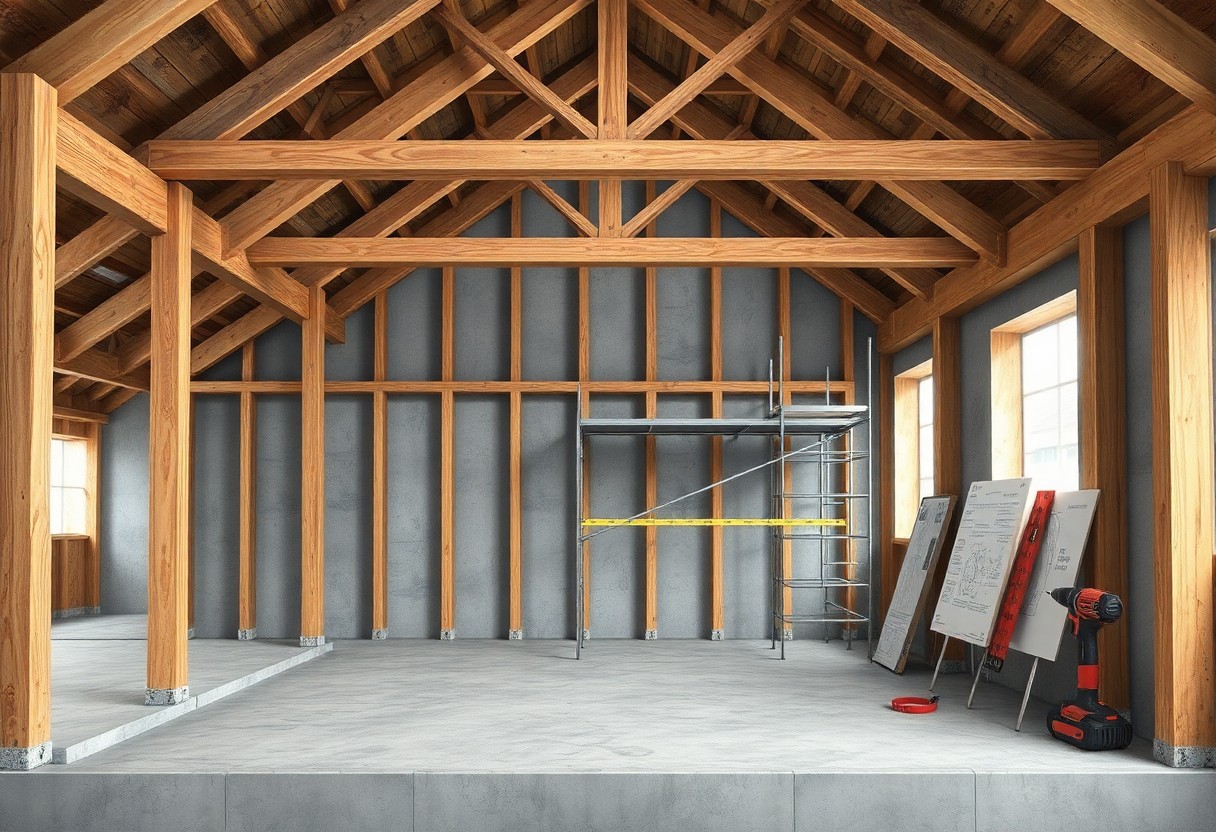
Begin by scanning foundation for cracks wider than 1/4 inch, uneven settlement, or moisture intrusion; check floor deflection against an L/360 target and note joist spacing-many barns have 2x8s at 24″ o.c. that won’t meet living loads. Inspect truss connections, metal plates, and sill plates for rot or insect damage. If you plan a loft or heavy equipment, have a structural engineer verify bearing capacities and design live loads (typically around 40 psf for residential floors).
Necessary Upgrades and Repairs
Address weakened framing by sistering joists with 2x10s or LVLs, installing glulam or double-LVL beams to close wide bays, and replacing decayed sill plates with pressure-treated timber or steel posts. Tie the shell to the foundation using anchor bolts or plate anchors, add shear walls or moment frames for lateral resistance, and upgrade roof connectors for increased snow or insulation loads. Always submit engineered plans and permits for major beam or foundation work.
For example, converting a 40’×60′ barn often requires two roughly 30-foot glulam beams supported on steel columns, sistering existing 2×8 joists to 2×10 at 16″ o.c. to meet a 40 psf live load and L/360 deflection, and installing anchor bolts per the engineer’s layout; using Simpson Strong-Tie connectors and proper sill-to-footing straps prevents uplift and ties the retrofit into code-compliant detail.
Interior Design Ideas
Balance your barndominium’s industrial bones with warm textures and layered lighting to create five functional zones-kitchen, dining, living, workspace, and mudroom-within a typical 1,800-2,400 sq ft shell; use built‑ins, rugs and pendant grouping to define areas while keeping sightlines open.
Open Concept Living
Prioritize 10-12 ft ceilings and anchor the plan with an 8-10 ft kitchen island or a fireplace wall; when removing non‑loadbearing partitions, have a structural engineer size headers and beams, expose trusses as a feature, and mitigate echo using rugs, curtains and upholstered seating to improve acoustics.
Choosing the Right Materials
Pair insulated metal panels or SIPs with closed‑cell spray foam (≈R‑6.5/in) for airtight envelopes, specify double‑pane low‑E windows with U‑factor ≤0.30, and combine reclaimed barn wood or engineered hardwood over slab floors to add warmth while matching the barndo aesthetic.
Match materials to climate and use: engineered hardwood tolerates 20-50% seasonal relative humidity swings better than solid planks, porcelain tile performs in mudrooms and entryways, and polished concrete over a standard residential slab (≈2,500-4,000 psi) is low‑maintenance; also verify VOC ratings, compatibility with steel framing, and manufacturer warranties before final selection.
Utility Considerations
When upgrading utilities, focus on capacity and routability: a 200‑amp service is common for barndominiums with workshops or EV chargers, 240‑V circuits handle dryers and welders, and water pressure should sit between 40-60 psi to protect fixtures. 1/4″ per foot drain slope prevents backups, while placing the main panel near future expansions saves conduit runs. You should also map existing septic capacity (750-1,500 gal typical) versus household demand before altering layouts.
Electrical and Plumbing Updates
You should plan dedicated 20‑amp circuits for kitchen small appliances, 30-50‑amp circuits for ranges and EV chargers, and AFCI/GFCI protection for bedrooms and wet zones; upgrading from 100 A to 200 A often avoids costly subpanel work. For plumbing, use PEX for long runs and easier bends, size water heaters 40-80 gallons to match household use, and verify septic drainfield sizing against bedroom count and local code.
Energy Efficiency Tips
Seal air leaks and prioritize insulation: aim for R‑49 in ceilings and at least R‑13 to R‑21 in walls, insulate rim joists with closed‑cell spray foam, and consider a ductless heat pump with COP ≥3.5 and SEER ≥18 to cut heating loads. LED retrofits cut lighting load by ~75%, and triple‑pane windows with U‑factor ≈0.20 improve winter performance in cold climates.
- Upgrade to a 200‑amp main if you plan heavy tools, EV charger, or future ADD‑ons.
- Route GFCI/AFCI circuits to kitchens, bathrooms, and workshops to meet code and reduce fire risk.
- Use PEX for easier routing and fewer fittings on long barn runs.
- Knowing your peak load profile (HVAC, workshop, EV) lets you right‑size service and avoid costly panel rework.
For performance gains, combine air‑sealing with staged insulation: a blower‑door guided retrofit that reduces leakage to under 3 ACH50 can cut heating demand by 30-50%. You can pair R‑49 attic insulation with a 2-3 ton heat pump (SEER 18-20) to achieve paybacks in 3-7 years depending on local rates; check local utility rebates and federal incentives for heat pumps and insulation upgrades.
- Install continuous ridge and soffit ventilation to protect roof assemblies while insulating.
- Swap incandescent and CFL bulbs for LEDs to reduce lighting energy by ~75% immediately.
- Invest in programmable thermostats or zoning for a 10-20% reduction in HVAC runtime.
- Knowing the expected payback (for example, 3-7 years for a properly sized heat pump in many regions) helps prioritize which efficiency upgrades to fund first.
Outdoor Spaces
Extend your living area outdoors by planning a covered porch 8-12 ft deep, a 12×14 ft patio for an outdoor dining set, and a 10×20 ft concrete apron for equipment or RV parking. Use 1/8-1/4 in per ft slope for drainage away from the foundation, and place shade trees 20-30 ft from the shell to cut summer cooling loads by roughly 20-25%. You should prioritize durable hardscapes where you need low maintenance and high use.
Landscaping Ideas
Prioritize native species to reduce water and maintenance; grouping plants by water need (hydrozoning) helps you run drip irrigation that can cut water use 30-50% versus spray systems. Apply a 3 in mulch layer to retain moisture and suppress weeds, and use permeable pavers where runoff matters. For pollinators, dedicate a 50-100 sq ft garden of flowering natives that bloom across spring-fall to boost biodiversity and curb pesticide needs.
Creating Functional Outdoor Areas
Define zones-cooking, dining, play, storage-and size them: a six‑person dining area needs about 10×10 ft, a fire pit seating circle is typically 8-12 ft diameter. Choose materials by use: poured concrete or pavers for heavy equipment, composite decking for low maintenance seating areas. Plan electrical (20A lighting circuits, GFCI receptacles) and water access early so you avoid retrofits that add thousands of dollars.
For utilities, allocate a dedicated 50-60A 240V circuit if you plan a hot tub, and a 30A RV outlet for hookups; position outdoor kitchens within 20-30 ft of the main house gas line or plan for a 1/2‑in gas stub to avoid long runs. Consider 3‑4 ft wide walkways for accessibility, 6-8 ft clearances around grills for safety, and LED task lighting at 300-400 lux for prep zones to make the space truly functional year‑round.
Common Mistakes to Avoid
Avoidable mistakes derailing projects often stem from poor budgeting, skipped permits, inadequate insulation, and improper load redistribution; in one Midwestern case a 2,400 ft² barndominium overran budget by 40% after hidden rot and electrical upgrades. You should prioritize contingency funds, phased inspections, and realistic timelines to prevent similar setbacks.
Underestimating Costs
You might use generic $100-$140/ft² estimates, yet full remodels often hit $150-$220/ft² once structural fixes, HVAC upsizing, and sprayed-foam insulation are included; set a 15-25% contingency, get two contractor bids, and budget for unexpected items like replacing sill plates or upgrading a 100 A panel to 200 A.
Skipping Permits and Regulations
Skipping permits to save time can trigger stop-work orders, fines ranging from $500 to $5,000, and insurance denials; you must pull structural, electrical, and septic permits for major changes, and plan for required inspections at footing, rough, and final stages to keep your remodel legal and insurable.
Plan for 2-8 week plan reviews and permit fees typically $200-$2,000 depending on jurisdiction; when you alter beams or add bedrooms submit engineered drawings, have licensed trades pull trade permits, and schedule inspections for footings, framing, electrical, plumbing, and final occupancy. If you close a sale with unpermitted work the buyer’s lender or appraiser may require costly retrofits or stop the loan, so address permits upfront.
To wrap up
Hence you can complete a barndominium remodel like a pro by developing a clear plan, mastering important carpentry, electrical, and plumbing basics, prioritizing structural integrity and energy efficiency, budgeting for quality materials, scheduling inspections, and hiring licensed contractors for complex systems; with careful planning and disciplined execution your finished space will be functional, stylish, and built to last.
FAQ
Q: How do I plan a DIY barndominium remodel and secure the necessary permits?
A: Start by defining your project scope, must-have features, and a realistic budget with a 10-20% contingency for unexpected issues. Photograph and document the existing structure, then get a basic structural assessment from a licensed inspector or engineer if you’ll alter load-bearing walls, rooflines, or foundations. Create rough drawings or a simple floor plan, then check local zoning, building codes, and permit requirements with your county or city planning department; many jurisdictions require stamped plans for structural, electrical, and plumbing changes. Submit permit applications with required drawings, pay fees, and schedule inspections at staged milestones (footing, rough-in, insulation, final). Maintain a project timeline that sequences demolition, structural work, utilities, insulation, and finishes to minimize rework. Track materials, receipts, and inspection reports to avoid delays at sign-off.
Q: Which structural and utility tasks can I safely tackle myself, and when should I hire licensed professionals?
A: Suitable DIY tasks: demolition (with proper safety gear), non-load interior framing, insulation, drywall hanging and finishing, painting, flooring, trim, cabinetry, basic carpentry, and installing fixtures. Minor electrical work like replacing outlets or fixtures may be DIY in some areas if you follow code, but major electrical (service upgrades, new circuits, panel work), gas lines, full plumbing rough-in and sewer work, structural alterations to beams or foundation, roof framing, and HVAC system design/installation should be handled by licensed pros. Hire an engineer for beam sizing or when altering load paths. Always pull required permits and schedule inspections for work that affects safety systems; doing otherwise can void insurance and complicate resale.
Q: How can I achieve professional-looking finishes on a budget during a barndominium remodel?
A: Maximize impact with thoughtful material choices and prep work: invest in a few high-visibility finishes (entry, kitchen countertops, lighting) and choose durable, cost-effective materials elsewhere (laminate, engineered hardwood, prefinished trim). Rent specialty tools (floor sanders, compactor, finish nailer) to speed work and improve results. Use prefinished or panel products for ceilings and walls to save time, and buy trim and doors in bulk to reduce cost. Prioritize proper surface prep-flat, clean, and primed surfaces lead to better paint and finish results. Learn and practice finishing techniques (caulking, feathering joint compound, sanding between coats, correct paint roller nap) to avoid contractor-level expenses. Phase upgrades to spread cost, and shop surplus, wholesale, or reclaimed-material sources for beams, barn doors, and decorative hardware that match the barndo aesthetic while saving money. Seal and insulate properly to reduce long-term energy costs and preserve finishes.
Leave a Reply