Over the course of planning your build, you must verify local zoning designations, permitted uses, setbacks, height limits, required permits, inspections and any HOA or county restrictions so your barndominium complies from foundation to occupancy; consult zoning maps, speak with planning staff, and apply for variances early to prevent costly delays.
Key Takeaways:
- Verify zoning and land‑use designation for your parcel-confirm barndominiums are permitted or pursue rezoning, variances, or conditional‑use permits; check setbacks, height limits, lot coverage, and permit requirements before purchasing or building.
- Confirm applicable building codes and structural requirements for metal/post‑frame construction, secure required engineering plans and inspections, and plan for utility connections, septic/drainage rules, and fire/energy compliance.
- Review HOA covenants, easements, and local ordinances; evaluate financing and insurance options for nontraditional dwellings and budget for permit fees, impact fees, and potential site‑improvement costs and delays.
Understanding Zoning Laws
When assessing your parcel, zoning maps and local code sections determine whether a barndominium is allowed, what uses are permitted, and what limitations apply – typical setbacks range 20-50 feet, minimum lot sizes often span 1-5 acres, and height caps commonly sit between 35-45 feet; you must check both zoning designation and any overlay districts or recorded covenants that can add extra restrictions.
Definition of Zoning
Zoning is your municipality’s tool for dividing land into categories (for example, R for residential, A for agricultural, C for commercial, M for industrial) and specifying permitted uses, density, setbacks, and lot coverage; you consult the zoning ordinance to see if a barndominium is explicitly allowed, allowed with conditions, or prohibited.
Types of Zoning Designations
Common designations affecting barndominiums include Agricultural (A‑1) which often permits farm residences and accessory structures, Rural Residential or RR for larger-lot single-family uses, R‑1 for conventional single-family with stricter aesthetics, C zones that usually restrict residential uses, and M or industrial that sometimes allow metal buildings but impose commercial standards.
- Check A‑1 and RR zones first if you want minimal design restrictions and farm-use allowances.
- Expect R‑1 to impose design, material, and lot coverage limits that can block metal-clad exterior finishes.
- Investigate C or M zoning only if you plan mixed commercial/residential use or can rezone.
- After you identify the designation, confirm setbacks, height limits, and accessory building rules in the ordinance.
| Designation | Typical Uses / Notes |
| A‑1 (Agricultural) | Allows farm dwellings, accessory buildings; often permits metal structures with fewer design controls. |
| RR (Rural Residential) | Large-lot single-family; may allow hobby farms and detached workshops subject to acreage minimums. |
| R‑1 (Residential Single‑Family) | Strict aesthetics, setbacks, and materials; metal exteriors often restricted without variance. |
| C / Commercial | Primarily business use; residential may require conditional use permit or rezoning. |
Digging deeper, you should note that A‑1 often requires less than 1-5 acres for accessory dwellings while some R‑1 zones mandate minimum lot widths (e.g., 60-100 ft) and limit accessory structure footprints to a percentage of the lot; you’ll typically see permitting timelines of 30-120 days for simple permits and 60-180 days if variances or rezonings are needed, with fees ranging roughly $200-$2,000 depending on jurisdiction.
- Gather plats, zoning map, and the specific ordinance section before applying for permits.
- Consult the planning department for interpretation and any historic or overlay district rules.
- Budget time for public hearings if you pursue rezoning or a variance; fees and notice periods vary.
- After you confirm code language, file the appropriate permit, variance, or conditional-use application.
| Requirement | Typical Range / Example |
| Setbacks | Front: 20-50 ft; side: 5-20 ft; rear: 20-40 ft. |
| Minimum Lot Size | Urban R‑1: 6,000-10,000 sq ft; Rural/A‑1: 1-5 acres. |
| Height Limits | Residential: 30-40 ft; Rural can allow 45+ ft with exceptions. |
| Lot Coverage / Accessory Limits | Coverage 25-40%; accessory building area often capped at 50% of primary footprint or a fixed sq ft. |
Barndominiums and Zoning Regulations
Zoning maps, land‑use codes, and overlay districts determine whether your barndominium is allowed: agricultural (A) or rural residential (RR) zones commonly permit them, while suburban R‑1 or planned unit developments often restrict them. You must check setbacks (typically 20-50 ft), maximum lot coverage (often 25-40%), height limits (35-45 ft), and septic/well siting rules (50-100 ft separations); floodplain or conservation overlays can add elevation or foundation requirements that change project feasibility.
Common Zoning Issues for Barndominiums
You frequently run into permitted‑use conflicts, HOA covenants, minimum lot size requirements (0.5-5 acres in many jurisdictions), driveway/access standards, and septic or well permitting. Fire district or road‑maintenance requirements can force upgrades; for example, a county may require a minimum all‑weather access and turnouts for structures over 3,000 sq ft. Variances, conditional use permits, or rezoning are typical solutions but add time and public hearings.
Permitted Uses and Restrictions
Permitted uses vary: some jurisdictions treat barndominiums as primary dwellings if you finish interior living space, while others allow only agricultural or accessory uses on the same structure. You may see limits on home‑based businesses, short‑term rentals, or on‑site commercial activity; an A‑zone might allow a workshop and occasional farm sales, but an R‑1 zone could ban any nonresidential use without a conditional permit.
When pursuing approval, expect a process: submit a site plan, floor plans, engineered foundation details, septic design, and a survey; public notice and a planning commission hearing often take 30-90 days. Fees commonly range $200-$2,000 depending on rezoning or variance scope. Also confirm which code applies-local officials may require IRC compliance for residential finishes or IBC standards for metal‑framed sections-so coordinate code classification early to avoid rework.
Building Codes and Regulations
Overview of Building Codes
You’ll follow the IRC for one- and two-family dwellings (up to three stories) and the IBC for commercial or mixed-use barndominiums, while energy requirements come from the IECC. Codes cover foundation, structural framing, roof snow/wind loads, electrical, plumbing, mechanical systems, fire separation and egress. Local jurisdictions routinely adopt amendments and different code years, so verify county or city requirements, permit timelines and required inspections before finalizing your plans.
Importance of Compliance
If you skip code compliance you risk fines, stop-work orders, forced demolition and insurance or mortgage complications; insurers and lenders often require a certificate of occupancy before paying claims or closing loans. Inspectors verify structural, electrical and egress safety to protect occupants. Being compliant preserves resale value and limits liability-documented permits and approved inspections make your barndominium financeable and insurable.
Insist on engineer-stamped plans for nonstandard spans or loads-open bays over about 20-30 feet often need engineered trusses and calculations. Hire licensed electricians and plumbers, schedule foundation, framing and final inspections, and keep inspection reports plus the final certificate of occupancy. Expect special inspections for concrete (28-day strength tests), welding and gas-line pressure testing in many jurisdictions; those records are often decisive in insurance disputes, lender reviews and title transfers.
Assessing Property for Barndominium Construction
You need to audit zoning district, minimum lot size (many rural zones allow barndominiums on 0.5-2 acres), setbacks, easements and access to utilities before buying. Check slope – grades over 15% can add 10-30% to foundation and grading costs – and verify permit timelines (county review often 30-90 days). Confirm floodplain status (FEMA Zone AE/A adds elevation requirements) and whether the parcel lies in an HOA or conservation overlay that limits exterior materials or footprint.
Factors to Consider
Prioritize items that directly affect buildability and cost: lot coverage limits, septic/well feasibility, road maintenance responsibility, and potential firewise vegetation requirements. You should obtain a soils report and a site plan early to avoid surprises from setbacks or utility extensions that can add $10k-$50k.
- Zoning designation and permitted uses (AG, R‑R, R‑1) – confirm accessory dwelling rules.
- Setbacks, easements, floodplain and FEMA map status (Zones A, AE, VE require different elevations).
- Soil perc test results and bedrock depth; engineered foundations cost more on shallow bedrock.
- Utility access: distance to power transformer, sewer vs septic feasibility, and well yield (gallons per minute).
- Road access and county maintenance vs private road agreements; culvert or driveway permits can be required.
- Thou must verify septic capacity and watershed protections, since some counties mandate 50-100 ft septic setbacks and riparian buffers.
Land Use and Environmental Impact
You must evaluate wetlands, endangered species habitat, and local stormwater rules early: Clean Water Act Section 404 and state permits can block fills in wetlands, and buffers commonly range 25-100 ft. Expect engineered stormwater controls when disturbed area exceeds 1 acre, and be aware that mitigation fees or on‑site restoration may be required.
For example, a Central Texas county required a wetland delineation and 120‑day mitigation plan that added $8,000 in fees and native plant restoration after a 0.3‑acre disturbance; in Florida, building near gopher tortoise burrows triggered relocation permits costing $5k-$20k. You should commission a wetland delineation, Phase I enviro assessment, and consult the county planner and a civil engineer to size retention, calculate 100‑yr runoff, and estimate mitigation before finalizing your site purchase.
Navigating the Permit Process
Steps to Obtain Permits
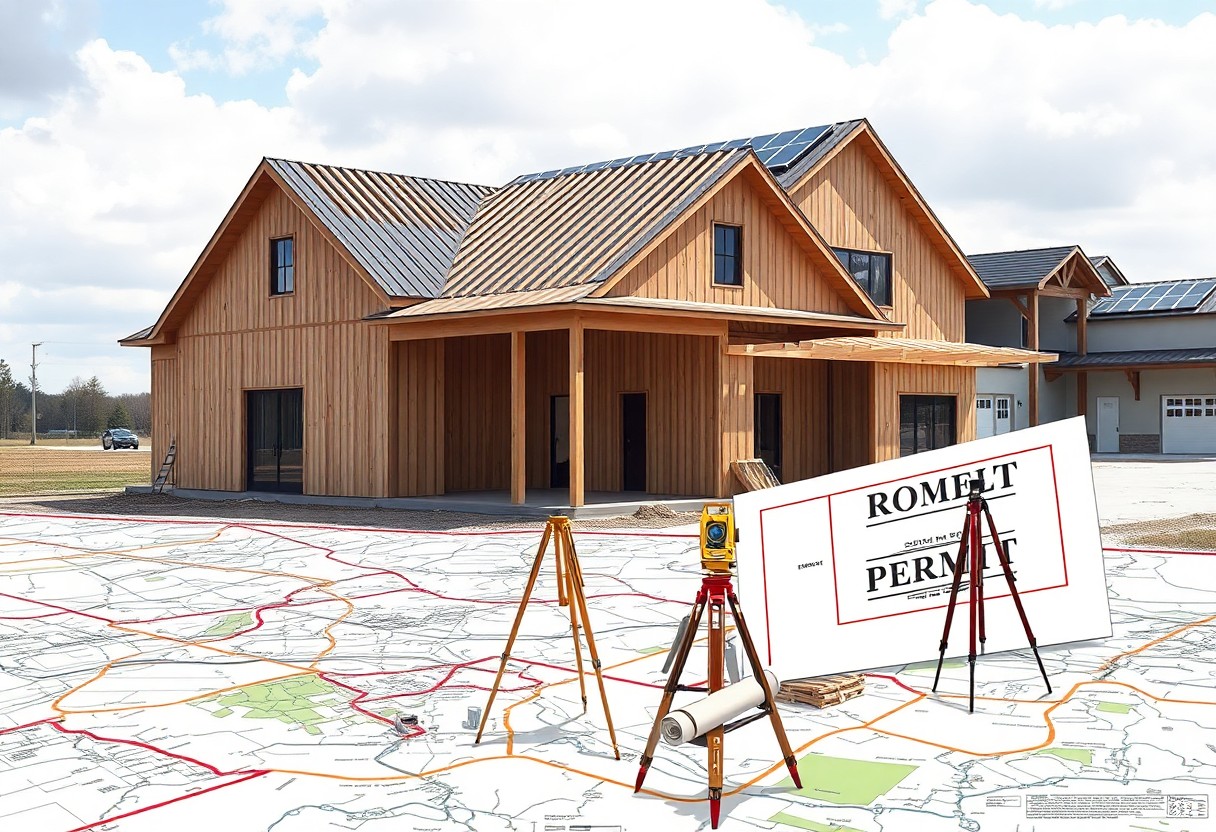
After confirmed zoning, start with a pre-application meeting with your building department, then submit a site survey, engineered foundation and framing plans, and septic/soils reports. Expect separate permits for building, electrical, plumbing, mechanical and septic; fees commonly range $200-$2,000 and review timelines run 2-12 weeks. Schedule inspections for footings, framing, systems and final; providing a complete packet shortens review and reduces re-submissions.
Common Challenges and Solutions
You’ll face zoning misclassification, setbacks, floodplain restrictions, septic failures and plan-review delays most often. Pursue a pre-application review, hire a local engineer or architect, and apply for a variance or conditional-use permit when setbacks or use conflicts arise. Using a design that meets local dimensional standards and submitting complete, stamped documents cuts rejections; retaining a builder familiar with county procedures speeds inspections and approvals.
For example, in one Midwestern county a homeowner hit a 25-foot setback issue; by commissioning a site re-survey and engineer-stamped drainage plan, then applying for a 10-foot variance, they secured approval in eight weeks and paid about $1,200 in combined fees. If your permit is denied, you can appeal within typical 30-day windows or request administrative review; budgeting $500-$1,000 for professional support often halves time-to-approval.
Future Trends in Barndominium Zoning
Expect local planners to expand rural-residential and mixed‑use overlays that explicitly mention post‑frame and metal‑clad homes, with minimum lot sizes commonly staying in the 0.5-2 acre range; you should prepare for faster pre‑app meetings, emphasis on energy and stormwater compliance, and build schedules of 3-6 months when using contractor-ready plans, all of which will shift how you time permits, site work, and financing.
Changes in Legislation
You’ll see more jurisdictions update land‑use tables and conditional‑use rules to allow residential metal buildings; look for ordinance changes addressing setbacks, lot cover, wastewater capacity, and solar access. Some counties now reference post‑frame construction in zoning text or offer form‑based code pilots-checking state model ordinances and recent county code amendments lets you identify which permitting shortcuts or design standards apply to your parcel.
Evolving Perceptions of Barndominiums
Buyers and planners increasingly view barndominiums as legitimate housing when finished to residential standards: you should plan for residential‑grade insulation, windows, porches, and interior layouts of 1,200-3,000 sq ft to compete on MLS; improved curb appeal and documented compliance with IRC or local codes materially raise resale prospects and neighborhood acceptance.
On financing and approvals, you’ll find lenders and insurers more willing to underwrite barndominiums that meet IRC/IBC standards and have comparable sales; keep detailed cost breakdowns, builder certifications, and completed inspections to support appraisals. Municipalities with successful examples often cite a handful of comps and permit histories that you can reference during your review and variance requests.
Conclusion
Upon reflecting on “Barndominium Legal Zoning 101 – What You Must Know Before You Build”, you should verify local zoning classifications, secure permits, assess building codes, consult planners or legal counsel, and plan site use to avoid delays and fines; proactive compliance protects your timeline, budget, and investment while ensuring your barndominium meets safety and land-use requirements.
FAQ
Q: Can I build a barndominium on my property?
A: Start by confirming your property’s zoning district and permitted uses with the local planning or zoning office. Some zones expressly allow residential or agricultural structures; others require a conditional use permit, rezoning, or an agricultural-use qualification tied to active farming. Check lot size, setbacks, height limits, maximum lot coverage, floodplain and wetlands restrictions, and any conservation overlays. If the zoning code is unclear, request a zoning verification letter or pre‑application meeting; if necessary pursue rezoning or a variance (processes that involve public notice, hearings, fees, and timelines that can span weeks to months).
Q: Which permits and inspections will I need for a barndominium?
A: Typical requirements include a building permit plus trade permits for electrical, plumbing, mechanical and HVAC. Submittal documents usually include a site plan, engineered foundation and roof plans, floor plans, energy compliance documentation, soil/perc tests for septic, and utility connection plans. Expect staged inspections: footing, foundation, framing, rough‑ins, insulation, and final. Additional permits may be required for septic, well, driveway/culvert, septic drainfield setbacks, and any floodplain development. Fees, required professional stamps, and inspection checklists vary by jurisdiction.
Q: How do zoning rules differ from building codes for a barndominium?
A: Zoning controls land use, density, lot layout, setbacks, height, and permitted activities on the parcel. Building codes (e.g., IRC/IBC and local amendments) set construction and safety standards-structural, fire, egress, insulation, plumbing, and electrical. Both sets of rules apply: zoning determines whether and where you can place the structure; building codes determine how it must be built. Occupancy classification (residential vs accessory/agricultural) affects code requirements such as egress, fire separation and energy compliance, so clarify intended use early.
Q: Do HOAs, easements, or utility access affect barndominium projects?
A: Yes. Homeowners association covenants can restrict exterior materials, colors, rooflines, building types or require architectural approval; HOA approval is separate from municipal permits. Recorded easements, right‑of‑ways and conservation restrictions can limit building locations and site work; check plat and title documents. Utility availability and extensions (water, sewer, gas, electric) influence feasibility and cost; remote sites may require wells, septic systems or costly service extensions and impact/connection fees. Verify all restrictions before finalizing plans.
Q: What are the options if my parcel’s zoning doesn’t allow a barndominium as planned?
A: Options include applying for a rezoning to a district that permits your intended use, seeking a conditional use permit (CUP) if the use is permitted with conditions, or requesting a variance for dimensional exceptions like setbacks or height. Each route requires an application, supporting documents, public notice and hearings; decision criteria include compatibility, traffic, environmental impacts and neighborhood character. Engage a land‑use planner or attorney if needed, attend pre‑application meetings, and be prepared to propose mitigation (landscaping, buffers, limits on use) to improve approval chances.
Leave a Reply