Author: info@barndominiuminsider.com

  • “Cozy Meets Industrial – Interior Design Tips For Stunning Barndominium Spaces”

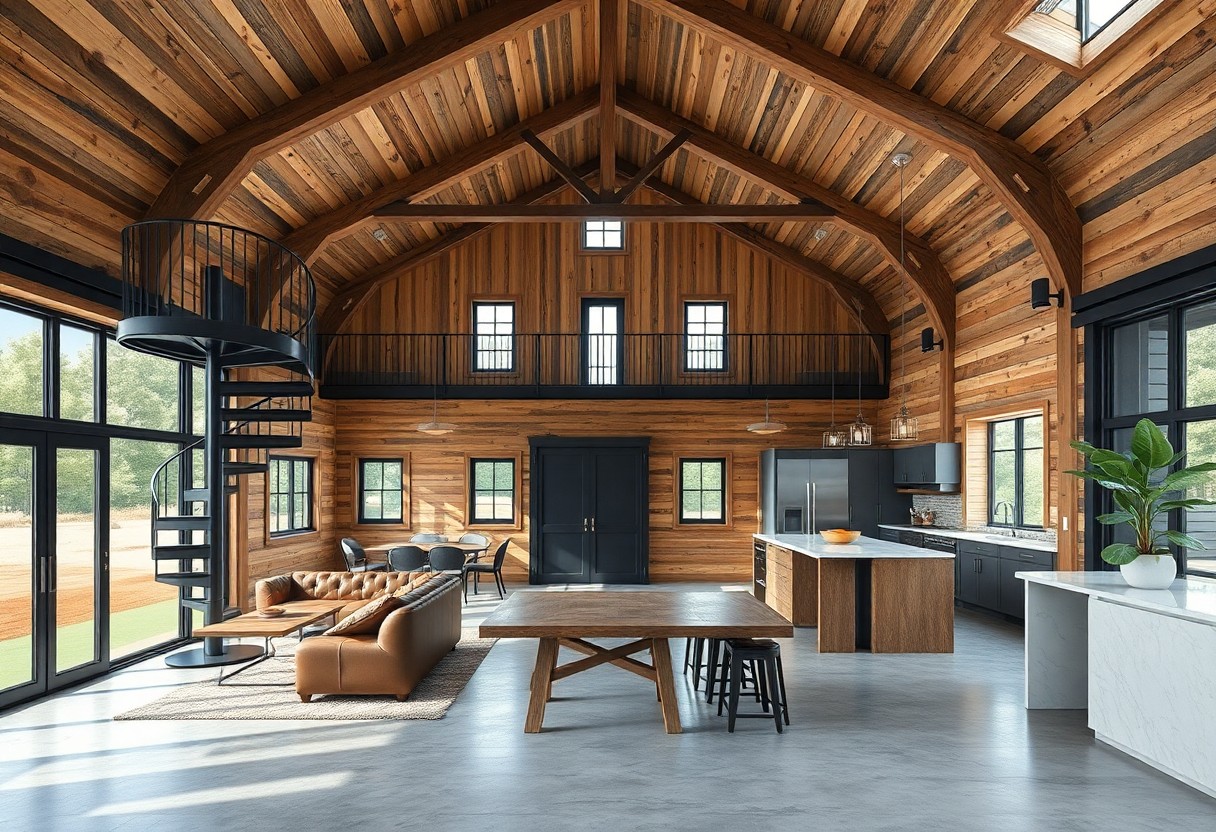
    Barndominium spaces thrive when you blend warm textiles, reclaimed wood, and exposed steel to create your cozy industrial aesthetic that feels lived-in yet refined. Use a neutral palette with textured accents, layer ambient and task lighting, mix raw metals with soft fabrics, define functional zones with rugs and furniture, and incorporate smart storage and greenery to soften the industrial edge.

    Key Takeaways:

    • Balance raw industrial elements (steel, concrete, exposed beams) with warm materials (reclaimed wood, plush textiles, area rugs) to make barndominiums feel both rugged and inviting.
    • Layer lighting and finishes-mix pendants, track and task lights with dimmers, and combine matte blacks, brushed metals, and warm woods to create atmosphere and visual depth.
    • Use open, flexible layouts with clear zones and multifunctional furniture; define areas with rugs, shelving, sliding barn doors, and built-in storage to maximize function without closing the space.

    Understanding the Barndominium Concept

    Beyond the stylistic mix, a barndominium combines a metal or post-frame shell with residential finishes, often yielding open-plan layouts, 10-14 foot ceilings, and integrated shop or storage bays. You can expect common sizes between 1,200-3,000 sq ft; many owners choose steel-kit shells for faster builds. Construction typically cuts framing time and allows flexible zoning of living versus utility areas, making these spaces ideal for blending cozy interiors with industrial bones.

    Definition and Origins

    Originating from barn-to-home conversions in rural America, the barndominium evolved as post-frame and steel buildings gave homeowners affordable, open shells to adapt. You’ll find roots in adaptive reuse trends dating back decades, with modern kit packages and pole-barn methods popularized since the late 20th century. Builders often use prefab steel or timber frames, simplifying permitting and accelerating timelines compared with traditional stick-built homes.

    Benefits of Barndominiums

    You gain cost-efficiencies, durability, and multifunctional space: metal shells resist rot and pests, reducing maintenance, while open plans accommodate living, workshop, and storage without extra framing. Many projects run 10-30% below conventional build costs per sq ft and finish faster, letting you allocate budget to high-impact touches like reclaimed wood accents, custom kitchens, or enhanced insulation for year-round comfort.

    For example, a 2,000 sq ft barndominium with a 600-1,000 sq ft attached shop can be built for roughly $100-$160 per sq ft depending on finishes; you can offset utility costs by adding R-20 to R-30 insulated assemblies or closed-cell spray foam, which often trims heating and cooling bills by 15-25%. Mixed-use layouts also boost resale appeal in rural markets where buyers prioritize garage/workspace integration.

    Key Design Elements

    When you define zones in an open-plan barndominium, play with scale and texture: use exposed steel trusses to emphasize verticality, anchor living areas with 8×10 rugs, and lower pendant clusters over dining to create intimacy. Aim for a 60/40 warm-to-industrial material balance, introduce layered lighting from 2700K ambient to 3000K task, and keep sightlines clear so the industrial shell feels intentional rather than cold.

    Blending Cozy and Industrial Aesthetics

    Bring softness into steel-framed spaces by layering textiles-think a wool rug, linen drapes, and 4-6 leather or velvet pillows-while retaining industrial bones like exposed ductwork and matte-black fixtures. Use warm stains on reclaimed wood and add plants or a 36″ wood-burning stove to offset concrete floors; allocate 5-10% of the floorplan to intimate seating clusters to create human-scale moments within expansive volumes.

    Choosing the Right Materials

    Prioritize materials that age well: reclaimed pine or white oak for flooring, A36 hot-rolled steel for visible beams, and polished or sealed concrete for high-traffic zones. Select finishes that resist wear-water-based polyurethane for wood, epoxy or penetrating sealer for concrete-and stainless or galvanized fasteners to prevent corrosion in barn-style humidity. Plan for maintenance: sealed concrete typically needs recoating every 3-5 years.

    Specify material dimensions and installation steps: choose 3/4″ tongue-and-groove hardwood or 5/8″ engineered planks for stability over radiant heat, acclimate reclaimed wood 7-14 days, and install 6mm cork or underlayment for sound dampening. For steel work, request A36 grade beams with hot-dip galvanized brackets and welded connections; insulate walls to R-21 and roofs to R-38 to control condensation around metal, which in a 2,400 sq ft remodel reduced seasonal temperature swings by ~15%.

    Color Schemes and Textures

    Blend warmth and rawness using a 60/30/10 color split: 60% warm neutrals (greige, taupe), 30% mid‑tone materials like reclaimed wood and leather, and 10% industrial accents such as charcoal steel or oxidized copper. You should layer textures-an 8×10 wool rug, nubby throws, and a distressed leather sofa-to ground high ceilings and open plans. Contrast matte concrete floors with satin wood finishes and soft textiles to make large volumes feel intimate.

    Palette Selection for Warmth

    Start with a warm neutral base-Benjamin Moore Revere Pewter or Sherwin‑Williams Accessible Beige-then add two accent colors: one earthy (terracotta, olive) and one deeper tone (navy or charcoal). You can follow the 60/30/10 distribution and reserve bold hues for pillows, art, and a single focal wall. Use 2700-3000K warm LED lighting to keep pigments looking rich after dusk.

    Incorporating Industrial Finishes

    Introduce industrial surfaces selectively: exposed ductwork, brushed steel hardware, polished concrete, and reclaimed corrugated metal panels. You should limit raw metal to roughly 20-30% of visible surfaces to prevent a cold feel, balancing with wood, wool, and plaster. Opt for powder‑coated or brushed finishes on high‑touch items to combine durability with refined texture.

    When working with concrete, seal it with a matte penetrating sealer to reduce dust and staining, and consider a micro‑topping for damaged areas. You can treat steel with clear lacquer or a controlled patina to manage corrosion; use corten as an isolated accent if moisture is present. Add acoustic treatments-plan 2-4 panels per 500 sq ft-or large upholstered pieces to tame reverberation in open barndominiums while keeping the industrial look intact.

    Furniture and Decor Choices

    Balance industrial bones with cozy silhouettes: you mix reclaimed wood tables (72-96 inches) and powder-coated steel frames with plush wool rugs and leather seating. Use scale to define zones-an 84-96-inch sofa anchors the living area while a 72-inch farm table seats six-and aim for 2-3 primary materials plus 3-5 layered textures to keep the space warm yet structured.

    Functional and Stylish Furnishings

    You should choose modular, multiuse pieces-think a sleeper sectional, storage ottoman, or a kitchen island at standard 36-inch height with seating for 3-4. Select durable finishes like top-grain leather, kiln-dried reclaimed wood, and powder-coated steel, and maintain 18-24 inches clearance around dining chairs to ensure circulation while prioritizing form and long-term wear.

    Accessorizing with Intent

    You should place accents with purpose: layer an 8×10 jute under a 6×9 wool rug, use 3-5 pillows in varied fabrics, and hang either a single 48×36 statement piece or a gallery of 3-5 frames above a sofa. Add pendant lighting 24-36 inches in diameter over islands and targeted task lamps to create pockets of warmth without visual clutter.

    When styling further, you should limit metals to two finishes (for example, brass and blackened steel) and restrict your palette to three colors plus neutrals to maintain cohesion. Introduce one vintage find per room-a trunk or industrial locker-and arrange vignettes in odd numbers (3 or 5). For instance, pair a 7-foot sofa with a 48×36 painting and a 24-inch sculptural lamp to create a balanced focal point.

    Lighting Solutions

    You should layer ambient, task, and accent lighting to articulate the open-plan volumes of a barndominium; aim for 100-300 lux in living zones and 300-500 lux at work surfaces, then use dimmers to shift mood. Combine high-mounted ambient fixtures with targeted pendants over islands and adjustable wall washers to highlight raw textures like exposed steel and reclaimed wood, ensuring you balance brightness with warmth (2700K-3000K) for a welcoming industrial-cozy feel.

    Natural vs. Artificial Lighting

    You can exploit clerestory windows and south-facing glazing to flood large spaces with daylight-outdoor illuminance ranges broadly from ~1,000 lux on overcast days to 100,000 lux in direct sun-so plan glazing, light shelves, and skylights to capture that variability. When daylight falls short, back it with layered artificial light: task fixtures of 300-500 lux at counters, 150-250 lux for circulation, and dimmable ambient sources to match daylight color temperature for cohesive scenes.

    Industrial Lighting Fixtures

    You should pick fixtures that read industrial but perform: metal pendants, gooseneck barn lights, caged sconces, and linear LED high bays all suit barndominiums. Specify pendants 12-20 inches in diameter with 800-1,600 lumens each over islands, and 4-8 foot linear fixtures delivering 3,000-6,000 lumens above workbenches; favor CRI ≥90 and 2700K-3500K depending on the space.

    Mount pendants about 30-36 inches above an island for 8-foot ceilings and add ~3 inches per extra foot of ceiling height; use narrow beam (15°-25°) for task spots and wide beam (60°+) for ambient fill. Integrate dimmers, occupancy sensors, and smart scenes so you can tint light levels and color temperature throughout the day. For workshop-adjacent areas choose IP-rated fixtures and LED retrofits with 100-140 lm/W efficiency to lower maintenance and energy use while preserving the industrial aesthetic through finishes like matte black, aged brass, or raw steel.

    Maximizing Space Utilization

    Stretch vertical volume by adding mezzanines or lofts-half-lofting a 24×36 bay can yield roughly 400 sq ft of extra usable area-and keep circulation at 36-48 in. to maintain flow. Fit 12-24 in. deep built-ins into structural bays, swap swinging doors for sliding barn doors to reclaim 3-4 sq ft per opening, and cluster plumbing/wiring to reduce wasted corridor space so you can add a pantry or reading nook without expanding the footprint.

    Open Floor Plans

    Define zones with furniture and scale instead of partitions: anchor the living area with an 8×10 rug and a 84-96 in. sofa, use a 4×8 island to separate kitchen tasks and seat four, and vary ceiling height or lighting intensity to signal transitions. You should maintain 42 in. minimum behind islands for single-cook kitchens and 48 in. for multi-cook layouts to preserve usable work and traffic lanes.

    Multi-functional Areas

    Convert guest rooms into dual-purpose spaces by installing a Murphy bed or a fold-down wall bed paired with a built-in desk and shelving; a wall bed can reclaim 60-100 sq ft of daytime floor space. Employ fold-away dining tables (24-30 in. depth when stowed), banquette seating with 18-24 in. under-seat storage, and mobile islands to let a single room serve as office, guest room, and hobby studio.

    In one practical layout, combine mudroom, laundry, and pet-care station along a single 10-12 ft wall: stackable washer/dryer (27 in. depth) under a 24 in. work counter, overhead cabinets 12-15 in. deep, and a fold-down dog-wash basin to keep services centralized. Plan dedicated circuits and task lighting of 300-500 lux for work surfaces, and reinforce framing where loft beds or heavy storage will load joists to ensure long-term performance.

    Final Words

    Drawing together the warmth of cozy elements and the raw edge of industrial materials, you can create a balanced barndominium that feels both inviting and architecturally striking. Prioritize layered textures, thoughtful lighting, and scale to make your open spaces intimate without losing industrial character. Use durable finishes, strategic storage, and curated decor to ensure functionality and personality throughout your home.

    FAQ

    Q: How can I successfully blend cozy and industrial styles in a barndominium without the space feeling cold or overly raw?

    A: Begin by balancing hard and soft elements: expose structural features like steel beams and concrete floors, then counter them with warm wood finishes, layered rugs, and plush textiles. Use reclaimed wood for shelving or accent walls to add patina and warmth, and introduce textiles (wool throws, linen curtains, upholstered seating) to soften echo and visual harshness. Maintain an open layout typical of industrial design but carve intimate zones with area rugs, lighting clusters, and furniture groupings to create inviting pockets throughout the barn-like volume.

    Q: Which materials and finishes achieve an industrial look while keeping the interior inviting?

    A: Combine raw, utilitarian materials-exposed brick, steel, concrete-with warm, tactile finishes such as oiled hardwoods, matte bronze or brass metalwork, and natural stone. Opt for matte or honed concrete rather than high-gloss to avoid a sterile feel; add wood ceiling beams or reclaimed planks to introduce warmth and texture. Choose warm-metal fixtures (aged brass, blackened steel) and pair them with leather or boucle upholstery to maintain industrial character without sacrificing comfort.

    Q: What color palette works best for a cozy-industrial barndominium?

    A: Start with a neutral base-warm greys, soft taupes, and off-whites-to highlight structural elements while keeping the atmosphere warm. Layer in deeper accent tones like charcoal, navy, olive, or terra cotta for depth, and use muted metallics or warm wood tones as secondary accents. Introduce small pops of color via textiles, art, or cabinetry to prevent monotony while preserving the restrained industrial aesthetic.

    Q: How should I approach lighting to make a high-ceiling barndominium feel intimate and functional?

    A: Use layered lighting: ambient illumination from recessed cans or pendant clusters, task lighting over work areas (pendants above islands, adjustable sconces by reading chairs), and accent lighting to highlight textures and architectural features. Hang larger statement fixtures (industrial chandeliers or linear pendants) at varying heights to scale down vast ceilings, and install dimmers to control mood. Maximize natural light with large windows or skylights and soften it with translucent window treatments to reduce glare while preserving coziness.

    Q: What furniture choices and layout strategies optimize comfort and flow in a barndominium?

    A: Define functional zones in the open plan-living, dining, kitchen, workspace-using rugs and furniture orientation rather than walls. Select substantial, comfortable seating (deep sofas, modular sectionals) to anchor living areas and balance industrial proportions. Mix metal-framed pieces with warm wood surfaces, and incorporate multipurpose furniture (storage benches, credenzas) to keep clutter contained. Position circulation paths clearly, allow for natural sightlines to focal points like a fireplace or kitchen island, and consider built-in storage or custom cabinetry to maintain a streamlined, lived-in look.

  • Best Barndominium Kit Companies – Top Picks for Your Build

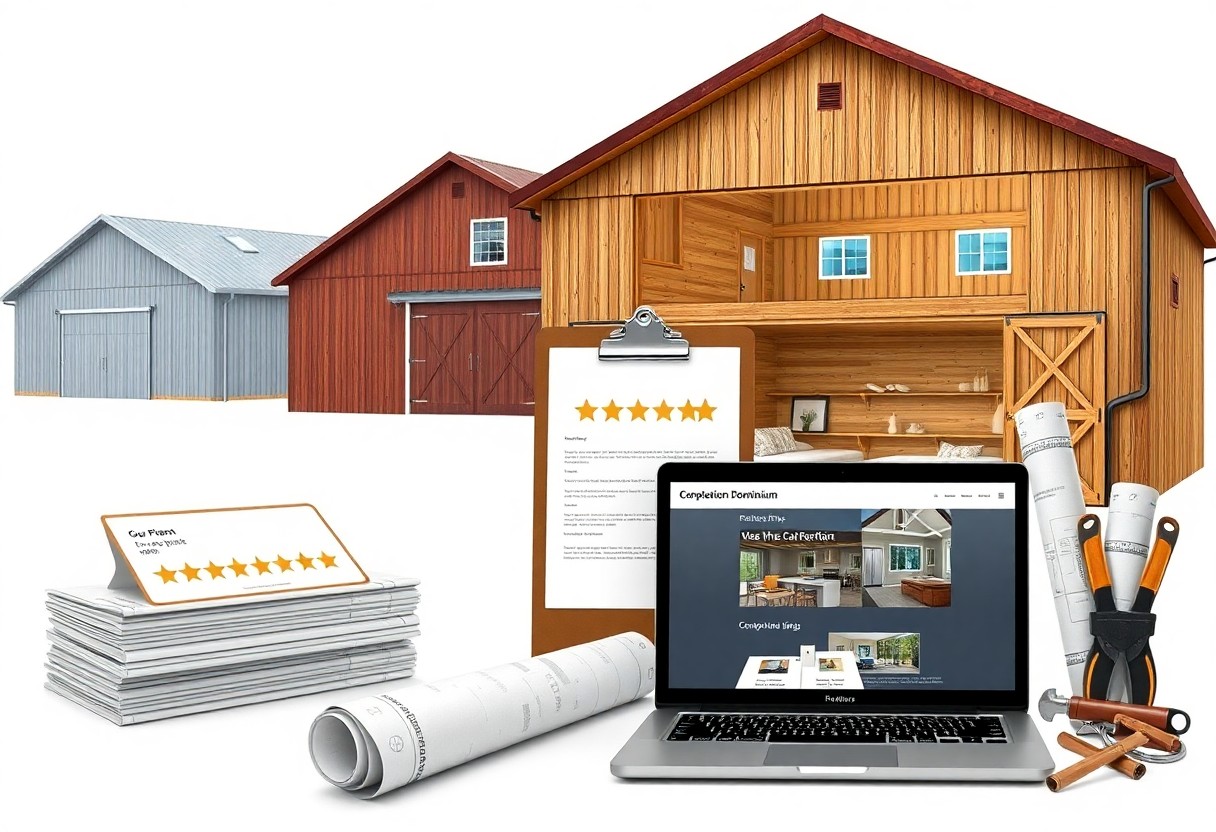
    Most homeowners and builders find that choosing the right barndominium kit saves time and money; this guide helps you compare leading manufacturers by price, materials, customization, warranty, and support so you can select the best fit for your site, budget, and design preferences. You’ll get clear pros and cons, delivery and installation considerations, and tips for vetting suppliers to ensure your build meets code and quality expectations.

    Key Takeaways:

    • Top manufacturers offer complete, customizable kits with quality materials and pre-engineered plans to speed construction and control costs.
    • Compare pricing, warranties, lead times, shipping, and local-code support to avoid unexpected expenses and delays.
    • Choose providers with strong customer reviews, builder resources, and a network of local contractors to simplify permitting and assembly.

    Overview of Barndominiums

    What is a Barndominium?

    Part barn, part condominium, a barndominium pairs a pre-engineered metal or timber building shell with residential finishes to give you open-plan living plus integrated workspace or storage. You’ll often see sizes from roughly 1,000-3,000 sq ft, with large clear spans that let you place a 1,000+ sq ft shop, garage, or workshop under the same roof as living areas. Kits and custom designs both remain common starting points.

    Benefits of Building a Barndominium

    You gain lower upfront shell costs, faster construction, and flexible floor plans that suit workshops, hobby farms, or multi-generational living. Typical savings versus comparable stick-built homes range 20-40% on shell costs, build times frequently compress to months, and steel shells offer long service lives-often 40-60 years-while reducing maintenance and allowing large, column-free interior spaces.

    For more detail, kits for the building shell commonly range $20,000-$60,000 depending on footprint and gauge, and finished build costs typically vary widely based on finishes and site work. You can tailor a 2,000 sq ft layout to include a 1,000 sq ft shop, open living plan, and loft, cutting duplication of outbuildings and often lowering total lifecycle costs through simpler maintenance and adaptable space usage.

    Criteria for Choosing a Barndominium Kit Company

    Prioritize firms that score well on material standards, engineering, customization, lead time and after-sales support. You should expect PE‑stamped plans, typical lead times of 4-12 weeks, and transparent warranties (many offer 10-40 year paint or panel warranties). Compare shell-only kit costs (often $20-$60/ft²) versus finished build estimates ($100-$200/ft²), and verify delivery logistics, site-specific engineering, and customer reviews or build photos before committing.

    Quality of Materials

    Check for Galvalume or G‑90 galvanized panels, commonly 26-29 gauge for roofing/siding, and ASTM‑grade steel for structure; ask for specifications on purlins, girt thickness and fastener types. You’ll want insulation options (R‑13 to R‑30 common) and treated lumber or engineered LVLs where used. Request mill test certificates, paint warranties (20-40 years typical), and sample panels to confirm finish and corrosion resistance.

    Customization Options

    Assess how freely you can change floor plans, roof pitches, window layouts and bay sizes; many companies allow relocatable interior walls, additional garage bays, or pre‑cut door/window openings for modest fees. You should confirm if clear‑span trusses are available (often up to 60-80 ft) for uninterrupted bays, and whether the vendor provides 3D renders, option packages, and structural revisions for site conditions.

    For more detail, verify costs and timelines for specific extras: adding a mezzanine, dormers, upgraded siding, or stamped trusses typically adds 10-30% to the base kit price and can extend lead time by 2-6 weeks. Ask for example builds or case studies showing the exact scope and final cost of comparable customizations, plus any engineering change orders and associated fees so you can budget accurately.

    Top Barndominium Kit Companies

    Company A Overview

    If you prioritize structural strength and quick turnaround, Company A ships 24- or 26-gauge steel kits with engineered plans and a 6-8 week lead time for 1,200-3,000 sq ft models. Their standard package includes R-19 insulation, open-web trusses, and a 12-year structural warranty; typical turnkey estimates range $50-$75 per sq ft, though customization and site prep raise final costs.

    Company B Overview

    You’ll find Company B excels at high-end customization, offering timber-frame and hybrid steel options, 20-30 year roof warranties, and pricing from $65-$110 per sq ft for fully finished kits. They provide stamped engineering for wind and snow zones, CAD shop drawings, and a 4-6 week quote turnaround for bespoke designs up to 4,000 sq ft.

    Beyond basic specs, Company B supports multi-state permitting and has completed case studies-one 2,200 sq ft Mountain build with 50 psf snow-load engineering finished envelope-only in 10 weeks. You can order add-ons like integrated loft systems, custom cupolas, and insulated concrete slab details to streamline your contractor coordination.

    Company C Overview

    If budget and DIY appeal to you, Company C targets entry-level buyers with pre-cut post-frame kits starting around $18,000 for a 1,000 sq ft shell and 8-12 week delivery. They use 26-gauge panels, standard R-13 wall insulation options, and offer modular bay sizes (20′-40′) to simplify foundation and crane needs for smaller sites.

    Company C also provides extensive online build guides and parts-level warranties, which lets you save on labor; typical owner-builder projects using their kits report 6-12 month completion times for finished interiors. You’ll also be able to add pre-wired packages and window/door bundles to reduce subcontractor sourcing.

    Cost Considerations for Barndominium Kits

    Plan on separating kit price from build expenses: basic steel shell kits typically cost $15-$60 per sq ft, while finished barndominiums often land between $70-$150+/sq ft. For a 2,000 sq ft shell you might pay $30k-$120k; foundation, utilities, and finishes can double or triple that figure. You should request itemized quotes and compare delivered kit costs versus turnkey estimates to avoid surprises.

    Budgeting Your Build

    Break your budget into categories: kit, foundation, site prep, utilities, interior finishes, permits, and contingency. For a 2,000 sq ft project expect foundation costs of $10k-$40k, utility hookups $5k-$30k, and interior finishes averaging $40-$100+/sq ft. You should set a contingency of 10-20% and get multiple bids for each major trade.

    Hidden Costs to Consider

    Account for hidden line items like soil tests ($500-$2,000), crane or delivery fees ($1,000-$5,000), septic hookups ($5k-$20k), upgraded footings for frost or expansive soils, HVAC upsizing and permit or impact fees. You should ask kit sellers what they exclude so you can budget accurately.

    In one build, a homeowner bought a $45k kit for 1,800 sq ft but paid $28k for slab reinforcement due to clay soils, $9k for septic, $6k to extend power, and $15k for insulation and finishes-add-ons exceeded the kit cost. To limit exposure you should get a site evaluation, line-item quotes from the supplier, and at least two foundation bids.

    Customer Reviews and Testimonials

    Customer feedback across review sites highlights repeatable patterns you can use when vetting kits: many buyers give average ratings between 4.2-4.8/5, cite rapid shell erection and durable 24-26 gauge steel, while service responsiveness and warranty follow-through separate top firms. You should weigh quantified praise-like multiple reports of 2-4 day shell assemblies for 2,000-2,500 sq ft kits-against the frequency of negative notes about shipping or paperwork.

    Positive Experiences

    Many owners tell you that prefab kits significantly cut framing time-Company A customers reported completing the structural shell on a 2,400 sq ft build in 3 days with two experienced crew members; customer-service response times of 24-72 hours and documented 20-year roof warranties are common selling points. You’ll also find case studies where turnkey engineering reduced permit cycles from months to weeks, saving both time and carrying costs.

    Common Challenges

    Shipping delays and missing components show up regularly in critical reviews: buyers report lead-time slips of 4-12 weeks during peak seasons and roughly 8-12% of complaints reference incomplete fastener packs or unclear installation details. You should expect some punch-list items and plan contingency time and budget-multiple reviewers noted spending an extra $1,500-$5,000 resolving parts or plan-interpretation issues.

    To mitigate these problems you can insist on written lead times and itemized packing lists, inspect deliveries within 48 hours and photograph shortages, and order 10-20% extra consumables up front. Also verify that stamped engineering matches local code before purchase, keep all communication logged for warranty claims (many require notice within 30 days), and consider hiring a local erector familiar with barndominium specifics to close punch-list items faster.

    Tips for a Successful Barndominium Build

    Sequence your build to reduce delays: order the foundation and shell to overlap, lock in a 24- or 26‑gauge steel kit with typical 8-12 week lead times, and separate kit cost from finish work (concrete slabs average $4-8/sq ft; insulation $1-3/sq ft).

    • Obtain stamped plans and permits before materials arrive
    • Secure three bids and written start dates for trades
    • Preorder long‑lead items like windows and HVAC

    Recognizing preordering key components can shave weeks off your schedule.

    Planning Your Space

    Start by mapping daily flows: if your shell is 2,400 sq ft, consider allocating about 1,800 sq ft to living and 600 sq ft to workshop or storage; aim for 10-14 ft ceilings in primary spaces, cluster plumbing within a 20‑ft run to save $3,000-6,000, and plan a 3-4 zone HVAC layout so you don’t oversize equipment for a 2,000-3,000 sq ft layout.

    Working with Contractors

    Require at least three written bids, verify licenses and insurance, and prefer fixed‑price or GMP contracts to limit surprise costs; expect contractor markup of roughly 10-20% above subcontractor rates, a shell erection timeline of 8-12 weeks, and total build time of 4-6 months for a typical 2,000-3,000 sq ft barndominium.

    Insist on a clear payment schedule (common draws: 10% deposit, 30% after foundation, 40% after shell, 20% at completion), written change‑order procedures with a 10‑day response window, lien waivers, and a minimum one‑year workmanship warranty; also visit at least three past projects and request a schedule of values before signing.

    FAQ

    Q: What should I consider when choosing a barndominium kit company?

    A: Evaluate company reputation, product types, and the level of engineering and support they provide. Key factors include: quality of materials (gauge of steel, treated timber, fasteners), availability of stamped structural drawings for your jurisdiction, customization options for floor plans and exterior finishes, warranty terms, delivery logistics, and on-site assembly assistance or certified erectors. Compare real customer reviews and completed projects, verify lead times and shipping costs, confirm any required foundation or concrete scope, and check whether the company offers financing or works with lenders. Ensure the company’s kit aligns with local building codes and that you have access to reliable local contractors for plumbing, electrical, insulation, and interior finishes.

    Q: Which barndominium kit companies are commonly recommended and what sets each apart?

    A: Several manufacturers are frequently recommended for different priorities: Morton Buildings – strong custom design capabilities and a nationwide dealer/installer network for turnkey projects; Legacy Building Solutions – competitive pricing on post-frame and pole barn-style kits with good customization; Armstrong Steel – heavy-gauge engineered steel buildings suited to durable steel shells; SteelMaster Buildings – bolt-together steel kits that simplify DIY erection and reduce erection time; General Steel – commercial-grade pre-engineered buildings with robust engineering documentation; American Barn Company / Homestead-style builders – options that blend traditional barn aesthetics with residential finishes. Match the company to your priorities: full-service custom design, budget-friendly kits, DIY-friendly systems, or commercial-grade engineering and warranties.

    Q: What are typical costs, timelines, and best practices for managing a barndominium kit build?

    A: Costs vary widely: basic shell kits often range from about $20,000 to $100,000+ depending on size and materials; finished barndominiums commonly fall between roughly $80-$200+ per square foot depending on finishes, systems, and labor. Timeline: ordering and fabrication typically takes 4-12 weeks, site prep and foundation can take 2-8 weeks, shell erection often completes in a few days to a few weeks, and full interior build-out can take several months. Best practices include securing stamped plans and permits before ordering, budgeting a contingency of 10-20% for change orders and unforeseen issues, coordinating the foundation contractor with the kit delivery window, hiring or consulting with an experienced general contractor familiar with metal/post-frame builds, confirming insulation and HVAC strategies early, and documenting warranty and post-delivery support terms. Factor shipping, crane or rigging costs for erection, and local utility hookups into your schedule and budget.

  • Luxury Barndominium Plans – Upscale Designs to Inspire You

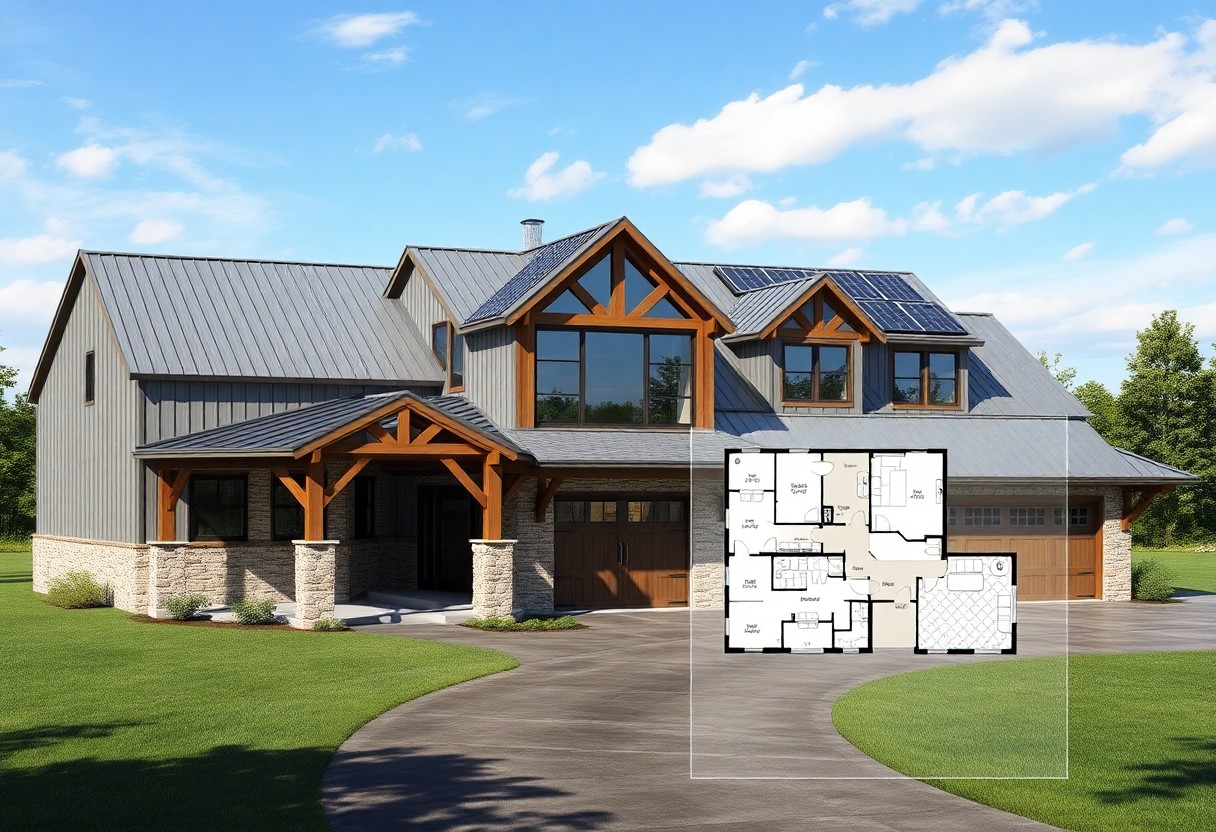
    Luxury barndominiums combine rugged practicality with high-end finishes, offering you flexible plans that support vaulted interiors, expansive windows, and custom materials tailored to your lifestyle. This concise guide highlights upscale design elements, efficient layouts, and premium material choices so you can confidently evaluate floor plans, budget priorities, and customization options. With expert tips on integrating modern amenities and maximizing natural light, you’ll be equipped to turn a barn-inspired shell into a sophisticated, comfortable home that reflects your tastes.

    Key Takeaways:

    • Marries rugged barn architecture with upscale interiors-open plans, exposed beams, and high ceilings create dramatic, livable spaces.
    • Flexible layouts and multifunctional zones (lofts, workshops, guest suites) allow tailoring for family life, entertaining, or hobbies.
    • Luxury finishes, large windows, indoor‑outdoor connections, and smart material choices deliver comfort and curb appeal while helping control cost and efficiency.

    Understanding Barndominiums

    You’ll examine structural systems, material choices, cost ranges and design strategies that make barndominiums distinct, from post‑frame or steel framing to metal roofs and expansive open plans; expect concrete examples like 2,400 sq ft layouts with 12-20 ft ceilings, attached 800-1,200 sq ft workshops, and typical finish timelines of 3-9 months depending on scope.

    Definition and Features

    A barndominium combines a barn‑style exterior-often steel or post‑frame construction and metal siding-with a fully finished residential interior, so your space typically features open floor plans, exposed trusses, lofts, 10-20 ft ceilings, large garage/shop bays and durable finishes that simplify conversions between living, work and storage areas.

    Benefits of Barndominiums

    You gain cost and time advantages: shells can run roughly $50-$100 per sq ft and finished builds commonly $100-$200 per sq ft, while construction often finishes in 3-9 months; durable materials reduce maintenance and wide, flexible bays let you adapt 20-30% of square footage for workshop, rental or multi‑gen use.

    More specifically, metal roofs and steel framing often provide 40-70 years of service life and resist pests and fire better than wood, spray‑foam insulation boosts thermal performance for lower utility bills, and an attached 1,000 sq ft shop can double income potential if you lease it or support a home business, improving long‑term ROI on rural properties.

    Luxury Design Elements

    You’ll see barndominiums fuse industrial scale with refined details: 12-14 foot ceilings, exposed steel trusses, reclaimed oak or wide-plank European white oak floors, and custom millwork that transforms a 2,500-4,000 sq ft shell into a luxury residence; integrated lighting design and layered textures-leathered granite, honed marble, and hand-forged iron-anchor the aesthetic while enhancing resale value.

    High-End Finishes

    Specify materials like quartzite or Calacatta marble countertops, leathered granite island tops, 8-10 foot custom cabinetry with soft-close hardware, and herringbone tile backsplashes to create impact; upgraded finishes typically add $50-$150 per sq ft depending on brands (Sub-Zero, Wolf, Miele) and bespoke elements such as reclaimed beam treatments or artisan plaster walls.

    Modern Amenities

    Outfit your barndominium with smart-home platforms (Control4, Savant), 240V EV charging, a whole-house generator or Tesla Powerwall backup, and zoned HVAC-mini-splits or geothermal-to balance comfort with efficiency; integrated AV, fiber internet, and security systems are now standard in high-end plans to support remote work and entertainment.

    For deeper implementation, plan a 7.1 home theater with acoustic insulation and a dedicated 200-400 sq ft wiring closet, a 50-200 bottle climate-controlled wine cellar, and radiant floor heating beneath tile and stone in baths and kitchens; in one Texas build, adding radiant heat and a 240V EV charger increased perceived luxury and reduced annual heating costs by enabling lower thermostat setpoints.

    Popular Luxury Barndominium Styles

    Among upscale barndo options you’ll encounter Rustic Elegance, Contemporary Chic, Industrial Modern and Farmhouse Luxe-each leveraging open plans, exposed structure and custom millwork. Typical footprints range from 1,500-4,000 sq ft with ceiling heights of 14-20 ft; designers often add floor-to-ceiling glazing, mezzanines and built-ins. Expect upscale finishes to increase costs by roughly $40-$120 per sq ft depending on stone, metal, and custom carpentry choices, and plan mechanical upgrades (ERVs, radiant heat) to optimize comfort in large-volume spaces.

    Rustic Elegance

    You can emphasize reclaimed timbers, wide-plank flooring and hand-forged iron hardware to create Rustic Elegance that feels authentic yet refined. Many projects use reclaimed barn siding, 10-14 inch exposed beams, soapstone or honed granite countertops and integrated mudrooms; a 2,800 sq ft build might allocate 15-20% of the budget to millwork and premium wood finishes to preserve warmth while upgrading performance with modern insulation and mechanicals.

    Contemporary Chic

    You’ll find Contemporary Chic barndominiums use clean steel lines, expansive glazing and minimalist materials-polished concrete, white oak and matte black metalwork-creating a gallery-like interior. Typical strategies include 12-18 ft vaulted ceilings, 8-12 ft sliding glass walls for indoor-outdoor living, and cantilevered mezzanines to maximize views; budgeting often shifts toward high-performance glass and bespoke lighting, which can add $10,000-$40,000 depending on scale.

    You should prioritize thermal performance and detailing when executing Contemporary Chic: use steel I-beams with thermal breaks, high-efficiency low-E glazing (U-values below 0.30) and continuous insulation (wall R-values of R-30-R-40, roof R-50-R-60 in colder zones). Integrate concealed track lighting, LED architectural fixtures and zoned HVAC or ductless mini-splits for precise comfort in open volumes. Consider polished concrete with radiant tubing or large-format porcelain for clean floors, and allocate design dollars to custom stair systems and glass balustrades to maintain the minimalist aesthetic while meeting structural and code requirements.

    Floor Plans and Layouts

    When configuring your layout, think in terms of square footage and flow: many luxury barndominiums span 1,800-3,000 sq ft with 10-14 ft ceilings and open living cores, while master suites often occupy 300-500 sq ft with private patios. Place service zones-kitchen, laundry, mudroom-along one wall to simplify plumbing and lower build costs by up to 15%. You can allocate a 400-600 sq ft loft or office above the garage for flexibility.

    Open Concept Designs

    Open-concept designs maximize the barn aesthetic by combining living, dining, and kitchen into uninterrupted space often 30-40 feet across, with islands 8-12 feet creating anchored zones. You can incorporate exposed steel trusses and 10-14 foot ceilings to emphasize volume, while acoustic panels and recessed shelving control echo. In a 2,400 sq ft plan, dedicating 800-1,200 sq ft to the great room creates a dramatic entertaining core without sacrificing private bedrooms.

    Multi-Story Options

    Choosing multi-story options lets you stack private suites above the living core, creating 2-3 levels with floor-to-floor heights of 10-12 feet and saving up to 20% of footprint compared to single-story plans. You should locate stairs and elevator cores adjacent to mechanical chases to streamline HVAC and plumbing, and consider long-span trusses or interior load walls to maintain open ground-floor spaces.

    If you plan a second floor, expect structural and code implications: adding a full second floor often requires reinforced foundations and shear walls that can raise costs 10-25%. You can mitigate this by using prefabricated floor trusses and steel beams, or by opting for a partial loft-example: a 600 sq ft mezzanine for a home office and two bedrooms above a 2,400 sq ft great room preserves volume and trims material needs by roughly 15%. For accessibility, budget $30,000-50,000 for a residential elevator.

    Interior Design Inspiration

    You’ll elevate your barndominium by focusing on scale and material contrasts: pair 6-8″ reclaimed oak planks with matte black steel, use a 60/30/10 color split, install layered lighting (pendants 30-36″ above islands, wall sconces 60″ from floors), and ground seating with 8×10 or 9×12 rugs; built-in cabinetry and concealed storage keep the open plan airy while highlighting structural beams and high ceilings.

    Color Palettes

    Adopt a 60/30/10 approach: 60% warm neutrals (example: Benjamin Moore Revere Pewter HC-172, LRV 55), 30% mid-tones like slate blue or olive green, and 10% accents in brass, terracotta, or matte black; choose eggshell for walls and satin for trim to balance light reflection, and test samples on 12″ squares since natural light shifts color perception by up to 20% across the day.

    Furnishing Tips

    Scale pieces to your room: in a 20×25 ft great room pick sectionals 120-140″ wide, coffee tables 16-18″ high, and maintain 18-24″ between seating and tables; favor low-profile silhouettes under beams, mix leather and wool for texture, and fix large pieces to floor plans rather than centering on walls to preserve flow.

    • Anchor seating with rugs at least 8×10 ft so front legs sit on the rug.
    • Choose a sectional depth of 36-42″ for a lounge feel, or 30-34″ for upright seating.
    • Any oversized furniture should be balanced with open shelving or a 36″ walkway to maintain circulation.

    For circulation and function plan 36″ minimum clear paths in main corridors, allow 42-48″ behind dining chairs for service, and size dining tables to occupancy-36×72″ seats six comfortably, 48×96″ seats eight to ten; you’ll keep living zones wearable and comfortable while showcasing the barn’s volume.

    • Use modular storage units (24-36″ deep) to hide HVAC and utilities without losing floor area.
    • Layer lighting: 300-400 lux for task zones, dimmable ambient at 100-150 lux for lounges.
    • Any large accent pieces should repeat a color or material from another zone to create cohesion.

    Building Considerations

    You should start with structural decisions like clearspan steel frames versus timber post-and-beam-steel allows 40-60 ft spans for dramatic open rooms without interior columns. Factor in insulation targets (R‑21-R‑30 walls; R‑30-R‑60 roof) and waterproofing details for metal envelopes. Expect permit, utility hookup, and site-prep to add 5-10% to schedules and budget, and plan mechanical routing early to avoid costly mid-build relocations.

    Budgeting for Luxury

    When aiming upscale, you should plan $180-$350 per sq ft depending on finish level and custom systems; a 3,000 sq ft build at $220/sq ft totals about $660,000. Allocate 10-15% contingency and 15-20% for soft costs (engineering, permits, design). Prioritize spending on envelope performance, high-efficiency HVAC, and a chef-grade kitchen to maximize long-term value.

    Selecting the Right Contractor

    You should get at least three bids and compare detailed scopes, not just totals; require licensing, insurance, five recent references, and a portfolio with similar metal- or timber-framed projects. Demand a clear timeline-many 2,500-3,500 sq ft barndominiums finish in 6-12 months-and define change-order processes and payment milestones before signing.

    You should verify warranties and insurance: insist on Builder’s Risk and general liability, request a subcontractor list, and expect a GC markup of 10-20%. Visit an active job site, contact past clients about punch-list responsiveness, check the state contractor board for complaints, and include milestone payments tied to inspected deliverables plus lien waivers to protect your investment.

    Conclusion

    So you can confidently select a luxury barndominium plan that reflects your lifestyle, combining refined materials, thoughtful spatial planning, and energy-efficient systems to elevate comfort and resale value; by prioritizing your needs and working with experienced architects and builders, you ensure a durable, elegant home that delivers both rural charm and upscale living.

    FAQ

    Q: What design elements define a luxury barndominium and how can plans transform a simple shell into an upscale residence?

    A: Luxury barndominium plans prioritize proportion, material contrast, and intentional flow. Key elements include high, exposed-ceiling volumes with engineered trusses, large glazing arrays for daylight and views, a clear separation of public and private zones, and integrated indoor-outdoor living with covered porches or courtyards. Upscale finishes-custom millwork, stone or tile accent walls, engineered hardwood or polished concrete floors, and designer lighting-elevate the aesthetic. Mechanical considerations such as high-efficiency HVAC, acoustical treatments, and hidden mechanical chases keep the industrial shell feeling refined. Thoughtful circulation (mudroom/boot room, service corridors, pantry adjacency to the kitchen) and built-in storage systems maintain the clean, high-end look while maximizing functionality.

    Q: How much should I budget for a luxury barndominium and which factors drive cost variations?

    A: Expect a wide range depending on location, finishes, and site conditions; upscale barndominiums commonly run from roughly $150 to $350+ per square foot. Major cost drivers are finish level (custom cabinetry, stone, luxury appliances), envelope upgrades (insulated panels, high-R roof and wall assemblies, thermal breaks), foundation complexity and site work (grading, driveway, utilities), specialized structural elements (wide-span trusses, mezzanines), and mechanical systems (HVAC zoning, radiant heat, smart-home controls). Design and permitting fees, bespoke features (elevators, wine cellars, large glass walls), and local labor rates also significantly affect total. Build a contingency of 10-20% and allocate separate budgets for landscaping and exterior amenities to avoid scope creep.

    Q: What should be included in plan sets and how do I work with designers and builders to achieve a high-end result?

    A: A complete plan set for an upscale barndominium should include site plan and grading, foundation and structural framing plans, detailed roof and connection details for metal systems, HVAC/plumbing/electrical schematics, interior elevations for kitchens and baths, finish schedules, window/door schedules, and specifications for insulation and waterproofing. Collaborate with a designer or architect experienced in mixed-material structures, use 3D models or renderings to validate spatial and material choices, and develop a finish palette early. Vet builders by portfolio, request references for similar projects, and obtain fixed-price bids for well-defined scopes. Incorporate mock-ups for critical finishes, stage selections to keep the schedule, and document allowances clearly in contracts to control change orders and ensure the finished product matches the upscale vision.

  • Buying a Barndominium – What Every Homebuyer Must Know

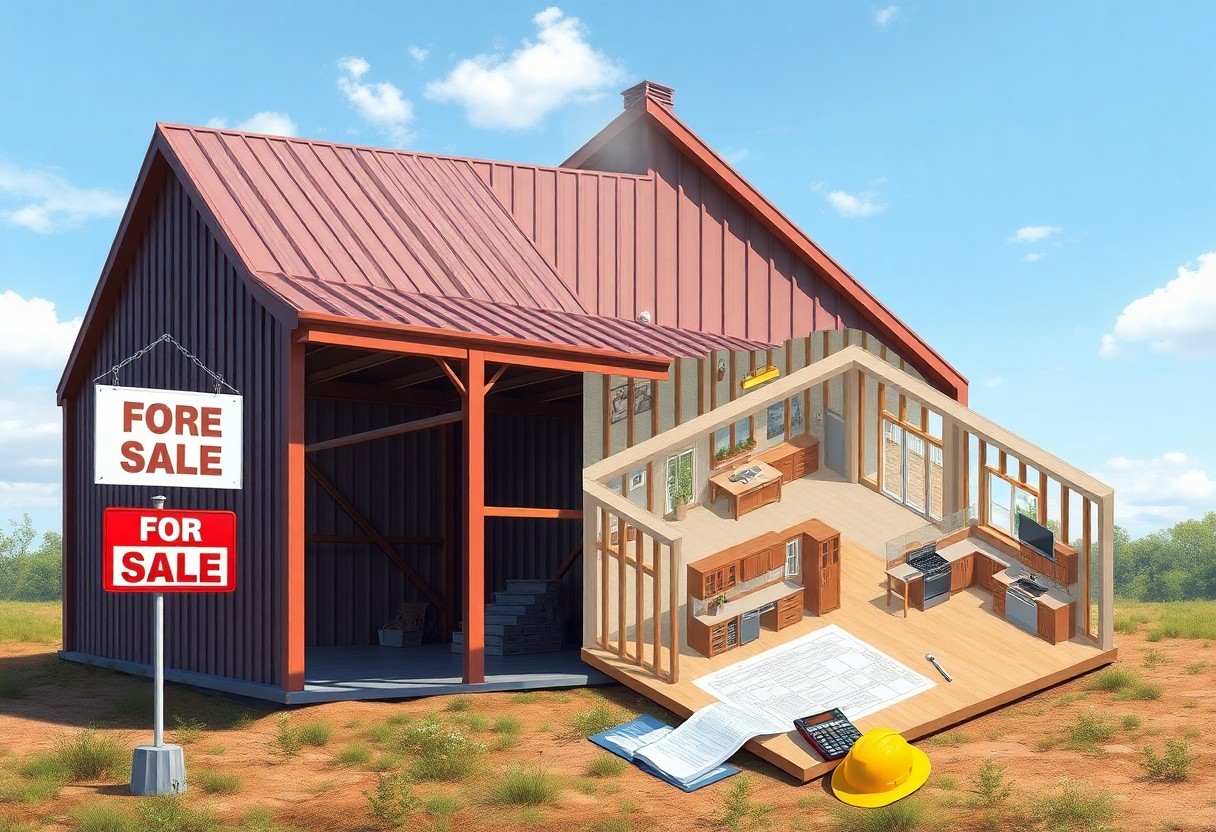
    Over the past decade barndominiums have grown in popularity, and when you consider one as your next home, you should weigh design flexibility, zoning and building codes, insulation and energy efficiency, resale value, and contractor experience; understanding cost breakdowns, financing options, and maintenance needs will help you make informed choices so your barndominium meets lifestyle, budget, and long-term investment goals.

    Key Takeaways:

    • Confirm zoning, setback, floodplain and other local code requirements; secure permits and verify septic/well and foundation/site-prep needs before buying.
    • Know the build type and true costs: metal shell lowers framing expense but finish-out, insulation, HVAC, moisture control and insurance drive the final budget.
    • Plan financing and resale: lenders often treat barndominiums as custom homes-use experienced builders, a detailed contract, realistic appraisal expectations and a contingency fund.

    Understanding Barndominiums

    You should evaluate how construction type, site prep, and intended use interact-post-frame or steel shells change foundation needs, clear-span interiors affect HVAC design, and attached workshops influence electrical capacity; typical build windows run 2-6 months and finish levels drive costs more than the shell itself, so plan budgets and utility hookups early to avoid surprises.

    Definition and Features

    You’ll find a barndominium blends a barn’s structural system with full-time living space: metal siding/roof, concrete slab or crawlspace, open clear spans often 30-60 ft, large overhead doors, and flexible loft or mezzanine layouts; finishes range from basic drywall to high-end kitchens, and many use post-frame construction for faster, lower-cost shells.

    Advantages Over Traditional Homes

    You can save time and money because shells are simpler and often cheaper per square foot-typical ranges are roughly $60-$150/ft² depending on finishes-and build schedules of 2-6 months beat many stick-frame projects; durability of metal roofing and siding also reduces maintenance and long-term replacement costs.

    You’ll also gain versatility: combining living space with a 1,000-2,000 ft² workshop eliminates the need for separate outbuildings, cutting land-use and utility extension costs; for example, a 2,000 ft² shell at $80/ft² can cost about $160,000 before finishes, whereas adding similar detached shops can push total project costs 20-40% higher and lengthen permitting and inspection timelines.

    Financing a Barndominium

    Financing a barndominium demands that you match lender type to build method: post-frame or steel-shell builds often qualify for construction-to-permanent loans, while modular or non-permanent structures may force chattel loans. Expect lenders to request detailed plans, a builder contract, and an itemized budget; typical construction loan underwriting asks for 20-30% down if land isn’t fully paid, and appraisal-based loan amounts usually cover 65-80% of combined land plus projected construction costs.

    Mortgage Options

    You can pursue a single-close construction-to-permanent loan (one closing, converts to a 15-30 year mortgage), a stand-alone construction loan (interest-only during build, then refinance), or specialty programs like VA or USDA if you qualify and the property meets occupancy and site rules. Draw schedules fund work in stages, lenders inspect at major milestones, and rates on construction loans typically run 0.5-1.5% higher than permanent mortgages; chattel loans exist if your build is classified as personal property.

    Budgeting for Construction

    Plan per-square-foot costs conservatively: lower-end barndo shells start around $100-$130/sq ft for basic finishes, typical mid-range builds run $130-$200/sq ft, and high-end finishes exceed $200/sq ft. You should also budget $5k-$50k for site prep (septic, well, grading), $1k-$5k for permits, and include a contingency of 10-20% to cover change orders and unforeseen site issues.

    For example, a 2,000 sq ft mid-range barndominium at $140/sq ft equals $280,000 for construction; add $30,000 site work, $20,000 foundation and utilities, and $3,000 permits. With a 15% contingency ($47,000) your project estimate totals about $380,000. Track costs against draw schedules, require lien waivers, and plan for 5-10% retainage on each draw to ensure punch-list completion before final conversion to the permanent mortgage.

    Choosing the Right Location

    Prioritize parcels with good site access, stable soils, and minimal flood risk to control build and insurance costs; aim for locations within a 30-45 minute commute if proximity to schools and jobs matters. You should map topography, solar exposure for passive/heating design, and existing driveways-steep grades above 15% will increase excavation and foundation costs substantially. Investigate nearby development plans and ask local planners about future road or utility projects that could affect value and construction timing.

    Zoning and Land Restrictions

    Check zoning maps and county ordinances for permitted residential uses, minimum lot sizes (often 1-5 acres in rural districts), setback rules (commonly 20-50 ft), and accessory building limits; agricultural or mixed-use zoning can restrict primary residences or require a conditional use permit, which often takes 30-90 days to approve. You should also verify HOA covenants and deed restrictions that may prohibit metal exteriors, certain rooflines, or short-term rentals, since compliance affects design and resale.

    Access to Utilities and Services

    Verify availability of electric service, municipal water/sewer, broadband, and emergency response times before buying: many rural barndominium sites require a percolation test for septic and a drilled well (typical domestic wells are 100-400 ft deep); expect septic installs generally in the $3,000-$10,000 range for conventional systems. You should contact local utilities to confirm nearest pole/pipe location and any line-extension fees that will factor into your budget and timeline.

    If utilities aren’t nearby, get written line-extension estimates from the utility company-extension costs commonly range widely (roughly $20-$100 per linear foot depending on terrain and permits), so running service 1,000 ft can be tens of thousands of dollars. You should also explore alternatives like engineered septic systems ($10,000-$25,000 for complex sites), drilled wells, or off-grid packages (solar plus batteries often $15,000-$40,000) and obtain county health and utility approvals before closing to avoid surprise costs or delays.

    Designing Your Barndominium

    You’ll want to treat the metal shell as a flexible canvas: plan for open sightlines, 10-14 ft ceiling heights, and strategic placement of plumbing and electrical to cut retrofit costs. Use common footprints like 30×40 or 40×60 to control material pricing, orient living spaces to maximize southern light, and specify insulation targets (walls R-19, attic R-38) to get predictable comfort and energy bills. Prioritize durable finishes in high-use zones to keep long-term maintenance low.

    Layout Considerations

    Start by zoning: allocate roughly 40% of square footage to living/kitchen, 30% to bedrooms, 15% to garage/shop and 15% to utilities and circulation to balance function and cost. Group wet areas (kitchen, baths, laundry) to shorten plumbing runs and reduce labor. Consider a loft or mezzanine for flexible space, 3-4′ overhangs for weather protection, and egress/ADA needs when siting bedrooms and entries for resale and daily use.

    Customization Options

    You can add exposed timber trusses, a mezzanine, or a 20×20 shop bay with a 10-12 ft roll-up door to tailor the shell to lifestyle and work needs. Finish choices-from board-and-batten siding to quartz countertops-drive cost and durability; adding a 20×20 garage bay typically increases build cost by roughly $10,000-$30,000 depending on finishes. Choose systems (radiant floor, mini-split heat pumps) that match your climate and open-plan layout.

    For deeper customization, pick systems and materials that align with performance goals: ductless mini-split heat pumps (12,000-36,000 BTU) suit open volumes, while insulated concrete slabs with hydronic radiant heat improve winter comfort in colder zones. Specify window U-values ≤0.30 for energy savings, and consider pre-plumbing for future baths or an in-law suite to increase flexibility; one 40×60 conversion produced 2,200 sq ft living plus an 800 sq ft shop, maximizing resale and utility.

    Building Process Overview

    When you sequence the build, start with site prep and a compacted gravel pad or engineered slab-site work often runs 5-10% of total costs. Next, the metal shell or post-frame frame goes up; shells can be erected in days to weeks and typically account for 30-40% of the budget. After that, rough-ins for electrical, plumbing, and HVAC precede insulation and interior finishes, which usually consume the remaining 40-50% and determine final habitability and resale value.

    Hiring Contractors vs. DIY

    You can save 10-30% by doing specialized tasks yourself, but licensed contractors reduce risk: expect general contractor fees of 10-20% plus subcontractor labor that often represents 40-60% of project cost. For a $200,000 build, hiring professionals might add $20k-$40k in markup but brings permits, inspections, warranties and faster timelines; DIY works if you have trade skills, time, and willingness to assume code and liability responsibilities.

    Timeline Expectations

    You should plan for a wide range: simple shell-first builds can close the envelope in 4-12 weeks, while fully finished barndominiums commonly take 4-9 months from permit to move-in. Weather, permit turnaround, and material lead times (HVAC units often 4-8 weeks) are frequent sources of delay, so build buffers into your schedule and budget.

    Breaking timelines into phases helps: permitting 2-8 weeks, site prep and foundation 1-4 weeks (concrete cure adds time), shell erection 1-3 weeks, rough-ins 2-6 weeks, insulation/drywall 2-4 weeks, and finishes 4-12 weeks. For example, a 2,400 sq ft Texas barndominium I referenced finished in 26 weeks largely because of a two-week concrete cure and a six-week HVAC lead time; pre-ordering long-lead items and coordinating one GC can shave weeks off delivery.

    Inspection and Maintenance

    Importance of Inspections

    You should schedule a full structural and pest inspection at least once a year and spot-check the roof and mechanicals every six months; typical inspection fees run $300-$500. Metal panels, sealants, fasteners and any wood framing where moisture accumulates need focused attention for rust, loose screws, rot or termites-catching issues early can prevent $5,000+ repairs down the road.

    Routine Maintenance Tips

    Perform quarterly walk-arounds to spot loose screws, sealant gaps, and gutter blockages; clean gutters twice yearly and service HVAC every 6-12 months. Replace damaged neoprene-washered fasteners and touch up exterior coatings every 5-7 years based on sun exposure. Use stainless or hot-dipped galvanized fasteners in coastal or high-humidity areas to reduce corrosion.

    • Retorque and replace missing panel fasteners every 3 months.
    • Clear gutters and downspouts in spring and fall to avoid water infiltration.
    • After five years, schedule a professional roof-coating inspection to preserve paint and warranty coverage.

    For example, a homeowner in central Texas documented quarterly checks and replaced 24 corroded clips within two years, preventing a leaking ridge line that would have cost about $8,000 to repair; you should keep dated photos and maintenance logs, retain manufacturer manuals, and use 12-14 gauge stainless or galvanized screws in exposed locations.

    • Service HVAC, change filters, and inspect duct seals every 6-12 months.
    • Treat perimeter wood and perform termite inspections annually in high-risk regions.
    • After each major storm, walk the perimeter and check for displaced panels, loose fasteners, or standing water around the foundation.

    Conclusion

    With these considerations in mind, you can confidently assess whether a barndominium fits your lifestyle and budget; evaluate zoning, insulation, and resale potential; plan for contractor selection, warranties, and realistic timelines; and prioritize energy efficiency and long‑term maintenance. By doing due diligence and asking targeted questions, you protect your investment and ensure the finished home meets your needs and expectations.

    FAQ

    Q: What exactly is a barndominium and how do financing and insurance differ from a conventional house?

    A: A barndominium combines residential living areas with a metal- or post-frame barn structure and can be a new build or a conversion of an existing agricultural building. Financing options vary: conventional mortgage lenders will often require the structure to be classified as residential, on a permanent foundation, and appraised like a house; some buyers need construction-to-permanent loans, owner-builder loans, or specialty lenders familiar with post-frame construction. Down payments and terms can be stricter if the property is classified as agricultural or commercial. For insurance, policies must reflect metal-frame construction and use (living plus workshop/garage); obtain a homeowner policy that covers replacement cost, detached-shop exposures, and liabilities for business use if applicable. Provide lenders and insurers with engineering reports, foundation details, and a certificate of occupancy to secure standard residential terms and adequate coverage.

    Q: What inspections, code checks, and permits should I prioritize before buying or converting a barndominium?

    A: Prioritize a structural inspection by someone experienced with metal or post-frame buildings to assess framing, connections, anchor bolts, roof trusses, and mezzanine/support systems. Have a qualified electrician and plumber inspect systems for code compliance, proper grounding, panel capacity, and plumbing vent/septic/well integrity. Confirm insulation type and vapor control to avoid condensation issues, and check for moisture, rust, and pest damage. Verify permits and approvals: building permits for conversion or new construction, zoning confirmation (residential vs. agricultural), septic/well permits, floodplain setbacks, and any local agricultural exemptions that affect habitability. Obtain a soils report for foundation suitability and, if planning modifications, an engineer’s stamped plans. Ensure certificate of occupancy or equivalent documentation is available before closing.

    Q: How do customization, energy efficiency, maintenance, and resale prospects affect my decision to buy a barndominium?

    A: Customization is a major appeal-open layouts, high ceilings, and integrated shop space-but finish quality affects long-term value; higher-end interior finishes and a permanent foundation increase marketability. For energy performance, choose continuous insulation strategies (insulated metal panels, spray foam, or properly detailed cavity insulation with thermal break) and address thermal bridging at steel framing; size HVAC for the combined open space and consider zoning. Maintenance differs from conventional homes: metal exterior care (corrosion protection, sealants, fastener checks), roof seam inspections, condensation management, and routine mechanical servicing are important. Resale depends on location, permitted use, documented permits/warranties, and the perceived permanence of construction-homes that look and are documented as residential typically appraise and sell more predictably than structures labeled agricultural or commercial.

  • Barndominium Ideas Gallery – Creative Interiors & Exteriors

    There’s a curated gallery of barndominium ideas to guide your choices for creative interiors and exteriors, showing how you can combine open-plan layouts, reclaimed wood, industrial metals, and light-maximizing windows to craft functional living spaces; the examples and tips help you plan finishes, storage, and energy-smart upgrades.

    Key Takeaways:

    • Fusion of rustic and modern styles: open-plan interiors, exposed beams, reclaimed wood combined with sleek finishes and industrial accents.
    • Highly customizable, functional layouts: versatile lofts, integrated workshops, and multi-use rooms tailored to lifestyle and budget.
    • Striking exteriors and outdoor living: metal siding, large windows, covered porches, and intentional landscaping enhance curb appeal and usability.

    Overview of Barndominiums

    You’ll find barndominiums blend utilitarian shells with polished living spaces, often lowering construction costs to roughly $50-$150 per sq ft and trimming build time to 3-6 months; typical footprints range from 1,200-3,500 sq ft, letting you scale from weekend retreats to fully finished family homes while reusing steel frames or reclaimed timbers for character and savings.

    Definition and History

    You can trace the modern barndominium back to mid-20th-century barn-to-home conversions, but the contemporary form-steel or timber shells fitted with full residential systems-accelerated in the 2000s with prefab kits and surged during the 2010s thanks to social media; notable examples include Midwest timber conversions and Texas metal-shell homes adapted for year-round living.

    Popularity and Trends

    You’ll see popularity driven by affordability (commonly $50-$150/sq ft), fast timelines (3-6 months), and flexible rural zoning; Instagram and Pinterest exposure amplified interest in the 2010s, and states such as Texas, Oklahoma, and Pennsylvania report higher concentrations of new builds and conversions.

    Beyond cost, you should note design and tech trends: open-plan great rooms, lofted bedrooms, exposed trusses, and mixed-material façades; prefab steel kits can cut labor by up to 30%, while SIPs, spray foam, and PV systems boost efficiency-many owners also convert extra space into Airbnbs or home offices to offset mortgage costs.

    Creative Interior Ideas

    Within your barndominium you can blend form and function by combining exposed timber, mezzanines, and strategic glazing to boost natural light; try 10-20 ft ceiling heights, a lofted office, and built-in storage under stairs to make a 1,200-2,000 sq ft footprint feel expansive while keeping heating costs down with zoned thermostats and insulated metal walls.

    Open Floor Plans

    Open layouts often span 1,200-2,500 sq ft and rely on an 8-10 ft kitchen island as the visual anchor; you can define zones with area rugs, a 6-8 person dining table, and a sectional facing a focal fireplace while using sliding barn doors and acoustic panels to control echo without breaking sightlines.

    Rustic vs. Modern Decor

    Balance rustic and modern by using a 60/40 split-60% warm textures like reclaimed oak beams and leather seating, 40% sleek elements such as polished concrete floors, matte-black hardware, and minimal LED lighting-so your spaces feel layered yet streamlined and your finishes read as intentional rather than cluttered.

    For example, in a 1,800 sq ft Texas barndominium designers used 18 ft vaulted ceilings, 10 in. reclaimed beam accents, a 9 ft walnut island, and polished concrete with in-floor radiant heat; you get tactile warmth from a shiplap feature wall and the efficiency of sealed concrete, while matte-black fixtures and simple pendant lighting keep the aesthetic contemporary and resale-friendly.

    Innovative Exterior Designs

    You can push a barndominium’s curb appeal by mixing classic barn proportions with modern elements: oversized sliding glass doors that open a 12-16 ft living wall, wraparound porches with exposed trusses, and covered patios that extend living space by 200-400 sq ft. Combining a low-maintenance metal roof with stone accents and integrated outdoor kitchens gives a layered look while keeping maintenance low and resale appeal high.

    Architectural Styles

    When choosing a style you can pick gambrel roofs to boost loft area by roughly 40% compared with simple gables, or favor clean-lined modern gables and shed roofs for abundant clerestory light. Industrial aesthetics pair exposed steel and clear-span trusses up to 40-60 ft, while farmhouse or rustic looks use board-and-batten, cupolas, and porches to create familiar, approachable facades.

    Material Choices

    You’ll often balance longevity and aesthetics by pairing standing-seam metal roofs (40-60 year lifespan) with fiber-cement siding or reclaimed wood accents. Stone veneer and concrete bases add thermal mass and durability, while insulated metal panels speed assembly and improve energy performance-common choices when you want low upkeep and a striking exterior.

    In practice you should match materials to climate and budget: standing-seam metal resists hail and wind, fiber-cement handles moisture and requires little painting, and reclaimed wood delivers unique character but needs treatment for pests and UV. Insulated metal panels can provide R-values from moderate to high depending on thickness, letting you meet local code targets more easily while cutting construction time.

    Functional Spaces

    You optimize everyday use by zoning for specific functions-plan a 6×8 mudroom, a 12×16 workshop, and a 24×24 garage in a 1,200-3,000 sq ft barndominium to balance living and utility. Specify 40-60 psf live loads for living areas and 100-150 psf for workshops, route HVAC and plumbing through a central utility chase, and reserve a 10-12 ft ceiling bay for mechanical access or loft storage to keep systems serviceable without sacrificing open-plan aesthetics.

    Home Offices

    For a productive home office, give yourself a 10×12 footprint with a 30″-deep desk and 60″ of storage wall shelving; add a 4×6 clerestory or 3×5 operable window for daylight and a dedicated 20A circuit plus wired Ethernet (1 Gbps) for reliability. Use STC-45 partition assemblies or a 4″ double-stud wall to reduce noise from adjacent workshops, and incorporate recessed task lighting with 300-500 lux at the work surface.

    Indoor-Outdoor Living

    Sliding or folding glass systems-12-16 ft openings-transform a central great room into an alfresco extension, connecting to a 200-400 sq ft deck with a 10 ft overhang for shade. Include a 36″ outdoor grill module and service runs for a mini-kitchen, and spec low-threshold, thermally-broken frames to maintain energy performance when closed.

    Detail matters: specify a 1/4″ per foot deck slope for drainage, marine-grade stainless for exterior appliances, and motorized screens or retractable awnings for insect control and sun management. In one case study, a 2,400 sq ft barndo used a 16′ bi-fold wall and composite decking to create a year-round living area with integrated radiant heat beneath the indoor tile extending to the threshold for a seamless transition.

    Sustainable Barndominium Options

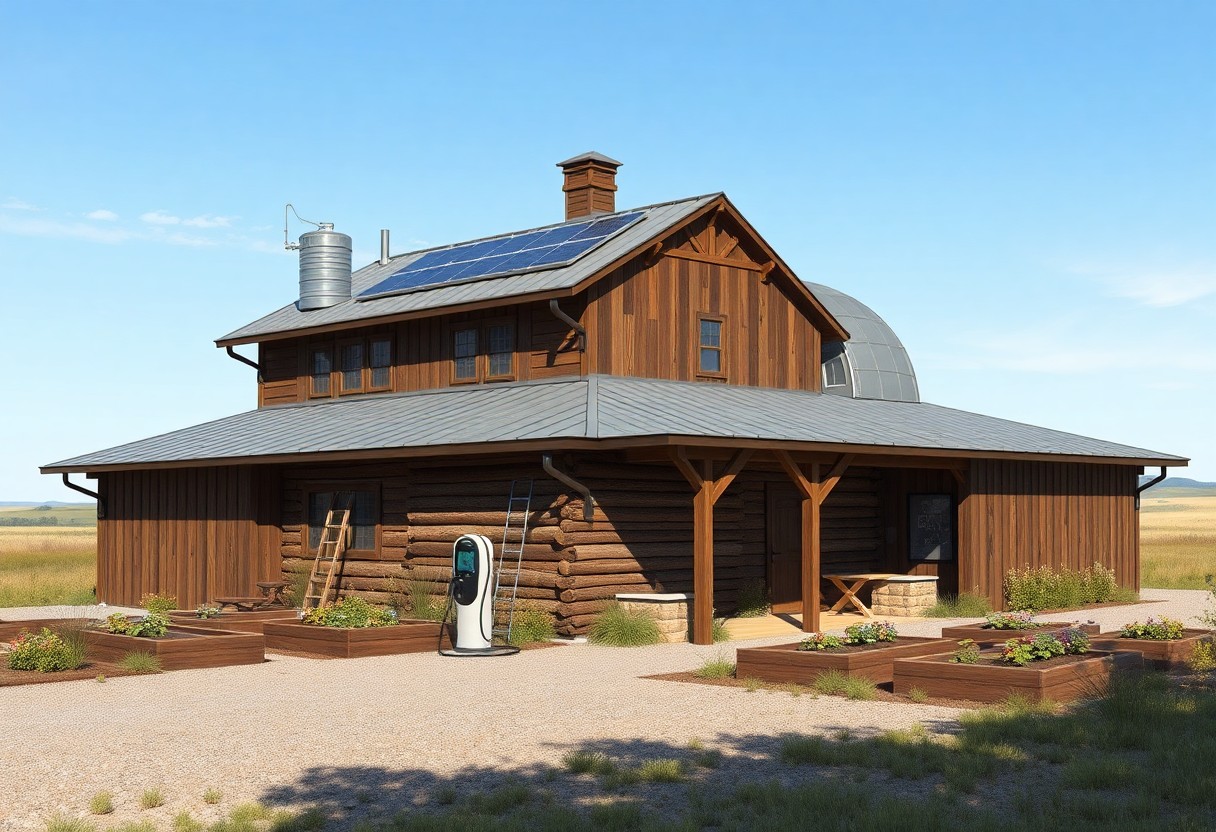
    Your barndominium can hit low-energy or near net‑zero performance by combining a 4-10 kW solar array and 10-20 kWh battery storage with high‑performance insulation (attic R‑49, walls R‑20) and passive solar orientation. Add a 300-500 gallon rainwater tank for irrigation and graywater use, plus a green roof or reflective metal roofing to cut roof surface temperatures by 10-20°F. These measures lower operating costs while preserving the barn aesthetic you favor.

    Energy-Efficient Features

    You reduce heating and cooling loads dramatically by installing a cold‑climate air‑source heat pump (HSPF 9-11) or a ground‑source system (COP 3-4), paired with an ERV/HRV achieving 70-90% heat recovery. Target airtightness under 3 ACH50, use LED lighting and smart thermostats to shave 10-15% from energy bills, and zone HVAC with mini‑splits for 20-30% efficiency gains in open plan layouts.

    Eco-Friendly Materials

    You can specify reclaimed barn siding, FSC‑certified lumber, CLT panels or SIPs to reduce embodied carbon and speed construction; SIPs often improve envelope performance by 20-50% compared with stick framing. Choose low‑VOC paints (≤50 g/L), recycled‑content steel for the shell, and hempcrete or cellulose insulation for healthier indoor air and better moisture buffering.

    You should vet material sources with Environmental Product Declarations (EPDs) and certifications like FSC or GREENGUARD, and prefer manufacturers offering recycled content and end‑of‑life takeback. For roofing choose metal with a 40-70 year lifespan and high solar reflectance; for interiors favor formaldehyde‑free cabinetry and cork or reclaimed hardwood floors to cut lifecycle impacts while keeping maintenance needs low.

    Cost Considerations

    Expect total costs to vary widely based on size, finishes and site work: basic metal-shell barndominiums often run $70-$150 per sq ft, while fully finished homes commonly reach $120-$200+ per sq ft. You should factor in foundation, utility hookups and site prep, which typically add $10,000-$50,000, and budget a 10-15% contingency for unforeseen expenses.

    Budgeting for a Barndominium

    Break your budget into clear line items: allocate 35-50% for shell and exterior, 25-35% for interior finishes and cabinetry, 15-25% for mechanical, electrical and plumbing, and 5-10% for site work and permits. You should set a 10-15% contingency and obtain at least three detailed bids, then track change orders and compare contractor allowances to estimated costs to avoid surprises.

    Financing Options

    Explore construction-to-permanent loans, USDA rural loans if your property qualifies, and VA or conventional mortgages once the build is complete. Many lenders require 20-25% down for construction loans and offer interest-only payments during the draw period. You can also consider tapping home equity or personal loans for smaller budgets, but compare interest rates and repayment terms before committing.

    When you apply, be prepared to submit detailed plans, a signed builder contract and a draw schedule; lenders typically require periodic inspections before each disbursement. Typical setups include monthly draws with 5-10% retainage and conversion to a permanent mortgage within 30-60 days after completion-for example, a $300,000 construction loan might carry interest-only payments during a 12‑month build and then convert to a 30‑year fixed loan at closing.

    Summing up

    From above, the Barndominium Ideas Gallery equips you with diverse interior and exterior solutions-efficient layouts, rustic-modern finishes, energy-wise upgrades, and adaptable spaces-so you can tailor aesthetics and performance to fit your lifestyle and budget. Apply these concepts to make confident design choices that maximize comfort, curb appeal, and long-term value for your barndominium.

    FAQ

    Q: How can I use the “Barndominium Ideas Gallery – Creative Interiors & Exteriors” to plan my own interior design?

    A: Use the gallery as a visual checklist and reference library. Start by saving images that appeal to you and grouping them by room (kitchen, living, bedroom, bath), feature (open lofts, exposed beams, mezzanines), or element (flooring, lighting, cabinetry). For each saved image note specifics: ceiling height, window placement, visible finishes (metal, reclaimed wood, concrete), and furniture scale. Translate those observations into measurable goals-sample ceiling heights, aisle widths, and cabinet depths-so you and your designer/contractor can assess feasibility. Pay special attention to repeated themes across images (e.g., mixed metal and wood, sliding barn doors, integrated workshop space); those indicate design motifs that work together. Finally, create a prioritized list: must-haves, nice-to-haves, and deal-breakers to guide budgeting and phasing of the build.

    Q: What exterior styles and materials featured in the gallery work best for durability and curb appeal in different climates?

    A: The gallery showcases several durable, attractive exterior approaches-corrugated metal with painted steel panels for low maintenance and modern-rustic appeal; board-and-batten or reclaimed timber for warm, farmhouse character; and stone or masonry accents for visual weight and weather resistance. In wet or coastal climates, choose galvanized or coated steel panels and corrosion-resistant fasteners, and specify high-grade sealants and drainage details. For cold climates prioritize raised foundations, insulated metal panels or thick cavity insulation, and robust roof snow load design; in hot sunny regions use reflective roof coatings, deep overhangs, and strategically placed shading. Combine materials for curb appeal-metal siding for the main volume, vertical wood or stone at entryways-and ensure flashing, trim, and window systems are specified for the local climate to prevent moisture and air infiltration.

    Q: How can I adapt gallery ideas to fit a tight budget, obtain permits, and hire the right team for a barndominium project?

    A: Start by selecting a few high-impact, cost-effective design choices from the gallery-open-concept floors that reduce partition costs, exposed structure that saves on finishes, and standardized window sizes to lower glazing expenses. Create a phased plan so vital systems (foundation, envelope, mechanicals) are prioritized and decorative elements can be deferred. For permits: research local zoning for accessory dwelling, agricultural, or mixed-use structures; prepare dimensioned floor plans, structural notes, and site plans showing setbacks and utilities for permit submissions. When hiring, seek contractors and architects experienced with metal-frame or post-and-beam buildings; ask for references and recent barndominium projects, verify licensing and insurance, and request itemized bids to compare scope. Consider a design-build firm or an owner-builder consultant if you plan partial self-management. Factor in hidden costs-utility hookups, septic or well, grading, and insulation upgrades-and add a contingency (typically 10-20%) to your budget.

  • 2 Bedroom Barndominium Plans – Perfect Designs for Small Families

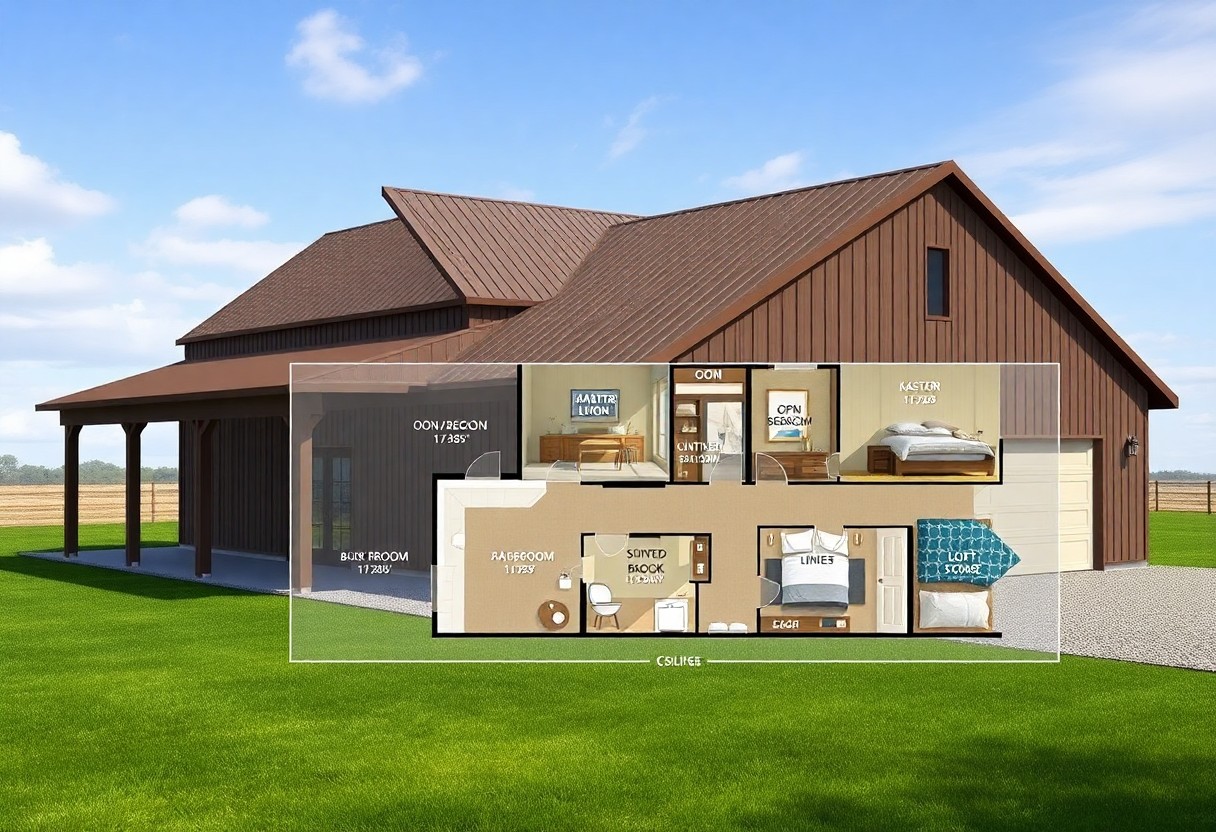
    With smart layouts and durable materials, 2 Bedroom Barndominium Plans – Perfect Designs for Small Families show how you can maximize living space without sacrificing comfort; you’ll find open-concept common areas, efficient storage solutions, flexible floorplans for guests or a home office, and cost-effective construction methods that keep your budget and energy bills low while delivering rugged, modern style.

    Key Takeaways:

    • Open, multifunctional layouts maximize usable space by combining kitchen, dining, and living areas and adding flexible storage and room uses.
    • Simple, metal-based construction and compact footprints lower building and maintenance costs while enabling energy-efficient systems for small-family budgets.
    • Designs prioritize customization and indoor-outdoor living-easy additions like porches, adaptable bedroom placement, and a small home office/guest nook.

    Overview of Barndominiums

    Combining barn-style post-frame construction with residential finishes, barndominiums usually span 1,000-2,000 sq ft and employ steel or timber shells with insulated panels. You get clear-span interiors, high ceilings, and faster builds-often weeks rather than months-while average costs commonly range $70-$120 per sq ft, making them a practical choice for compact, flexible family homes.

    Definition and Features

    When you choose a barndominium, expect a metal- or wood-clad exterior, concrete slab or crawlspace foundation, and open-plan interiors that often allow clear spans of 40-60 ft without load-bearing walls. Features include exposed beams, mezzanines or lofts, integrated garages or workshops, and straightforward HVAC and insulation upgrades for energy efficiency.

    Advantages for Small Families

    For small families, barndominiums deliver efficient two-bedroom layouts with flexible living space, lower construction costs, and easy expansion: you can add a 300-800 sq ft shop or future bedroom without major structural changes. You’ll also benefit from durable materials, simplified maintenance, and adaptable floor plans that support home offices or play areas.

    More specifically, a typical 1,200-1,600 sq ft two-bedroom barndo can allocate 500-800 sq ft to an open kitchen/living/dining zone, with bedrooms separated for privacy and a 1-2 bath configuration optimized for family use. You can include built-in storage, a mudroom, and a 400-600 sq ft attached shop for hobbies or storage, plus options for solar panels and high-R insulation to reduce operating costs further.

    Key Considerations in Designing a Barndominium

    When designing your two-bedroom barndominium, prioritize zoning, storage, and mechanical placement to maximize livability within 1,000-1,600 sq ft. Allocate about 55-65% of the footprint to shared living (living/kitchen/dining), group wet walls to cut plumbing runs by up to 20%, and plan 3‑ft circulation paths so furniture layout flows without dead zones.

    Space Optimization

    You can reclaim square footage with built-ins, lofted storage, and multipurpose furniture; for example, a 6-8 ft kitchen island can serve as prep, dining and storage, saving around 40-60 sq ft. Use an 11×12 master and a 10×11 guest bedroom, stack laundry to free 12-16 sq ft, and prefer sliding barn doors to save 6-8 sq ft per room.

    Functionality and Flow

    Position public spaces where natural light is strongest and bedrooms on the quiet side to control noise. Keep the kitchen’s work triangle within 4-9 ft and locate laundry within 10-15 ft of bedrooms for efficient daily routines. Maintain 36‑inch hallways and 42‑inch main walkways so movement stays smooth and furniture clears easily.

    If you plan a 1,300 sq ft layout, you can reduce plumbing materials and labor by roughly 18-20% by placing the kitchen (12×10) and bathroom back-to-back on a single wet wall; a 14×18 living area with a 6-8 ft island preserves open sightlines. Include a 6×7 mudroom with bench and closet to contain entry traffic, test sightlines from entry to backyard, and keep 36-42 inches clearance around seating to support comfortable circulation and furniture placement.

    Popular Layouts for 2 Bedroom Barndominiums

    You’ll find two dominant approaches: open-plan living where the kitchen, dining and living areas share a 400-700 sq ft footprint for flexible family time, and traditional layouts that separate functions into rooms for privacy and noise control; designers commonly fit 2-bedroom plans into 900-1,600 sq ft, balancing shared space with two private bedrooms and one to two baths.

    Open Concept Designs

    In open designs you get a combined kitchen-living-dining area often anchored by a 7-10 ft island and 12-16 ft vaulted ceilings to enhance light and sightlines; this layout suits families who want visibility for kids, supports a 400-700 sq ft communal zone, and typically places bedrooms off a short corridor to keep private spaces distinct.

    Traditional Layouts

    Traditional plans separate the kitchen, dining and living rooms-kitchens commonly sized 120-180 sq ft and living rooms 150-250 sq ft-so you gain dedicated rooms for entertaining and quieter bedrooms, often configured as a 2-bed, 1-2 bath package with a foyer or hallway to improve circulation and storage placement.

    You can arrange traditional layouts to maximize privacy and function: place the master on one side (12×14 ft typical) and the secondary bedroom opposite, add a 5×7 mudroom/laundry near the entry, and use interior partitions to create a formal dining room or home office; post-frame construction lets you relocate walls without major structural changes, making future reconfiguration straightforward.

    Interior Design Ideas for Barndominiums

    You’ll maximize a 1,000-1,500 sq ft two-bedroom barndominium by embracing open-plan living, 12-16 ft vaulted ceilings, and a mezzanine for storage or a reading nook. Place the kitchen along a south wall with a 10-12 ft island and a 6-8 ft sliding barn door to separate bedrooms. Use large 6-8 ft windows to boost daylight, and zone areas with 5×7 rugs and low-profile furniture to keep sightlines clear.

    Rustic and Modern Styles

    You can combine reclaimed wood, exposed 2×10 trusses, and a farmhouse sink with matte-black steel, polished concrete floors, and minimalist cabinetry. Aim for a 60/40 wood-to-metal ratio for warmth and edge. For example, pair a 6×8 reclaimed beam over the island with a black steel staircase and 18-20 inch industrial pendants to create cohesive rustic-modern contrast.

    Color Schemes and Materials

    Start with a 70/30 neutral-to-accent split: 70% warm neutrals like SW Repose Gray or BM White Dove on walls and large furniture, and 30% accents in deep navy, forest green, or rust. Use engineered oak 6-8 inch planks for flooring, 3cm quartz counters, and corrugated metal or shiplap as accent walls to balance texture and maintenance.

    Select finishes that age well: matte or low-sheen paints hide wear, wire-brushed oak resists scratches, and honed quartz minimizes reflections. Choose 3-4 metal finishes max-matte black for hardware, aged brass for lighting, and stainless for appliances-to avoid visual clutter. South-facing rooms benefit from warmer pigments; north exposures take cooler undertones.

    Budgeting for Your Barndominium

    Budgeting for your barndominium demands a line-item approach: allocate 40-50% of your build budget to shell and structure, 20-30% to interior finishes, 10-15% to MEP (mechanical, electrical, plumbing), and 5-15% for site work and permitting. Add a 10-15% contingency; for example, a 1,200 sq ft build at $120/sq ft ($144,000) plus 12% contingency and $8,000 site work pushes the total near $170,000.

    Cost Estimation

    When estimating costs, use $90-200 per sq ft as a realistic range: basic finishes land near $90-110/sq ft, mid-range $110-150, and high-end $150-200+. Break bids into hard costs (materials, labor) and soft costs (permits, design, utility hookups). Get three contractor quotes; a 1,300 sq ft two-bedroom at $130/sq ft would be about $169,000 before contingency and site fees.

    Financing Options

    You can fund your build with construction-to-permanent loans (typical down 20-25%), conventional mortgages after completion, FHA loans with 3.5% down, USDA rural loans with 0% down in eligible areas, or VA loans for veterans with no down payment. Alternatives include HELOCs, cash-out refinance, or personal savings. Lenders will require plans, itemized budgets, and contractor bids to underwrite the loan.

    Construction loans usually offer interest-only payments during the build and convert to a permanent mortgage; expect a 6-12 month construction term, a draw schedule with inspections every 30-60 days, and higher interim interest-often 0.5-1.5% above permanent rates. You should provide detailed plans, contractor licenses, and contingency reserves, and shop lenders experienced with barndominiums to avoid appraisal or classification issues.

    Building Process and Timeline

    Expect a typical build to take 4-6 months for a 1,200 sq ft two-bedroom barndominium with a contractor-led crew; owner-builder projects often run 6-12 months. Foundation and slab work usually occupy 1-3 weeks, steel framing and shell erection 2-4 weeks, and interior finishes 6-10 weeks. Weather, permitting delays, and custom finishes can add 10-20% to the schedule, so budget contingency weeks rather than days.

    Permits and Regulations

    You’ll apply for a building permit, septic or sewer hookup approval, and any well or electrical service permits; requirements vary by county. Typical turnaround ranges from 2-12 weeks-rural counties may process permits in 2-4 weeks while coastal or high-density jurisdictions can take 8-12 weeks. Fees commonly range $500-$5,000; submit engineered plans for steel buildings to minimize review rejections.

    Construction Phases

    First, you clear and grade the site, then pour a concrete slab or pier foundation; site prep and foundation take 1-3 weeks. Next, framing and metal shell erection proceed in 2-4 weeks, followed by rough-in of plumbing, electrical and HVAC over 1-3 weeks. Finally, insulation, drywall, finishes and inspections typically span 6-10 weeks before occupancy.

    Coordinate lead times-steel kits and custom windows commonly ship in 3-8 weeks and garage doors 2-6 weeks-so order materials during permitting. Schedule inspections after foundation, rough-in and final stages; failing a rough-in can delay finishes by weeks. Sequence subcontractors carefully (HVAC rough-in before insulation, drywall after) and add a 10-20% timeline buffer for weather and supply delays.

    To wrap up

    With these considerations, you can select 2-bedroom barndominium plans that balance efficient living, flexible open layouts, and durable, low-maintenance materials to suit a small family. Prioritize smart storage, multifunctional rooms, and energy-efficient systems to lower costs and increase comfort. By aligning your lifestyle, budget, and site constraints, you’ll create a practical, stylish home that adapts as your family’s needs evolve.

    FAQ

    Q: What layout features make 2-bedroom barndominium plans ideal for small families?

    A: A successful 2-bedroom barndominium balances open living with private bedroom zones. Common layouts place an open kitchen/dining/living core for flexible family space, a master suite with closet and easy bathroom access, and a second bedroom sized for a child, guest or home office. Include a dedicated laundry near bedrooms, a mudroom or entry drop zone, and built-in storage/cubby solutions to maximize compact footprints (typical effective sizes range from 800-1,200 sq ft). Options such as a loft, bonus room over a garage, or a connected workshop provide future flexibility while keeping the main living area efficient and easy to heat/cool.

    Q: How can I control construction and operating costs without sacrificing comfort or durability?

    A: Reduce build and operating costs by prioritizing a simple rectangular footprint and a single roof plane, using a pre-engineered metal shell for the exterior, and investing in a high-performance envelope (insulated metal panels, spray foam or high-R batt insulation, quality windows) to cut HVAC size and energy bills. Choose off-the-shelf components (standard window sizes, prefab trusses), consider a slab-on-grade foundation where appropriate, and phase interior finishes if needed. Shop barndominium kits or contractor packages for labor savings. Typical cost ranges vary widely by region and finish level, commonly $80-$150 per sq ft as a planning estimate; focus spending on structure, insulation, and efficient mechanicals for best long-term value.

    Q: What site, permitting, and mechanical issues should I address before finalizing a plan?

    A: Verify zoning, setbacks, allowable uses, and required permits with local authorities; confirm septic or sewer and well or municipal water availability; assess soil bearing capacity and drainage to select an appropriate foundation. Check local wind, snow and seismic requirements that affect roof and framing design. Plan utility hookups (electric service size, gas or propane, telecom) and locate HVAC equipment and mechanical closets for efficient duct runs. Ensure egress windows, smoke/carbon monoxide detectors, and energy-code insulation/ventilation standards are met. Engage a local architect or engineer for site-specific structural or code issues and factor permit timelines and inspection steps into the schedule and budget.

  • Barndominium Hidden Costs – Avoid Surprises During Construction

    With barndominium builds you must plan beyond the headline price, because site preparation, utility hookups, foundation upgrades, insulation and finishing choices, permitting delays, and contractor change orders often inflate costs; you can protect your budget by conducting thorough site surveys, getting detailed bids, verifying material and labor scopes, allocating a contingency, and closely managing change orders throughout construction.

    Key Takeaways:

    • Site preparation and foundation expenses-grading, soil remediation, septic and utility hookups often exceed initial estimates.
    • Envelope and systems costs-proper insulation, HVAC, plumbing and electrical upgrades for metal shells can add significantly to budgets.
    • Permits, change orders and delays-permit fees, design changes, inspections and contractor contingencies frequently drive up final costs.

    Understanding Barndominiums

    You need to separate structural systems, finishes, and utility work to spot hidden expenses: metal shell options (pole, steel frame) cut framing time to days, yet converting that shell into a 1,500-3,000 ft² home typically adds $50-$120 per ft² for insulation, HVAC, plumbing, and finishes-often exceeding initial shell quotes by 25-60%.

    What is a Barndominium?

    You’re looking at a hybrid building where an agricultural-style shell becomes primary living space; sizes commonly fall between 1,200 and 3,000 ft², and builds range from simple pole-barn shells to engineered steel-clear-span structures. For example, a bare 2,000 ft² shell might cost $30,000-$80,000, while full interior finishes often double that figure.

    Benefits of Barndominiums

    You gain faster construction, open-plan flexibility, and lower framing labor compared with conventional stick-built homes; typical framing savings run 10-30%. Durable metal exteriors reduce long-term maintenance, and integrated shop or storage space adds utility value that can boost resale appeal in rural markets.

    You should weigh those advantages against trade-offs: combining living and workshop space can force higher mechanical and fire-separation costs-upgrading insulation to R-30+ and installing a dedicated HVAC zone or commercial exhaust can add $5,000-$25,000. In practice, some owners save on framing but spend more on high-performance insulation, soundproofing, and custom finishes.

    Common Hidden Costs

    Beyond framing and finishes, you’ll face site-specific expenses that often push budgets up 10-30%. Grading and erosion control can add $1,000-$7,000, soil remediation $2,000-$20,000, and unexpected permit or inspection fees another $500-$2,500. You should factor in access work like driveways or culverts ($1,200-$8,000) and contingency for weather delays that increase labor and equipment rental days.

    Land Preparation Expenses

    You’ll likely pay for tree removal ($200-$2,000 per tree), stump grinding, and mass grading to achieve proper drainage; grading alone often runs $1,000-$7,000. Retaining walls or soil stabilization can add $2,000-$15,000, while required erosion-control measures and wetlands mitigation may tack on several thousand dollars and require specialized contractors and permits.

    Utilities and Infrastructure Costs

    You should budget for utility hookups: electric service can range from $1,000 to $15,000 depending on distance to the grid, well drilling typically $3,000-$15,000, and septic systems $3,000-$10,000. Road access, driveway surfacing, and culverts often add $1,200-$8,000, and municipal connection fees or impact assessments can be $500-$5,000 more.

    Trenching averages $10-$25 per foot, so a 200‑ft run at $20/ft adds $4,000; transformer or pole charges may be another $1,000-$5,000. You’ll also face permit, inspection, and inspection re‑test costs ($500-$2,000) and, for remote sites, consider off‑grid options like solar-plus-battery, which typically cost $15,000-$50,000 installed.

    Construction Costs Beyond the Basics

    Expect line items that don’t appear on initial bids: engineered trusses, third‑party inspections, crane rentals, and mobilization fees can push your budget 10-30% higher; for example, crane setup for roof lifts often costs $1,200-$4,000 and special inspections or engineering reports typically run $800-$4,000 depending on complexity.

    Specialized Contractors

    You’ll pay premiums for trades with specific barndominium experience: welders for custom metal framing may bill $75-$120/hr, HVAC contractors for ductless heat pumps $8,000-$20,000 installed, and septic installers $3,000-$10,000; remote sites add mobilization fees of $500-$3,000 and change orders from specialty subs compound quickly.

    Material Upgrades and Customizations

    Upgrading materials can shift costs dramatically-moving from basic ribbed metal siding ($3-$5/sq ft) to insulated standing‑seam ($8-$12/sq ft) or choosing spray foam over fiberglass can add 10-40% to your material budget and affect installation timeframes.

    Specific examples show the impact: triple‑pane windows run $600-$1,200 each vs. vinyl at $200-$400, custom cabinets often start at $12,000 compared to $5,000 for stock, and polished concrete floors typically cost $3-$8/sq ft while hardwood is $6-$12/sq ft-small selections scale across a 2,000 sq ft build and can add tens of thousands to the final price.

    Financing and Insurance Considerations

    Loan Options for Barndominiums

    Construction-to-perm loans are the most common route, often requiring 20-25% down with interest-only draws during a 6-12 month build before converting to a 15-30 year mortgage. Conventional lenders may classify a barndominium as residential or agricultural-classification affects rates and documentation. USDA and VA loans can work in rural areas if the structure meets primary-residence rules, while appraisers frequently rely on a cost approach when comparable sales are scarce, so provide detailed plans, budgets, and builder contracts to your lender.

    Insurance Coverage for Unique Structures

    During construction you’ll need builder’s risk insurance to cover materials and losses; after completion standard homeowner policies sometimes exclude nontraditional shells, so expect endorsements for metal roofing, detached shops, or open-floor agricultural elements. Insurers will assess wind/hail exposure, replacement-cost estimates, and occupancy use-premiums can be higher if the home is classified nonresidential-so confirm lender-required hazard and, if applicable, flood insurance early to avoid coverage gaps at closing.

    Builder’s risk premiums typically run about 1-3% of project value annually, and replacement-cost estimates for finished barndominiums often range $100-$200 per sq ft depending on finishes, which directly affects insured value. You should shop specialty carriers familiar with post-frame or steel-paneled homes, secure a certificate of insurance from your contractor, document progress with photos and receipts for faster claims, and verify whether endorsements for wind, hail, or detached workshops are included or must be added separately.

    Permitting and Regulatory Fees

    Expect permitting and regulatory fees to add $1,000-$10,000 to your barndominium budget, or roughly 0.5-3% of total construction costs depending on location. Building permits, plan review, impact fees, utility hookup charges, and inspections are typical line items. In many counties your permit total rises if valuation‑based fees apply (commonly 0.5-2% of declared project value) or if special permits are needed for wetlands, driveways, or accessory dwelling classifications.

    Zoning Requirements

    Zoning can force design changes or extra steps: you may need a variance, conditional use permit, or rezoning if agricultural-to-residential rules conflict. Application fees commonly run $500-$3,000 and public hearings can extend processing 4-12 weeks; rural jurisdictions sometimes take longer. If your lot sits in an agricultural zone expect setbacks, septic density limits, or HOA covenants to require plan revisions that bump costs and schedule.

    Permit Costs

    Permit costs cover building permits, plan review, and trade permits (electrical, plumbing, mechanical). Typical ranges: building permits $200-$5,000, trade permits $50-$500 each, septic and well permits $300-$2,000, and impact or school fees $1,000-$5,000 in some jurisdictions. Inspection fees and re‑inspection charges can add several hundred dollars if changes are made after approval, so tally each category when estimating.

    Many jurisdictions calculate permit fees from your declared construction valuation at rates between about 0.5% and 2%-so a $250,000 build could mean $1,250-$5,000 in base fees. Plan review can take 2-8 weeks and may cost 25-50% of the building permit; resubmissions often incur extra charges. You should request a written fee schedule from the local building department, budget a 10-15% permitting contingency, and factor time delays into your financing hold costs.

    Budgeting for Future Maintenance

    Plan on allocating 1-3% of your barndominium’s replacement cost annually for routine upkeep and small repairs; on a $300,000 build that’s roughly $3,000-$9,000 per year. Factor in predictable line items like annual HVAC servicing ($100-$300), gutter cleaning ($100-$250), and periodic exterior resealing so your long‑term budget isn’t derailed by predictable lifecycle costs.

    Long-term Care Costs

    Expect major component replacements on timelines: metal roof recoating or panel replacement every 8-15 years ($1,500-$6,000), HVAC replacement at 15-20 years ($5,000-$10,000), and septic pump‑outs every 3-5 years ($300-$700). You should also budget for slab settlement or foundation repair ($500-$4,000) and occasional siding or insulation repairs specific to metal‑frame assemblies.

    Emergency Fund Planning

    Allocate a dedicated emergency fund for unexpected structural or systems failures-aim for 3-6 months of household expenses plus a repair reserve equal to 1-3% of the building value (e.g., $3,000-$9,000 on a $300K barndo). Keep these funds liquid in a high‑yield savings account so you can pay for urgent deliveries, contractor emergency calls, or immediate parts replacements without borrowing.

    Use an annualized approach to size your monthly savings: divide major replacement costs by their expected lifespans and add routine expenses. For example, roof recoating $3,200/10 years = $320/yr; HVAC $7,000/18 years = $389/yr; septic $500/4 years = $125/yr; total ≈ $834/yr, or about $70/month. Allocate that monthly amount to a labeled account and top it up after any large claim or major repair.

    To wrap up

    To wrap up, you should budget for hidden barndominium costs like site prep, utility hookups, unexpected structural upgrades, and upgraded finishes; secure detailed contracts, contingency funds (10-20%), and trusted contractors, and conduct regular inspections so you can catch scope changes early and keep your project on schedule and within budget.

    FAQ

    Q: What are the most common hidden costs that show up during barndominium construction?

    A: Unexpected site conditions (rock, poor soil, high water table, or required drainage corrections) frequently drive up foundation and grading costs; extended excavation, rock removal, or engineered footings may be needed. Utility connections and off-site fees – water, sewer or septic design and permits, electrical service upgrades, transformer or trenching costs, and long service runs – add surprise charges. Changes to plans or upgrades to finishes (better insulation, upgraded windows, higher-end cabinetry, or specialty HVAC) quickly exceed builder allowances. Delivery and equipment charges – oversized material shipping, crane rental, and hard-to-reach-site premiums – are often omitted from initial estimates. Inspection fees, specialized testing (geotechnical, septic perc tests), impact fees, and municipal requirements can create extra line items. Weather delays and labor shortages increase schedule-dependent costs like temporary power, site security, and extended subcontractor mobilization. Finally, waste disposal, dumpster service, staging or storage for materials, and final cleanup or landscaping are frequently underestimated.

    Q: How should I budget for unknowns and control change-order costs?

    A: Set a contingency fund (typically 10-20% of the construction budget based on site risk) and treat allowances as placeholders, not firm numbers. Require the contract to detail allowances and the process for approving upgrades so you see cost impacts before work begins. Lock major selections (HVAC type, insulation R-value, window performance, roofing, and floor systems) early to avoid mid-build change orders. Insist on a formal written change-order procedure that includes scope, cost, time impact, and signed authorization before work proceeds; cap contractor markup percentages for changes. Obtain a geotechnical report and utility feasibility early to reduce surprises. Use fixed-price bids for defined scopes when possible or include maximum guaranteed price clauses. Keep detailed records of decisions and approvals and require lien waivers from subcontractors at payment milestones to reduce financial exposure.

    Q: What contract terms and protections should I include to avoid surprise invoices and disputes?

    A: Use a clear, itemized scope of work and include references to plans, specifications, and allowances; require the builder to disclose subcontractor quotes and permit fees prior to signing. Specify payment schedules tied to completed milestones, include a reasonable retainage percentage, and condition final payment on receipt of lien waivers and passing final inspections. Require the builder to provide certificates of insurance, builder’s risk insurance during construction, and worker’s compensation coverage. Include a documented change-order process with written approvals and defined markup limits for labor and materials. Add clauses for handling unforeseen site conditions (who pays for geotech-recommended corrections), dispute resolution (mediation/arbitration), and a completion/punch-list timeline. Include warranty terms, maintenance requirements, and an itemized list of buyer-supplied items to prevent scope gaps that lead to extra charges.

  • Selling a Barndominium – Tips to Get the Best Price Fast

    Selling your barndominium successfully requires sharp pricing, targeted marketing, strategic staging to showcase dual-purpose spaces, and clear documentation so you can close quickly at top value; prioritize professional photos, highlight energy-efficient or custom features buyers value, time listings to peak seasonal demand, and work with an agent experienced in unique properties to negotiate confidently and streamline inspections and financing.

    Key Takeaways:

    • Stage the interior and boost curb appeal-declutter, complete minor repairs, and style with rustic-friendly furnishings to create strong first impressions.
    • Price competitively using local comps or a quick appraisal; consider slight under-market pricing or flexible terms to attract multiple offers fast.
    • Target marketing to likely buyers with professional photos and drone shots, highlight structural benefits and acreage, and provide a pre-listing inspection to build buyer confidence.

    Understanding Barndominiums

    You’re likely already aware that barndominiums pair a steel or post‑frame shell with finished living space to create a versatile home‑shop hybrid. You can expect build costs roughly $100-$200 per sq ft for basic shells and $150-$250+ per sq ft for fully finished interiors; common sizes range 1,200-3,000 sq ft. Buyers value open plans, large garage bays, and low exterior maintenance-details you should highlight when pricing and marketing to get top offers fast.

    What is a Barndominium?

    Essentially, a barndominium is residential living space constructed inside a metal or timber agricultural‑style shell, often paired with an attached workshop or storage bay. You’ll find open‑concept layouts, exposed steel or timber framing, and durable siding; many units feature 500-1,500 sq ft of shop space and concrete floors. Because interior load‑bearing walls are minimal, you can reconfigure layouts more affordably than with traditional stick‑built homes-a strong selling point for buyers wanting flexibility.

    Popularity and Market Trends

    Demand has climbed since the mid‑2010s, particularly in Texas, Oklahoma, and the rural Midwest where land is affordable and buyers prioritize utility; retirees, contractors, hobbyists, and investors drive much of this interest. You’ll increasingly see finished barndominiums listed on MLS and niche platforms, and lenders/insurers are more familiar with them now, which shortens financing timelines and can reduce days‑on‑market compared with atypical rural properties.

    To leverage that demand, you should quantify buyer‑oriented features-shop square footage, ceiling heights, concrete bays, insulation R‑values, and HVAC upgrades-and present cost‑per‑square‑foot comparisons ($100-$250/ft² depending on finish). Also highlight zoning or agricultural tax advantages and recent local sales; in markets lacking similar homes, turnkey barndominiums with modern kitchens and finished shops often command premiums, commonly in the 10-20% range versus unmodified rural listings.

    Preparing Your Barndominium for Sale

    Tackle prep in stages: you should declutter high-traffic areas, finish small repairs (trim, latches, gutter seals), schedule HVAC and roof checks, and deep-clean interiors and barn-style finishes; presenting a turnkey property often speeds sales. Bring documentation-building permits, insulation R-values, and two years of utility bills-to show buyers operating costs and reduce back-and-forth during inspections.

    Curb Appeal Enhancements

    You should start outside by power-washing siding and gravel drives, repainting the front door a bold color, and adding low-maintenance landscaping-plant 3-5 drought-tolerant shrubs and two seasonal pots. Aim to mow and edge to 2-3 inches, install solar pathway lighting, and replace worn house numbers or mailbox; these small investments often boost buyer perception immediately.

    Home Staging Tips

    You can stage three to four key rooms-the living area, kitchen, master bedroom, and one bath-using a neutral palette, 3000K LED lighting, and minimal rustic accents to align with the barndo aesthetic. Remove about 50% of personal items, set furniture to show clear 3-4 ft traffic flow, and display one focal feature such as a reclaimed-wood mantel or an exposed-beam vignette so buyers can visualize lifestyle potential.

    • Depersonalize surfaces and pack away family photos so square footage and finishes stand out.
    • Introduce greenery and soft textiles; an 8×10 rug anchors the living area and defines scale.
    • Thou should position furniture to create 3-4 ft walkways and highlight sightlines to windows and doors.

    When you add furniture, prioritize scale: use sofas 84-96 inches long in large open rooms, smaller chairs in tight corners, and keep primary pathways at least 36 inches for comfortable flow. Add layered lighting (ambient, task, accent), swap heavy curtains for light sheers to maximize daylight, and stage kitchen shelves with uniform containers to convey organized storage to your buyer.

    • Choose muted earth tones and one accent color to complement exposed metal and wood.
    • Arrange bed linens with three layers-sheet, duvet, throw-for a polished master suite look.
    • Thou should set the thermostat to 68-70°F during showings and remove strong scents to keep the environment inviting.

    Pricing Your Barndominium

    Pinpoint a realistic price by combining local comps, finished-square-foot adjustments, and recent sale trends; for example, a 2,000 sq ft barndo with comparable sales around $120/sq ft suggests a baseline near $240,000, then adjust for acreage, outbuildings, or high-end finishes. You should also factor in average days on market in your county and whether buyers expect turnkey-ready or DIY-ready units to avoid overpricing and extended listings.

    Market Analysis Strategies

    Pull 3-5 comparable sales from the last 6-12 months within 5-15 miles and normalize for differences: add roughly $10-20 per sq ft for fully finished interiors versus shell space, and value usable acreage at $5,000-$25,000 per acre depending on local demand. Talk to two local agents who handle rural or unique properties, and cross-check MLS data with county records and recent private sales to verify price accuracy.

    Setting the Right Price

    Decide whether you want a quick sale or top-dollar by choosing your list strategy: price competitively (e.g., 1-3% under strong comps) to trigger immediate showings, or list at realistic market value if demand is high; always leave a 3-7% negotiation buffer and disclose completed upgrades with receipts to justify your number. You should also prepare a one-page pricing rationale for buyers and agents.

    For instance, if comps average $130/sq ft and your barndo is 1,800 sq ft, target around $234,000, then add $12,000 for a new 1,000 sq ft workshop and $8,000 for recent HVAC and septic upgrades to reach a $254,000 asking price; list at $259,900 to allow a 2% initial concession while still closing near your target. Track interest and be ready to adjust within 10-14 days if showings lag.

    Marketing Your Barndominium

    Online Listings Best Practices

    Optimize your headline with keywords buyers search for and list on MLS, Zillow, Realtor.com and Redfin to maximize exposure; include 10-20 high-resolution photos, aerial drone shots, a floor plan and a Matterport 3D tour; write a 200-300 word description that cites lot size, square footage and recent comps ($/sq ft) and highlight unique selling points like a 2‑car shop, energy-efficient systems or custom timber finishes to justify your asking price.

    Leveraging Social Media

    Target buyers on Facebook Marketplace, Instagram and TikTok by posting 3-5 times weekly: short walk-through videos, before/after photos and promoted posts; boost top content with a $50-$150 spend targeting a 10-25 mile radius and demographics like 30-60 year olds interested in rural living; one seller who boosted a 90‑second tour for $75 received 10 qualified inquiries in seven days, accelerating showings and offers.

    Prioritize video-60-90 second reels or a 3D guided tour link in your bio-and vary formats between quick clips, slide carousels and testimonial snippets; tag your listing agent, use hashtags (#barndominium, #metalhome, #shophouse), post at peak times (evenings 6-9 PM) and run a 7-14 day carousel ad to retarget website visitors, which helps convert casual viewers into scheduled showings and stronger offers.

    Negotiating Offers

    When offers arrive, prioritize your response speed and net proceeds over sticker price; reply within 24 hours and use a simple scoring sheet to compare price, contingencies, earnest money (1-3% typical), and closing date. Pay attention to escalation clauses and appraisal gap coverage, because a slightly lower cash offer that closes in 7-14 days often beats a higher, contingency-heavy bid. Calculate your net after a 5-6% commission and estimated repair credits before accepting.

    Dealing with Potential Buyers

    Screen buyers by verifying their pre-approval and earnest money, and favor those whose timeline matches your goals; you’ll close faster with cash buyers (7-14 days) versus financed buyers (30-45 days). Offer flexible showing windows to serious prospects and use a single, firm counter to anchor negotiations-e.g., counter a 30-day close to 21 days while asking for an additional $2,500 earnest deposit to demonstrate commitment.

    Closing the Deal Successfully

    Coordinate early with your title company, agent, and lender so you can deliver disclosures and payoff information promptly; schedule the final walkthrough 24-48 hours before closing and verify wire instructions by phone to prevent fraud. Expect seller-side costs around 5-6% for commission plus prorations, and confirm in writing who pays which closing fees to avoid last-minute surprises that derail the deal.

    When inspection issues arise, you can negotiate a repair credit or set a firm repair cap (for example, $3,000-$7,500) instead of agreeing to open-ended fixes; escrow holdbacks are another option to protect both parties. If an appraisal is low, consider an appraisal-gap clause or renegotiate based on recent comps. Have lien payoff figures and HOA statements ready at least five business days before closing to hit a 30-45 day financed closing or accelerate to 7-14 days for cash buyers.

    Legal Considerations for Selling

    Address zoning, permits, and title issues before listing so your sale doesn’t stall in escrow. Pull the deed, recent tax bills, building-permit history and any Certificate of Occupancy; many buyers and lenders request permit verification within 10-30 days of offer. If your barndominium sits on agricultural land, has conservation easements, or mixed-use covenants, disclose those restrictions up front to prevent renegotiations or financing delays.

    Required Documentation

    Gather your deed, current title report, plot survey, building permits, Certificate of Occupancy, recent inspection reports (roof, septic, electrical), well-water lab results, warranties, contractor invoices, HOA documents and the last three years of tax statements. Provide a physical binder and a searchable PDF link to your agent and escrow; having these organized shortens due diligence and often speeds closing by 7-14 days.

    Understanding Property Disclosures

    You must disclose known defects, prior flooding, unpermitted additions, pest or termite treatments, and any septic or well problems. Note roof age, insulation type, structural conversions, and any unresolved code violations. Clear, dated disclosures reduce post‑closing disputes and give buyers confidence to waive contingencies or proceed quickly.

    Be specific: list an unpermitted workshop you added in 2019, a septic pump replaced in 2017 with service receipts, or a metal roof installed in 2018 that still has a 10-15 year transferable warranty. Include permit numbers, contractor names, photos and invoices so your disclosures are verifiable; documented details are weighed heavily by buyers, lenders and title insurers.

    To wrap up

    The most effective approach to sell your barndominium quickly and for top dollar is to prepare it professionally, set a competitive price, highlight your home’s unique features, stage flexible living spaces, use high-quality photos and targeted listings, and make sure you qualify buyers for financing; work with an agent experienced in unconventional homes to streamline negotiations and close faster.

    FAQ

    Q: What pre-sale improvements will most increase a barndominium’s value quickly?

    A: Focus on high-impact, cost-effective updates: repair visible damage (roof, siding, windows), freshen interior paint with neutral tones, deep clean and declutter to emphasize space, stage key rooms (open-plan living, primary suite), upgrade lighting and fixtures, add simple landscaping and defined entry to boost curb appeal, ensure mechanical systems (HVAC, water heater, septic) are serviced, obtain recent inspection reports, and document all upgrades with receipts and permits to validate value to buyers.

    Q: How should I price and market my barndominium to attract fast, qualified offers?

    A: Price competitively using recent comparable sales and a local agent familiar with barndominiums; consider a slightly aggressive list price or a market-ready price with room for negotiation to drive interest. Use professional photos, drone images, floor plans and a virtual tour; highlight benefits like open layout, durable steel construction, low maintenance, shop/garage space and energy features in all listings. Target marketing to niche buyers (rural homebuyers, contractors, hobby farmers) via MLS, social media groups, local builder networks and realtor circles. Offer conveniences such as a pre-listing inspection, flexible showing times, and a clear timeline to shorten buyer hesitation.

    Q: Which documents and seller preparations prevent delays and speed closing?

    A: Assemble a packet with property deed, recent survey, permits and certificates of occupancy, inspection reports, septic and well test results (if applicable), utility bills, tax records, HOA or covenant documents, warranties and receipts for improvements, and a disclosure statement. Resolve title issues and clear liens before listing. Provide accurate room counts and floor plans, and have your agent prepare comparable market analysis and a proposed contract with preferred closing dates to streamline negotiations and expedite a clean closing.

  • Barndominium Tours – Explore Stunning Barn-Style Homes

    Over the course of our barndominium tours, you’ll explore barn-style homes that fuse rugged character with contemporary comfort, learn design strategies that maximize space and light, and see practical systems you can adapt for your own build; this guide equips you with the insights to evaluate finishes, layouts, and cost-effective upgrades confidently.

    Key Takeaways:

    • Versatile design blends rustic barn aesthetics with modern interiors, offering open floor plans, high ceilings, and customizable finishes.
    • Efficient construction and durable materials often lower build and maintenance costs compared with conventional homes while providing excellent longevity.
    • Tours-virtual or in-person-reveal layout options, storage solutions, and site-placement ideas to inform planning and spark design inspiration.

    What is a Barndominium?

    You’re looking at hybrid structures that combine a traditional barn shell-post-frame or steel-with finished living space, often ranging from 1,200 to 3,000+ sq ft. Builders use metal siding, timber frames or clear‑span steel to create open plans and high ceilings; typical build times run 3-6 months and construction costs commonly fall between $90-160 per sq ft depending on finishes and site work.

    Definition and Concept

    You’ll find barndominiums emphasize multifunctional layouts: ground-level garages or workshops integrated with lofted or open-plan living areas, exposed beams, and minimal interior partitions. Many owners customize zones for a 1,500 sq ft living wing plus a 1,000 sq ft shop, convert existing pole barns into residences, or specify clear-span steel for unobstructed interior volume and flexible room placement.

    Advantages of Barndominiums

    You gain faster construction schedules, flexible floor plans, and often lower per‑square‑foot costs compared with conventional homes; advantages include easy expansion, durable low‑maintenance exteriors (metal or treated wood), generous garage/workshop space, and adaptable interiors that serve families, hobbyists, or small-business needs.

    In practice you can shorten timelines-many builds wrap in under six months-and manage budget by choosing finish levels: a basic insulated shell lets you occupy quickly, while mid‑range interiors (insulation, HVAC, durable finishes) move costs toward the top of the $90-160/ft² range; in rural markets barndominiums frequently achieve strong resale appeal because they combine living space with functional workspace.

    Design Features of Barn-Style Homes

    You’ll encounter 12-16 ft vaulted ceilings, exposed timber trusses, standing-seam metal roofs and clearspans of 40-60 ft that define modern barndominiums. Many builds use steel frames or engineered glulam beams to create open plans of 800-1,800 sq ft without interior load-bearing walls. Exterior palettes mix board-and-batten, corrugated metal, and reclaimed siding, while energy upgrades like spray foam or SIPs push envelope R-values toward R-30 for efficient year-round comfort.

    Architectural Elements

    Gambrel or gable roof profiles-commonly 6:12 to 12:12 pitches-maximize loft volume and shed water efficiently, and you’ll often see oversized steel-framed windows for natural light. Sliding barn doors, clerestories, and 8-12 ft covered porches extend usable space; structural choices run from post-and-beam clearspans of 30-60 ft to steel I-beam frames, typically on slab-on-grade or shallow crawlspace foundations for cost-effective builds.

    Interior Design Inspirations

    You can pair reclaimed barn wood accent walls with polished concrete or wide-plank hardwood floors and 14-ft ceilings for a warm industrial feel; open kitchens frequently include 10-12 ft islands, 48-in ranges, and farmhouse sinks. Lighting mixes 18-24 in metal pendants and linear LED strips, while mezzanines of 200-400 sq ft add flexible bedrooms, home offices, or studios to the open-plan footprint.

    For deeper practical detail, consider HVAC sizing and acoustics: a 1,500-2,500 sq ft barndo commonly uses a 2-3 ton split system with zoning controls, plus acoustic panels or soft textiles to reduce echo under high ceilings. In one example tour, a 2,400 sq ft build used reclaimed pine walls, a 10-ft island, radiant floor heating in the bath and kitchen, and a 300 sq ft lofted study-showing how layout choices balance rustic character with modern comfort.

    Barndominium Tours: What to Expect

    During a tour you’ll typically spend 60-90 minutes walking interiors and outbuildings with the owner or builder, inspecting open-plan living areas, mezzanines, workshop bays and mechanical systems; expect to see common sizes from 1,500 to 4,000 sq ft and price ranges that vary widely by finish level. Bring a tape measure and ask about insulation, roof gauge, permitting history and warranty details so your comparisons are based on concrete specs rather than impressions.

    Popular Destinations for Tours

    You’ll find tour concentrations in Texas Hill Country, parts of the Southeast (North Carolina, Tennessee) and the Midwest, where rural zoning favors barn conversions; manufacturers like Morton Buildings host model home weekends and regional builders often open homes Saturdays 10-4. Plan for 15-30 attendees at open houses, and use listing filters for “barndominium” or “metal building home” to locate model tours within 50-100 miles of major towns.

    Unique Features in Notable Barndominiums

    You’ll notice signature elements such as exposed timber trusses, 18-25 ft vaulted ceilings, integrated 40×30 workshop bays, and reclaimed-wood finishes paired with metal exteriors; many include modern touches like oversized sliding barn doors, mezzanine offices, and attached RV garages. Inspect examples that combine a 2,500-3,200 sq ft footprint with dedicated 800-1,200 sq ft shop spaces to see how live-work layouts function in real life.

    In one documented case you can study a 2,800 sq ft Ohio barndominium that added 6″ closed-cell spray foam and high-efficiency minisplits, cutting winter energy use roughly 25-35%; another California example used south-facing glazing with 24″ overhangs to limit summer gain. When you tour, compare R-values, roof gauge, diaphragm bracing in shop bays and mechanical location to assess durability and long-term operating cost differences.

    Building Your Own Barndominium

    When you move from tours to building, expect a 4-9 month timeline for a typical 1,800-3,000 sq ft barndo depending on site work and finishes; permits, septic or well approvals, and local setbacks can add weeks. Use a local post-frame or steel builder with clearspan experience to avoid costly redesigns, and get a soil test and foundation estimate early-concrete slabs for a 30×40 shell often run $6,000-$12,000 depending on region.

    Planning and Design Considerations

    If you prioritize open living, plan clearspans of 30-60 feet to eliminate interior load-bearing walls; standard sizes are 30×40 or 40×60. Factor insulation levels (R-30 walls, R-49 attic are common targets), roof pitch for snow load, and mezzanine layouts for bedrooms. Coordinate HVAC sizing (roughly 1 ton per 400-600 sq ft), plumbing runs, and garage or shop bays before finalizing truss and girder placements.

    Budgeting and Financing

    Start with realistic per-square-foot estimates: $90-$150/sq ft for basic post-frame, $120-$225/sq ft for mid-to-high-end finishes; a 2,400 sq ft build at $125/sq ft equals $300,000. Build a 10-15% contingency into your budget and compare construction-to-permanent loans, USDA rural loans, FHA rehab options, and conventional mortgages-each has different down payment, credit, and documentation requirements.

    Dig into line-item costs: expect shell and envelope to consume ~30-40% of the budget, interior finishes 30-35%, foundation 10-15%, MEP (mechanical/electrical/plumbing) 10-15%, and site work 5-10%. Obtain at least three detailed bids, require draw schedules on construction loans, and plan for 3-6 months of interest-only payments during construction; a 620+ credit score is commonly needed for conventional financing, while USDA programs depend on property location and income limits.

    Maintenance and Sustainability

    Sustaining a barndominium means routine checks and targeted upgrades: inspect standing-seam metal roofs twice a year (they typically last 40-70 years), clean gutters quarterly, service HVAC and heat pumps annually, and reseal exposed timber every 3-5 years to prevent rot. You should monitor foundation moisture and ventilation in clearspan spaces, replace corrosion-prone fasteners with stainless or galvanized options, and budget for exterior paint or metal touch-ups roughly every 5-10 years to preserve building envelope performance.

    Tips for Upkeep

    You should keep a seasonal checklist: roof inspection twice yearly, gutter cleaning quarterly, timber sealing every 3-5 years, and HVAC servicing annually. Prioritize corrosion-resistant fasteners and flashings after any storm, and photograph roofing and truss connections during inspections for warranty claims. Perceiving small issues early saves thousands in repairs and preserves resale value.

    • Roof and flashing inspection: spring and fall
    • Gutter cleaning: every 3 months
    • Timber sealant: every 3-5 years
    • HVAC/heat pump service: annually

    Eco-Friendly Practices

    You can cut energy use dramatically with targeted measures: install R-30 to R-60 insulation in walls and roof, choose a 6-10 kW solar array for 2,000-3,000 sq ft homes, and fit LED lighting to reduce lighting load by ~75%. Harvest rainwater into 1,000-5,000 gallon cisterns for irrigation and consider heat pump water heaters (COP ~3.0) to lower water-heating costs by up to two-thirds.

    Case in point: a 2,400 sq ft barndominium in Texas paired an 8 kW PV system with a 16-18 SEER heat pump and high-performance insulation, cutting grid electricity use by ~85% and achieving a 6-7 year payback on solar plus HVAC upgrades. You should also prioritize local reclaimed materials-like barnwood floors-to reduce embodied carbon and support regional suppliers.

    Conclusion

    Presently you can draw inspiration from diverse barn-style homes-seeing how practical layouts, durable materials, and adaptive spaces combine to fit your lifestyle. Touring examples refines your preferences, helps estimate costs, and informs discussions with designers and builders. With on-site observation you make confident decisions about finishes, functionality, and long-term value for your own barndominium project.

    FAQ

    Q: What should I expect to see and evaluate during a barndominium tour?

    A: On a tour you’ll assess both the shell and the finished living spaces. Inspect structural elements (post-and-beam, steel frame, foundation type), roof and siding materials, and how the building envelope is sealed. Check insulation type and R-values, window and door quality, HVAC placement and ducting, plumbing layout, and electrical panel capacity. Walk through room flow, ceiling heights, lofts or mezzanines, natural light, storage, and built-in features. Note flooring transitions, cabinetry fit and finish, and trim work. Ask to see mechanical rooms, attic or crawlspace access, and any ventilation or condensation-control systems. Take photos and measurements, test doors/windows, and listen for drafts or unusual noises. If the tour includes a builder or homeowner, verify warranties, recent repairs, and any performance issues experienced in different seasons.

    Q: What technical and budget questions should I ask the builder or seller during a tour?

    A: Ask about foundation type, structural plans, and engineered drawings; inquire who the structural engineer and contractor were. Request details on insulation (type, thickness, R-value), wall and roof assemblies, vapor barriers, and air-sealing methods. Confirm heating and cooling system size and fuel type, water heater capacity, and any renewable systems (solar, heat pump). Ask for a complete list of finishes and allowances, change-order history, and an itemized cost breakdown for shell versus finished interior. Verify permits pulled, HOA or zoning restrictions, and whether final inspections were completed. Request warranty documentation for structural work, roofing, and mechanical systems, and ask for utility bills if available to gauge operating costs. Discuss typical maintenance items (roof care, siding, condensation management) and expected timelines for any outstanding work.

    Q: How do I arrange a tour, and what alternatives exist if I can’t visit in person?

    A: Contact the listing agent, builder, or homeowner to request a scheduled appointment and confirm access, parking, and safety requirements (hard hats for active sites). Ask if the property has specific visiting hours and whether pets or large groups are allowed. If travel is difficult, request a live virtual tour via video call, a narrated walkthrough, or a high-resolution photo and floor-plan package. For new builds, ask the builder for progress photos, site plans, and a recorded walkthrough of mechanical installations. Hire a qualified inspector to perform a pre-purchase inspection or to join a virtual tour so you get professional observations. For financing and cost planning, consult local lenders about construction-to-permanent loans and confirm any lender requirements for finished materials. Be courteous with photography-ask permission before sharing images publicly-and follow any site safety guidance during in-person visits.

  • “10 Inspiring Barndominium Design Ideas You’ll Want To Steal For Your Own Home”

    Barndominium living blends rugged durability with refined comfort, and in this list you’ll find ten design ideas to transform your space into a stylish, functional home. From open-concept interiors and reclaimed wood accents to energy-efficient systems and smart storage solutions, each idea shows how you can balance farmhouse charm with modern convenience to create a barndominium that reflects your lifestyle and elevates everyday living.

    Key Takeaways:

    • Blend rustic barn elements (exposed beams, metal siding) with modern finishes for a stylish, livable aesthetic.
    • Prioritize open-concept layouts, lofts, and flexible rooms to maximize space and adaptability.
    • Use durable, low‑maintenance materials and energy‑efficient systems while integrating practical features like garages and covered porches.

    Open Concept Living Space

    You can transform a barndominium into a seamless open concept living space that maximizes natural light and social flow, allowing cooking, dining, and lounging to coexist without barriers; this layout emphasizes multifunctional furniture, clear sightlines, and flexible zones that adapt as your needs change.

    Spacious floor plan

    You’ll benefit from a spacious floor plan that defines areas through furniture arrangement, rugs, and lighting rather than walls, creating roomy circulation, versatile entertaining spaces, and the ability to reconfigure zones as your lifestyle or family grows.

    High ceilings

    You can leverage high ceilings to amplify a sense of volume and sophistication, using tall windows, exposed beams, or lofted areas to enhance light and drama while keeping the main level feeling open and airy.

    To make high ceilings work for your home, scale lighting and furnishings appropriately-oversized pendants, long curtains, and vertical artwork create balance; consider acoustic treatments and efficient HVAC zoning to control echo and temperature without sacrificing the expansive aesthetic you want.

    Rustic Wood Accents

    You’ll give your barndominium instant warmth and depth by incorporating rustic wood accents-floors, wall planks, and trim-that balance industrial metal and open spaces. Choose rich finishes and consistent grain patterns to maintain cohesion, and place wood strategically to define zones without overwhelming the airy layout.

    Exposed beams

    You can use exposed beams as architectural statements that add height and rhythm to interiors; oversized or distressed beams introduce scale while carefully proportioned beams maintain openness. Stain or paint to match your palette, and integrate lighting and HVAC to preserve a clean, intentional look.

    Reclaimed wood elements

    You should incorporate reclaimed wood for floors, accent walls, and cabinetry to infuse history and texture; its weathered patina provides instant character and pairs beautifully with contemporary fixtures. Select pieces with stable thickness and treat them to prevent pests and moisture issues.

    You’ll find reclaimed wood from barn salvages, deconstructed homes, or specialty suppliers-inspect for nails, rot, and chemical treatments before purchase. Mill or plane boards for a uniform surface, fill gaps for flooring stability, and finish with breathable sealers that protect while preserving patina. Mix species deliberately for contrast, and allow acclimation time to your climate before installation.

    Modern Kitchen Features

    In a barndominium, modern kitchen features give you a balance of industrial strength and refined convenience, with durable surfaces, smart storage, and smart home integration that streamline cooking, increase efficiency, and elevate resale appeal.

    Sleek appliances

    Sleek appliances with integrated panels, stainless or matte finishes, and smart connectivity let you maintain a clean visual line while boosting performance; choose professional-grade ranges, quiet dishwashers, and app-enabled refrigerators to make your kitchen both stylish and highly functional.

    Large kitchen island

    A large kitchen island becomes the command center of your barndominium, offering prep space, casual dining, storage, and the option to incorporate a sink or cooktop so you can centralize tasks and socialize while you work.

    When planning your island, allocate at least 42-48 inches of clearance on all sides, include drawers and open shelving for varied storage, and incorporate power, task lighting, and seating for three to five people; select a durable surface like quartz or butcher block to withstand heavy use and tie the island’s finish to your overall palette for cohesion.

    Cozy Fireplaces

    A cozy fireplace anchors your barndominium, offering warmth and character whether you choose a traditional wood-burning hearth or a sleek gas insert; you can frame it with a reclaimed-wood mantel, built-in benches, or a tile hearth to create an inviting gathering spot that complements open ceilings and metal accents.

    Stone surrounds

    Stone surrounds bring rugged texture and timeless appeal to your fireplace; you can use floor-to-ceiling stone for drama or mixed-size stones for layered interest, pairing warm-toned materials with soft lighting and leather seating to balance the industrial barn aesthetic with homey comfort.

    Masonry options

    Masonry options range from full traditional brick or stone walls to lightweight veneers that mimic mass masonry while reducing load; you can select brick for classic warmth, poured concrete for modern minimalism, or stucco for a smooth, rustic finish that ties into your exterior palette.

    When you choose masonry, weigh factors like structural support, insulation, and maintenance: full masonry provides thermal mass and longevity, while veneers are quicker and more budget-friendly to install; coordinate mortar color, joint profile, and sealers to ensure weather resistance and a cohesive look with your barn’s materials.

    Expansive Windows

    Floor-to-ceiling glazing transforms your barndominium by merging interior and exterior, bathing rooms in daylight and enlarging perceived space. You can arrange windows to showcase architectural features, improve ventilation, and enhance passive solar benefits while maintaining a clean, contemporary aesthetic.

    Natural light

    Maximizing natural light reduces reliance on artificial lighting and elevates mood; you can use clerestories, skylights, and large casements to direct sunlight where you need it most. Combine low-E glass and proper orientation to control heat gain and glare without sacrificing brightness.

    Scenic views

    Strategically placed picture windows and sliding glass doors let you frame pastures, woodlands, or mountain vistas, turning views into living-room focal points. You can create seamless indoor-outdoor flow that invites the landscape in and anchors daily life to the surrounding setting.

    To make views work for you, consider window height, sightlines, and the placement of furniture so vistas remain unobstructed. Use mullion patterns, overhangs, and landscaping to compose the scene; add operable sections for fresh air and motorized shades to manage privacy, glare, and seasonal sun without compromising the view.

    Luxurious Bathrooms

    Transform your barndominium bathroom into a refined retreat by blending industrial elements with plush finishes; you can pair metal and concrete accents with heated floors, layered lighting, and custom vanities to create comfort without losing barn character, while smart storage and high-end fixtures keep the space functional and elegant.

    Spa-like amenities

    You can introduce steam showers, a deep soaking tub, towel warmers, and integrated sound to recreate a spa experience at home; prioritize energy-efficient fixtures and dimmable lighting, and use natural materials like stone and warm wood to balance the barn’s rugged aesthetic with soothing comfort.

    Walk-in showers

    Walk-in showers create openness and accessibility-choose a curbless entry with a linear drain and frameless glass to preserve sightlines, and use large-format tiles for a seamless look while adding a rainhead for a luxurious, hotel-style rinse.

    For more functionality, include a built-in bench, recessed niches for toiletries, and a handheld wand for convenience; consider steam capability, layered task and accent lighting, and proper waterproofing and slope planning so your walk-in shower performs beautifully and fits your barndominium’s style.

    Outdoor Living Areas

    Your barndominium’s outdoor living areas extend your home into the landscape, creating spaces for dining, relaxing, and entertaining. You can blend rustic metal and reclaimed wood with comfortable seating, outdoor kitchens, and layered lighting to craft year-round usability. Thoughtful flow between indoor and outdoor zones maximizes square footage and keeps maintenance low with durable, weather-resistant materials.

    Covered porches

    Covered porches give you a sheltered transition between indoors and the yard, letting you enjoy fresh air in shade or rain. You can outfit them with ceiling fans, heaters, cozy seating, and durable flooring that resists moisture and wear. Consider integrating roll-down screens or glass panels to increase usability across seasons without sacrificing the open-air feel.

    Fire pits

    Fire pits serve as social anchors for your outdoor living area, providing warmth, ambiance, and a focal point for gatherings. You can choose freestanding bowls, built-in pits, or gas units to match your aesthetic and maintenance preference. Arrange seating for sightlines and safe clearances, and use noncombustible materials for surrounding surfaces.

    When planning a fire pit you should size it to match your group, position it away from overhangs and vegetation, and set it on a stable, nonflammable base like gravel, pavers, or concrete. Select materials-steel, cast iron, or stone-based on durability and style, and install screens or covers for ember control. Check local codes and fuel-source options to ensure safe, compliant installation and easy upkeep.

    Unique Staircase Designs

    Staircases define circulation and style in a barndominium; you can choose sculptural forms or minimalist runs that blend metal, wood, and glass to match your aesthetic. Open risers boost light, integrated storage beneath treads maximizes utility, and thoughtfully chosen railings can echo barn hardware while complying with safety codes.

    Spiral options

    Spiral staircases save floor area and introduce instant visual drama; you can pick tight industrial steel spirals for compact efficiency or sweeping helical wood versions for elegance. Use them as focal features with pendant lighting or a skylight, and ensure tread depth and railing height support comfortable, safe use.

    Floating styles

    Floating staircases give a barndominium an airy, modern edge; you can choose cantilevered treads anchored to a concealed steel spine or glass-side stringers that make steps appear to hover. They pair beautifully with exposed trusses and wide-plank or polished concrete floors to amplify openness.

    For floating stairs you should prioritize material and structure-thick hardwood for warmth, steel for an industrial look, or laminated glass for minimalism-and arrange professional engineering and installation. Integrated LED lighting under treads enhances the floating illusion and improves nighttime navigation without adding visual clutter.

    Versatile Loft Spaces

    A versatile loft lets you reclaim vertical square footage as a multi-use zone that supports living, working, and relaxing without sprawling floor plans. You can define zones with rugs, railings, and low walls while preserving sightlines; add skylights, layered lighting, and built-in storage to maintain openness and functionality; and choose durable finishes that handle traffic and seasonal temperature swings so your loft adapts as your needs change.

    Home office

    Turn your loft into a productive home office by placing a streamlined desk near natural light, adding task lighting, and installing floating shelves to keep work materials organized. You can incorporate acoustic panels or rugs to reduce noise, use vertical storage to save floor space, and select ergonomic seating so longer sessions don’t wear you down; a cohesive color palette helps maintain focus and professionalism.

    Guest room

    Convert the loft into a welcoming guest room with a murphy bed or a sleeper sofa, layered bedding, and blackout window treatments to ensure restful nights. You can include a compact wardrobe or open hooks for clothing, bedside lighting for reading, and modular furniture that folds or tucks away so the space returns to multi-use when guests leave.

    For extra hospitality, provide easy-access outlets and charging stations, versatile bedding options for different preferences, and a portable privacy screen if the loft is open to lower levels. You can add a luggage bench or low table, install climate controls or a fan for comfort, and keep a small basket of necessarys-towels, toiletries, and local recommendations-to make arrivals effortless and leave a strong impression.

    Energy-Efficient Features

    You can dramatically cut utility bills and boost comfort by designing energy efficiency into your barndominium from the start. Focus on airtight construction, high-R insulation in walls and roof, properly sized HVAC, and passive measures like orientation and shading. Combining these strategies with smart controls and efficient appliances makes your home more durable, quieter, and less expensive to operate.

    Solar panels

    You can offset a significant portion of your electricity use by adding solar panels, which integrate well with metal roofs common on barndominiums. Prioritize optimal tilt and orientation, consider battery storage for resiliency, and take advantage of local incentives to improve payback. Proper system sizing and inverter choice ensure your installation meets your household load and future expansion.

    Insulated windows

    You should select double- or triple-pane insulated windows with low-E coatings and thermally broken frames to reduce heat transfer and control glare. These windows improve comfort year-round, lower HVAC demand, and limit condensation. Proper flashing and airtight installation are imperative to realize the full energy benefits and protect the envelope.

    For even better performance, choose windows with low U-factor and appropriate SHGC for your climate, and consider argon or krypton gas fills and warm-edge spacers to boost insulation. Match frame material to durability and maintenance needs, and have a professional verify installation, sealing, and alignment so your windows perform as specified over decades.

    Custom Lighting Fixtures

    Custom lighting transforms a barndominium from utilitarian to unforgettable; you can commission fixtures that echo your structure’s raw beams while delivering layered illumination for every zone. Select finishes that tie to metalwork or reclaimed wood, plan dimming for mood, and position accents to showcase art or architectural features so your home feels curated and distinctly yours.

    Statement chandeliers

    Statement chandeliers anchor large, open spaces and give your living or dining area instant personality. Choose oversized silhouettes or mixed materials-wrought iron, brass, or reclaimed wood-to match your palette; scale to ceiling height and keep proper clearance above tables. A bold chandelier becomes both focal point and functional source, blending rustic character with refined design that reflects your style.

    Pendant lights

    Pendant lights offer focused task lighting and sculptural interest above islands, counters, and reading nooks; you can layer single pendants with clusters to create rhythm across long surfaces. Vary shapes and finishes to complement or contrast exposed beams, and use adjustable stems or cords so you place light exactly where you need it.

    For performance, choose pendants with appropriate lumen output and color temperature-warm LEDs for cozy zones, neutral or cool for work areas-and add diffusers to reduce glare. You should space multiple pendants about 30-36 inches apart above islands and hang them roughly 30-36 inches above counters; opt for dimmable or smart bulbs so you control ambiance as activities change.

    Functional Mudrooms

    A well-planned mudroom in your barndominium acts as a transition zone that keeps dirt out of living spaces while supporting daily routines; you can include durable flooring, a designated drop zone for gear, and clear sightlines to the rest of the home so entries stay organized and traffic flows smoothly.

    Storage solutions

    You should prioritize modular storage that adapts to changing needs: open cubbies for shoes, closed cabinets for seasonal gear, high shelves for seldom-used items, and labeled bins to keep everything accessible-durable materials and simple layouts make maintenance easy in a busy household.

    Built-in benches

    Built-in benches give you a practical spot to sit while putting on boots and provide hidden storage beneath; integrated hooks or a shelf above the bench create a compact, efficient landing area that keeps clutter contained near the entry.

    When planning built-in benches, consider depth for comfortable seating, durable upholstery or wipeable surfaces, and drawers or lift-top compartments for shoes and pet supplies; incorporating electrical outlets nearby lets you add a charging station or heated boot tray for added convenience.

    Bold Color Palettes

    Embrace bold color palettes to give your barndominium instant personality; deep navy, forest green, or terracotta paired with crisp neutrals create a modern yet rustic vibe you can lean into. Use saturated tones on cabinetry, furnishings, or large textiles to define zones and amplify the barn’s architectural character.

    Accent walls

    Make a single accent wall the focal point by painting or cladding it in a bold hue or reclaimed wood; you’ll anchor living areas and bedrooms without overwhelming the space. Pair the wall with neutral finishes and strategic lighting to highlight texture and maintain balance throughout your home.

    Trendy combinations

    Mix contemporary and rustic colors-charcoal with warm oak, olive with matte black, or blush with raw steel-to craft a sophisticated contrast that suits a barndominium’s hybrid identity. You’ll create depth by repeating tones in textiles, trim, and metalwork for cohesive flow between rooms.

    To execute trendy combinations, pick one dominant tone and two supporting shades: a deep anchor, a warm mid-tone, and a bright accent. Test samples under different light, balance cool and warm undertones, and use finishes-matte, satin, or metallic-to control contrast while keeping your palette unified across interiors.

    Stylish Sliding Barn Doors

    Sliding barn doors are a signature barndominium element that blend industrial function with refined style, letting you define spaces without sacrificing flow. You can choose hardware, finishes, and track styles to match your aesthetic while improving accessibility and adding a dramatic focal point to living areas or bedrooms.

    Space-saving

    Because they glide along a wall instead of swinging, sliding barn doors free up floor space and simplify furniture layouts. You can use them to close off tight bathrooms, closets, or home offices while preserving circulation and visual openness, making small or irregular rooms feel larger and more efficient.

    Rustic charm

    Rustic sliding doors bring warmth through reclaimed wood, hand-hewn textures, and matte black or aged metal hardware, helping you create an authentic, lived-in vibe. You can pair them with modern fixtures to balance softness and structure, ensuring your interior feels both cozy and contemporary.

    For a richer rustic effect, select wood species with visible grain and natural imperfections, and consider distressing techniques or stains that highlight character. Choose barn-style hardware with durable rollers and soft-close options for daily use, and seal the finish to protect against humidity and wear while preserving the handcrafted look you want in your home.

    Smart Home Technology

    Integrating smart technology turns your barndominium into a responsive, secure, and efficient living space. You can centralize lighting, climate, security, and entertainment through a single hub or voice assistant, simplifying daily routines and enhancing resale appeal. Choose systems with open standards to ensure future upgrades and seamless device interoperability.

    Automated systems

    Automated systems let you schedule scenes, control access, and trigger actions based on sensors so your barndominium anticipates needs. You can create morning routines that raise shades, start coffee, and adjust thermostats, or set geo-fenced locks and lighting that respond when you arrive. Prioritize reliable hubs and local processing for faster, more private automation.

    Energy management

    Energy management systems give you real-time insight into consumption and let you shift loads to save money and reduce demand. Smart thermostats, connected appliances, and automatic scheduling optimize comfort while lowering bills; pairing solar panels with battery storage and an intelligent energy gateway helps you store excess power and use it when rates peak.

    Use energy dashboards and smart meters to identify high-usage devices and change behaviors or automate savings. You can schedule EV charging for off-peak rates, set appliances to run when solar production is highest, and configure demand response participation to earn credits. Choosing an energy platform that integrates weather forecasts and utility tariffs helps you automate cost-effective decisions and ensures resilience during outages.

    Beautiful Landscaping

    Well-planned landscaping frames your barndominium, balancing native plantings, mulched beds and open lawn to complement the building’s lines while reducing maintenance and water use. Strategic groupings of trees and shrubs provide year-round interest, define outdoor rooms and shelter wind-exposed areas to enhance comfort and curb appeal.

    Garden areas

    You can carve garden areas into terraces, pollinator-friendly beds or formal layouts that echo the barn’s geometry; raised beds, native perennials and drought-tolerant shrubs keep upkeep low while delivering strong seasonal color and texture that ties the house to the landscape.

    Pathways

    Pathways draw guests to your entry, porch and outdoor living zones; choose materials-gravel, reclaimed brick, pavers or concrete-based on style, traction and maintenance, and align routes with sightlines to create an inviting, cohesive approach.

    For pathways, consider width, slope and transitions so routes are comfortable and accessible; incorporate subtle lighting, edging and proper drainage to prevent erosion, and mix textures-stepping stones with groundcover or a bordered gravel strip-to add visual interest without increasing long-term upkeep.

    Artistic Decor Choices

    You can blend industrial beams and soft textiles to create a signature barndominium aesthetic that feels refined yet lived-in. Choose a restrained palette, layer textures like reclaimed wood, matte metal, and woven rugs, and use oversized art or sculptural lighting as focal points. Aim for balance between open spaces and curated displays so your home reads cohesive, intentional, and welcoming to guests and family alike.

    Local artwork

    You should source paintings, prints, and ceramics from nearby artists to anchor your barndominium in its region. Local pieces introduce authentic color stories and motifs that reflect landscape and culture; they also foster community ties. Place works where natural light flatters texture, rotate smaller pieces seasonally, and mix gallery-style arrangements with single large canvases to create dynamic focal points that feel both personal and professionally curated.

    Personal touches

    You can make the space unmistakably yours by incorporating family heirlooms, handcrafted furniture, and DIY accents. Repurpose barn elements as shelving or headboards, display travel finds with intentional groupings, and keep frequently used items attractive and accessible so form serves function. These details add narrative depth and warmth, turning structural character into a lived-in, inviting environment that reflects your taste and history.

    To amplify personal impact, curate vignettes that balance scale and negative space: group three to five objects with varied heights, anchor them on trays or books, and use consistent frames for photo walls. Integrate textiles-quilts, throws, rugs-with colors that echo your art, and rotate items seasonally to keep the home evolving. Let functional items like a well-worn toolbox or pottery be part of the decor so your story is both visible and useful.

    Unique Floor Materials

    Mixing reclaimed wood, polished concrete, and natural stone gives your barndominium character while addressing function and budget; you can zone different materials for living, work, and utility areas to handle traffic, moisture, and acoustics. Prioritize durable finishes where pets or heavy gear are common, and use area rugs or mats to soften cold surfaces and define cozy spaces.

    Concrete finishes

    Polished, stained, or textured concrete provides a low-maintenance, industrial-chic foundation that suits open barndominium plans; you can enhance warmth with integral color, acid stains, or overlays that mimic tile or stone. Concrete’s thermal mass moderates indoor temperature, but you should specify proper sealing and anti-slip treatments for safety and long-term resistance to abrasion and staining.

    Hardwood options

    Hardwood adds timeless warmth and visual depth to your barn-inspired interior; you can choose solid planks for traditional rooms or engineered boards for areas with variable humidity. Select species, plank width, and finish based on foot traffic and desired maintenance-harder species and matte urethane finishes hide wear better in high-use zones.

    When dicking out species and construction, you can weigh cost versus durability: oak and hickory resist dents and frequent refinishing, while walnut and maple offer rich tones but may show wear sooner. Engineered hardwood performs best over concrete slabs or heated floors, and wire-brushed or distressed textures help conceal scratches. Factor in refinishing frequency, finish type (oil vs. polyurethane), and installation method to match your lifestyle and long-term goals.

    Multi-Functional Spaces

    Design flexible zones that shift with your needs-open layouts let you combine living, work, and entertainment areas without feeling crowded. Use sliding partitions and modular furniture so you can quickly reconfigure rooms for guests, projects, or a home office, maximizing every square foot of your barndominium.

    Gym areas

    Carve out a gym area with impact-resistant flooring, proper ventilation, and abundant natural light so you stay motivated. Install wall storage and fold-away equipment to free floor space, add mirrors for form checks, and position the room near a bath or utility sink for quick cleanups after intense workouts.

    Craft rooms

    Create a craft room with a large worktable, task lighting, and adjustable shelving so your supplies stay organized and accessible. Choose washable surfaces and easy-to-clean floors, plus a power strip and pegboard to keep tools within reach while you focus on projects.

    Plan zones for cutting, painting, and storage so you can jump between tasks without constant cleanup. Incorporate labeled bins, clear drawers, and a mobile island that you can roll into natural light; add a dedicated sink and exhaust fan for messy mediums, and mount pegboards and focused lighting over each workstation to keep everything efficient.
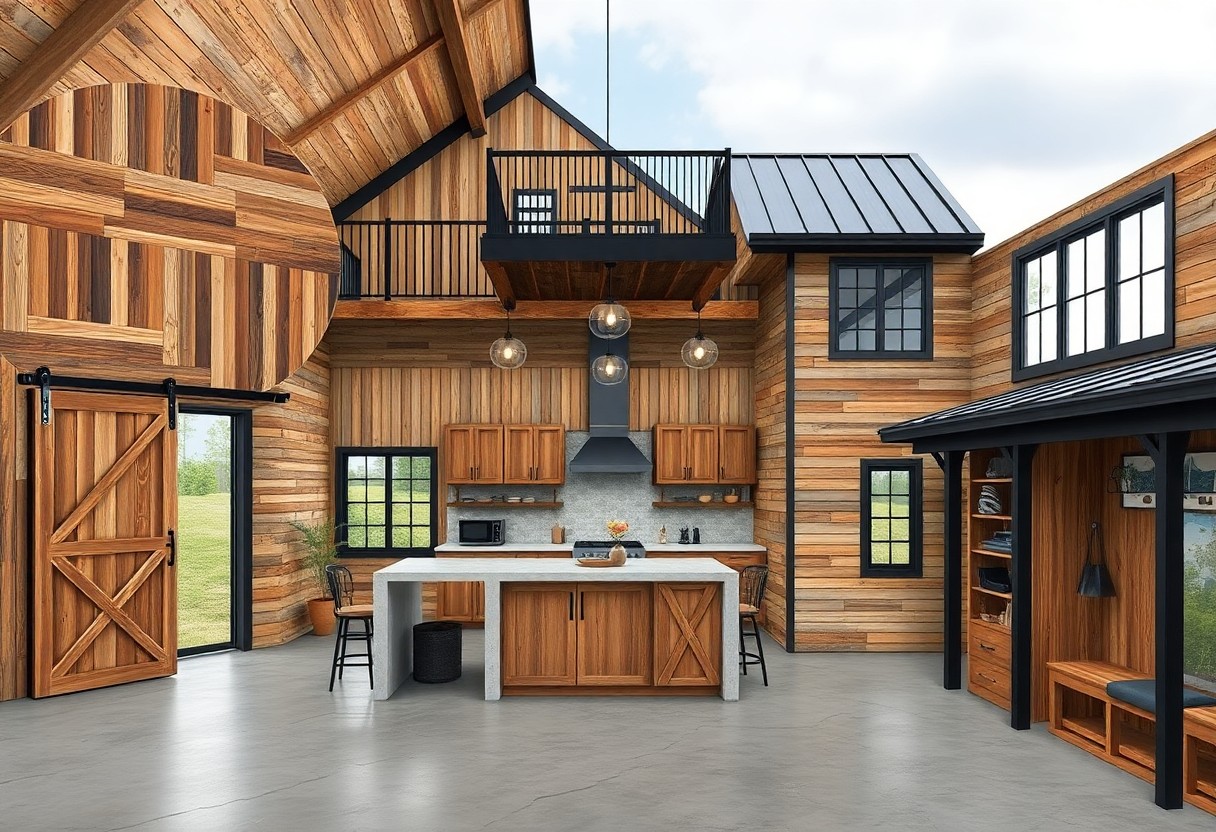
    Personalized Touches

    Infuse your barndominium with personality through curated accents that reflect how you live and what you love; combine reclaimed wood, metalwork, and textiles to soften industrial lines while keeping a cohesive color story that feels like yours.

    Family photos

    Arrange family photos as a gallery wall using mixed frame styles with consistent mats; you can anchor the display above a sofa or stair landing, rotate images seasonally, and add small ledges for keepsakes to create a dynamic, personal focal point.

    Travel mementos

    Showcase travel mementos as decorative focal points-framed maps, ticket stubs, postcards, and collected objects grouped by destination tell compelling stories; use shadow boxes and floating shelves to protect delicate items while highlighting your adventures.

    For durability and style, install recessed shelving with built-in lighting to spotlight fragile finds, and label pieces with discreet tags; you can integrate functional souvenirs-like carved bowls or textiles-into everyday use, and rotate displays to prevent dust buildup while keeping your travel story fresh.

    Summing up

    As a reminder, the ten barndominium design ideas show how you can blend rustic character with modern comfort, optimize open-plan layouts, incorporate durable and sustainable materials, maximize natural light and storage, and extend living outdoors. Use these concepts to prioritize function, personalize finishes, and plan efficient systems so your barndominium reflects your lifestyle while remaining resilient, efficient, and unmistakably stylish.

    FAQ

    Q: How do I choose the best layout for a barndominium that balances living space and workshop/garage needs?

    A: Start by mapping daily routines and how much of the building will be dedicated to hobbies, equipment, or vehicles versus living areas. Popular layouts place the workshop/garage on one end with a clear internal entry and sound/thermal separation from bedrooms; lofts or mezzanines provide extra sleeping or storage without expanding the footprint. Open-plan common areas (kitchen, dining, living) make efficient use of the tall, open barn volume while providing flexibility for future reconfiguration. Consider circulation – locate bathrooms and mechanicals near bedrooms for plumbing efficiency, and add a mudroom or vestibule between the shop and living space to control dust and temperature transfers. Include rough-in locations for utilities and plan storage and mechanical space early to avoid costly relocations later.

    Q: Which materials and finishes keep a barndominium feeling authentic but still modern and low-maintenance?

    A: Combine metal siding or corrugated panels with reclaimed timber accents for an authentic barn look that’s durable and low-maintenance. Concrete slab or polished concrete floors offer an industrial-modern base that’s easy to heat and clean; add area rugs to soften living spaces. Exposed steel beams paired with warm wood cabinetry and matte black hardware create a contemporary-rustic contrast, while composite decking and aluminum-clad windows reduce upkeep outdoors. For interiors, use moisture-resistant drywall or siding in high-humidity areas and choose finishes with good abrasion resistance in workshop-adjacent zones. Finish selections should prioritize longevity and ease of repair while reflecting the aesthetic balance you want between rustic and refined.

    Q: What are the most effective strategies to make a barndominium energy-efficient and comfortable year-round?

    A: High-performance insulation for walls and roof is vital; insulated metal panels or a continuous exterior insulation system plus a well-sealed roof cavity reduce thermal bridging. Install high-efficiency HVAC sized for the open volume and consider options like radiant floor heating for even warmth, and heat-recovery ventilation to maintain fresh air without energy loss. Choose double- or triple-glazed windows and position glazing for passive solar gain in winter while using overhangs, shades, or operable screens to limit summer heat. Air sealing at penetrations, proper attic ventilation, and attention to garage-to-living thermal separation will significantly cut heating and cooling loads. Consider solar PV, battery storage, or a hybrid heating system to further lower operating costs.

    Q: How can I create seamless indoor-outdoor living and effective landscaping for a barndominium site?

    A: Large sliding or folding glass doors and covered porches create visual and physical continuity between interior living areas and patios or decks, extending usable space and improving natural light. Use the same or complementary floor materials at the threshold to blur the line between inside and outside, and design a gentle grade with proper drainage away from the foundation. Native drought-tolerant plantings, gravel paths, and hardy grasses reduce maintenance and reflect rural character; cluster plantings to create outdoor “rooms” for dining, fire pits, or workshops. Add durable outdoor features like a covered workspace, storage outbuilding, or integrated outdoor kitchen to increase functionality, and orient landscape elements to shield prevailing winds or provide summer shade where needed.

    Q: What budgeting and planning tips help control costs when building a barndominium, and should I buy a kit or hire a custom contractor?

    A: Start with a clear budget that separates foundation, shell, systems (HVAC, plumbing, electrical), and finishes so you can prioritize where to invest. Barndominium kits or pre-engineered shells can save time and reduce framing costs, but custom builds offer greater control over layout and finishes; compare total delivered costs, transport, and local labor availability. Save by phasing finishes, doing selective DIY work (painting, trim, landscaping), and sourcing reclaimed materials for accent features. Obtain multiple detailed bids, verify contractor references and licensing, and account for permitting, utility hookups, and site prep in the schedule and contingency (typically 10-20%). Plan inspections and approvals early to avoid delays that drive up costs.