With barndominium builds you must plan beyond the headline price, because site preparation, utility hookups, foundation upgrades, insulation and finishing choices, permitting delays, and contractor change orders often inflate costs; you can protect your budget by conducting thorough site surveys, getting detailed bids, verifying material and labor scopes, allocating a contingency, and closely managing change orders throughout construction.
Key Takeaways:
- Site preparation and foundation expenses-grading, soil remediation, septic and utility hookups often exceed initial estimates.
- Envelope and systems costs-proper insulation, HVAC, plumbing and electrical upgrades for metal shells can add significantly to budgets.
- Permits, change orders and delays-permit fees, design changes, inspections and contractor contingencies frequently drive up final costs.
Understanding Barndominiums
You need to separate structural systems, finishes, and utility work to spot hidden expenses: metal shell options (pole, steel frame) cut framing time to days, yet converting that shell into a 1,500-3,000 ft² home typically adds $50-$120 per ft² for insulation, HVAC, plumbing, and finishes-often exceeding initial shell quotes by 25-60%.
What is a Barndominium?
You’re looking at a hybrid building where an agricultural-style shell becomes primary living space; sizes commonly fall between 1,200 and 3,000 ft², and builds range from simple pole-barn shells to engineered steel-clear-span structures. For example, a bare 2,000 ft² shell might cost $30,000-$80,000, while full interior finishes often double that figure.
Benefits of Barndominiums
You gain faster construction, open-plan flexibility, and lower framing labor compared with conventional stick-built homes; typical framing savings run 10-30%. Durable metal exteriors reduce long-term maintenance, and integrated shop or storage space adds utility value that can boost resale appeal in rural markets.
You should weigh those advantages against trade-offs: combining living and workshop space can force higher mechanical and fire-separation costs-upgrading insulation to R-30+ and installing a dedicated HVAC zone or commercial exhaust can add $5,000-$25,000. In practice, some owners save on framing but spend more on high-performance insulation, soundproofing, and custom finishes.
Common Hidden Costs
Beyond framing and finishes, you’ll face site-specific expenses that often push budgets up 10-30%. Grading and erosion control can add $1,000-$7,000, soil remediation $2,000-$20,000, and unexpected permit or inspection fees another $500-$2,500. You should factor in access work like driveways or culverts ($1,200-$8,000) and contingency for weather delays that increase labor and equipment rental days.
Land Preparation Expenses
You’ll likely pay for tree removal ($200-$2,000 per tree), stump grinding, and mass grading to achieve proper drainage; grading alone often runs $1,000-$7,000. Retaining walls or soil stabilization can add $2,000-$15,000, while required erosion-control measures and wetlands mitigation may tack on several thousand dollars and require specialized contractors and permits.
Utilities and Infrastructure Costs
You should budget for utility hookups: electric service can range from $1,000 to $15,000 depending on distance to the grid, well drilling typically $3,000-$15,000, and septic systems $3,000-$10,000. Road access, driveway surfacing, and culverts often add $1,200-$8,000, and municipal connection fees or impact assessments can be $500-$5,000 more.
Trenching averages $10-$25 per foot, so a 200‑ft run at $20/ft adds $4,000; transformer or pole charges may be another $1,000-$5,000. You’ll also face permit, inspection, and inspection re‑test costs ($500-$2,000) and, for remote sites, consider off‑grid options like solar-plus-battery, which typically cost $15,000-$50,000 installed.
Construction Costs Beyond the Basics
Expect line items that don’t appear on initial bids: engineered trusses, third‑party inspections, crane rentals, and mobilization fees can push your budget 10-30% higher; for example, crane setup for roof lifts often costs $1,200-$4,000 and special inspections or engineering reports typically run $800-$4,000 depending on complexity.
Specialized Contractors
You’ll pay premiums for trades with specific barndominium experience: welders for custom metal framing may bill $75-$120/hr, HVAC contractors for ductless heat pumps $8,000-$20,000 installed, and septic installers $3,000-$10,000; remote sites add mobilization fees of $500-$3,000 and change orders from specialty subs compound quickly.
Material Upgrades and Customizations
Upgrading materials can shift costs dramatically-moving from basic ribbed metal siding ($3-$5/sq ft) to insulated standing‑seam ($8-$12/sq ft) or choosing spray foam over fiberglass can add 10-40% to your material budget and affect installation timeframes.
Specific examples show the impact: triple‑pane windows run $600-$1,200 each vs. vinyl at $200-$400, custom cabinets often start at $12,000 compared to $5,000 for stock, and polished concrete floors typically cost $3-$8/sq ft while hardwood is $6-$12/sq ft-small selections scale across a 2,000 sq ft build and can add tens of thousands to the final price.
Financing and Insurance Considerations
Loan Options for Barndominiums
Construction-to-perm loans are the most common route, often requiring 20-25% down with interest-only draws during a 6-12 month build before converting to a 15-30 year mortgage. Conventional lenders may classify a barndominium as residential or agricultural-classification affects rates and documentation. USDA and VA loans can work in rural areas if the structure meets primary-residence rules, while appraisers frequently rely on a cost approach when comparable sales are scarce, so provide detailed plans, budgets, and builder contracts to your lender.
Insurance Coverage for Unique Structures
During construction you’ll need builder’s risk insurance to cover materials and losses; after completion standard homeowner policies sometimes exclude nontraditional shells, so expect endorsements for metal roofing, detached shops, or open-floor agricultural elements. Insurers will assess wind/hail exposure, replacement-cost estimates, and occupancy use-premiums can be higher if the home is classified nonresidential-so confirm lender-required hazard and, if applicable, flood insurance early to avoid coverage gaps at closing.
Builder’s risk premiums typically run about 1-3% of project value annually, and replacement-cost estimates for finished barndominiums often range $100-$200 per sq ft depending on finishes, which directly affects insured value. You should shop specialty carriers familiar with post-frame or steel-paneled homes, secure a certificate of insurance from your contractor, document progress with photos and receipts for faster claims, and verify whether endorsements for wind, hail, or detached workshops are included or must be added separately.
Permitting and Regulatory Fees
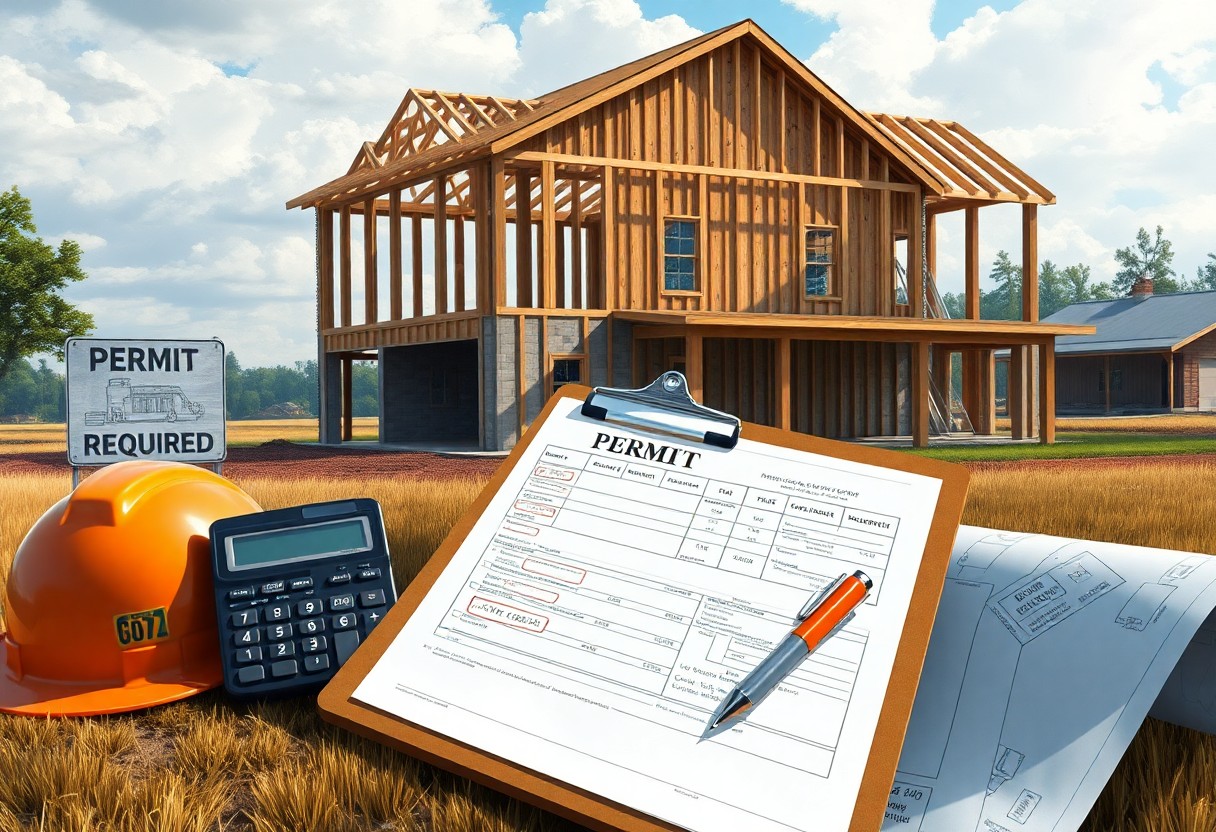
Expect permitting and regulatory fees to add $1,000-$10,000 to your barndominium budget, or roughly 0.5-3% of total construction costs depending on location. Building permits, plan review, impact fees, utility hookup charges, and inspections are typical line items. In many counties your permit total rises if valuation‑based fees apply (commonly 0.5-2% of declared project value) or if special permits are needed for wetlands, driveways, or accessory dwelling classifications.
Zoning Requirements
Zoning can force design changes or extra steps: you may need a variance, conditional use permit, or rezoning if agricultural-to-residential rules conflict. Application fees commonly run $500-$3,000 and public hearings can extend processing 4-12 weeks; rural jurisdictions sometimes take longer. If your lot sits in an agricultural zone expect setbacks, septic density limits, or HOA covenants to require plan revisions that bump costs and schedule.
Permit Costs
Permit costs cover building permits, plan review, and trade permits (electrical, plumbing, mechanical). Typical ranges: building permits $200-$5,000, trade permits $50-$500 each, septic and well permits $300-$2,000, and impact or school fees $1,000-$5,000 in some jurisdictions. Inspection fees and re‑inspection charges can add several hundred dollars if changes are made after approval, so tally each category when estimating.
Many jurisdictions calculate permit fees from your declared construction valuation at rates between about 0.5% and 2%-so a $250,000 build could mean $1,250-$5,000 in base fees. Plan review can take 2-8 weeks and may cost 25-50% of the building permit; resubmissions often incur extra charges. You should request a written fee schedule from the local building department, budget a 10-15% permitting contingency, and factor time delays into your financing hold costs.
Budgeting for Future Maintenance
Plan on allocating 1-3% of your barndominium’s replacement cost annually for routine upkeep and small repairs; on a $300,000 build that’s roughly $3,000-$9,000 per year. Factor in predictable line items like annual HVAC servicing ($100-$300), gutter cleaning ($100-$250), and periodic exterior resealing so your long‑term budget isn’t derailed by predictable lifecycle costs.
Long-term Care Costs
Expect major component replacements on timelines: metal roof recoating or panel replacement every 8-15 years ($1,500-$6,000), HVAC replacement at 15-20 years ($5,000-$10,000), and septic pump‑outs every 3-5 years ($300-$700). You should also budget for slab settlement or foundation repair ($500-$4,000) and occasional siding or insulation repairs specific to metal‑frame assemblies.
Emergency Fund Planning
Allocate a dedicated emergency fund for unexpected structural or systems failures-aim for 3-6 months of household expenses plus a repair reserve equal to 1-3% of the building value (e.g., $3,000-$9,000 on a $300K barndo). Keep these funds liquid in a high‑yield savings account so you can pay for urgent deliveries, contractor emergency calls, or immediate parts replacements without borrowing.
Use an annualized approach to size your monthly savings: divide major replacement costs by their expected lifespans and add routine expenses. For example, roof recoating $3,200/10 years = $320/yr; HVAC $7,000/18 years = $389/yr; septic $500/4 years = $125/yr; total ≈ $834/yr, or about $70/month. Allocate that monthly amount to a labeled account and top it up after any large claim or major repair.
To wrap up
To wrap up, you should budget for hidden barndominium costs like site prep, utility hookups, unexpected structural upgrades, and upgraded finishes; secure detailed contracts, contingency funds (10-20%), and trusted contractors, and conduct regular inspections so you can catch scope changes early and keep your project on schedule and within budget.
FAQ
Q: What are the most common hidden costs that show up during barndominium construction?
A: Unexpected site conditions (rock, poor soil, high water table, or required drainage corrections) frequently drive up foundation and grading costs; extended excavation, rock removal, or engineered footings may be needed. Utility connections and off-site fees – water, sewer or septic design and permits, electrical service upgrades, transformer or trenching costs, and long service runs – add surprise charges. Changes to plans or upgrades to finishes (better insulation, upgraded windows, higher-end cabinetry, or specialty HVAC) quickly exceed builder allowances. Delivery and equipment charges – oversized material shipping, crane rental, and hard-to-reach-site premiums – are often omitted from initial estimates. Inspection fees, specialized testing (geotechnical, septic perc tests), impact fees, and municipal requirements can create extra line items. Weather delays and labor shortages increase schedule-dependent costs like temporary power, site security, and extended subcontractor mobilization. Finally, waste disposal, dumpster service, staging or storage for materials, and final cleanup or landscaping are frequently underestimated.
Q: How should I budget for unknowns and control change-order costs?
A: Set a contingency fund (typically 10-20% of the construction budget based on site risk) and treat allowances as placeholders, not firm numbers. Require the contract to detail allowances and the process for approving upgrades so you see cost impacts before work begins. Lock major selections (HVAC type, insulation R-value, window performance, roofing, and floor systems) early to avoid mid-build change orders. Insist on a formal written change-order procedure that includes scope, cost, time impact, and signed authorization before work proceeds; cap contractor markup percentages for changes. Obtain a geotechnical report and utility feasibility early to reduce surprises. Use fixed-price bids for defined scopes when possible or include maximum guaranteed price clauses. Keep detailed records of decisions and approvals and require lien waivers from subcontractors at payment milestones to reduce financial exposure.
Q: What contract terms and protections should I include to avoid surprise invoices and disputes?
A: Use a clear, itemized scope of work and include references to plans, specifications, and allowances; require the builder to disclose subcontractor quotes and permit fees prior to signing. Specify payment schedules tied to completed milestones, include a reasonable retainage percentage, and condition final payment on receipt of lien waivers and passing final inspections. Require the builder to provide certificates of insurance, builder’s risk insurance during construction, and worker’s compensation coverage. Include a documented change-order process with written approvals and defined markup limits for labor and materials. Add clauses for handling unforeseen site conditions (who pays for geotech-recommended corrections), dispute resolution (mediation/arbitration), and a completion/punch-list timeline. Include warranty terms, maintenance requirements, and an itemized list of buyer-supplied items to prevent scope gaps that lead to extra charges.
Leave a Reply