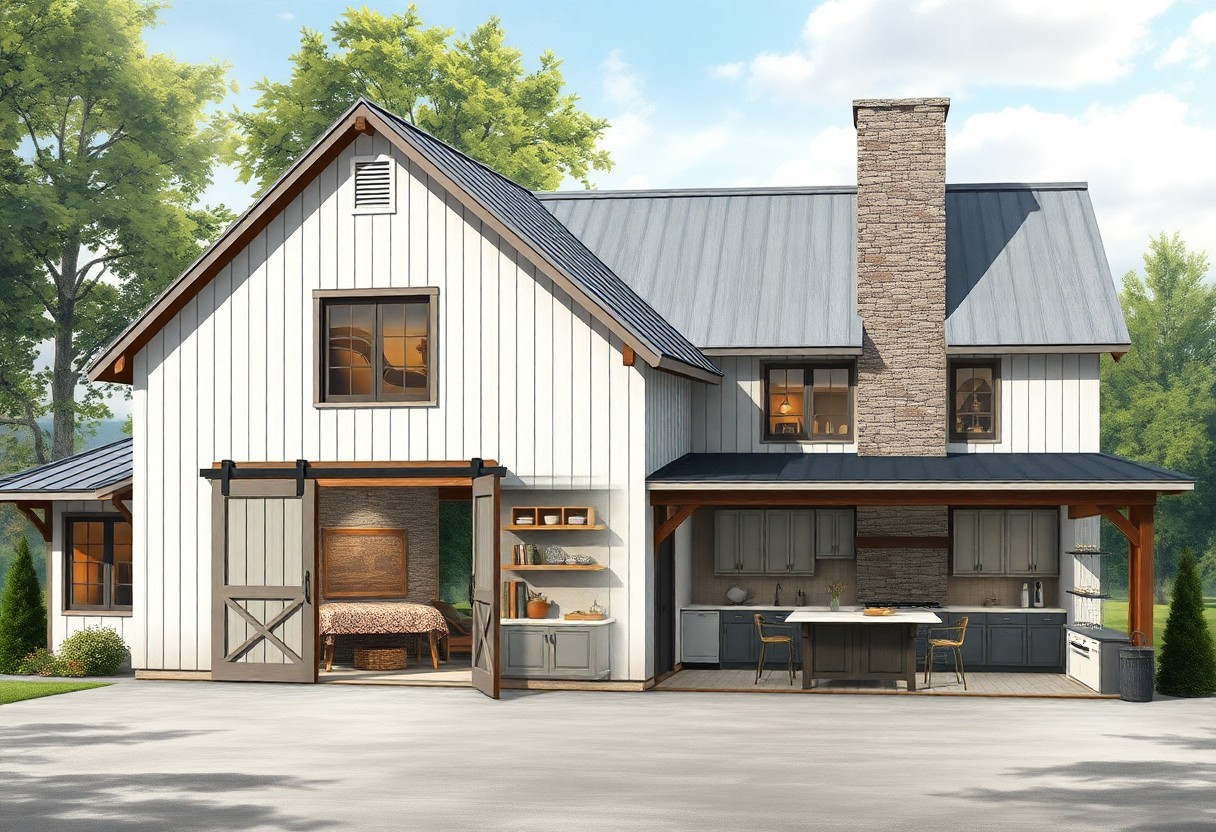
Over the past decade you’ve seen barndominiums blend farmhouse warmth with modern efficiency; this guide helps you evaluate floor plans, materials, and layout strategies so your design emphasizes exposed beams, wide porches, open-concept kitchens, and durable finishes while optimizing energy performance and livability. You’ll get practical ideas for integrating rustic elements-barn doors, reclaimed wood, metal roofing-plus tips for zoning, storage, and lighting to ensure your home balances character with functionality.
Key Takeaways:
- Blend barn exterior with farmhouse interior: open layouts, exposed beams, reclaimed wood, and metal accents create a rustic-modern aesthetic.
- Functional floor plans emphasize a large central kitchen, flexible living/loft areas, mudroom/boot space, and ample storage or workshop zones.
- Affordable, sustainable options-metal building shells, repurposed materials, and energy-efficient systems-make customization and cost savings achievable.
Understanding Barndominiums
When you evaluate barndominiums, note they merge a structural barn-often a steel clear-span shell-with fully finished living space, letting you combine a 30-60 ft clear-span workshop and 1,500-3,000 sq ft residence under one roof. Assembly of the metal shell can take days to weeks, while interior finishes commonly determine total cost and project timeline.
What is a Barndominium?
Essentially, you get a hybrid dwelling that integrates a work/storage bay with residential amenities-kitchen, bedrooms, and bathrooms-inside a barn-style structure. Many use prefabricated steel frames and metal roofing for durability, while interiors employ drywall, reclaimed wood, and vaulted ceilings. Typical footprints range from 1,200 to 3,000+ sq ft depending on whether you include a 400-1,200 sq ft shop.
Benefits of Choosing a Barndominium
You benefit from lower shell costs, flexible open-plan layouts, and easy integration of a workshop or garage. On average, mid-range builds fall between $80-$120 per sq ft, so a 2,000 sq ft barndo might cost $160k-$240k. Durability from metal exteriors and fewer load-bearing walls gives you design freedom and quicker construction schedules.
Additionally, you can optimize energy performance with spray-foam insulation, insulated metal panels, and radiant-floor heating to reduce operating costs and improve comfort. Financing options include construction-to-permanent loans and USDA programs in rural areas, and adding a 1,000 sq ft rentable shop can generate income that shortens payback and boosts resale appeal.
Key Elements of Farmhouse Style
Farmhouse elements emphasize functional details you can see and touch: open layouts with 10-12 ft ceilings, exposed timber or steel beams, wide-plank reclaimed oak floors, and board‑and‑batten or shiplap walls. You’ll often combine a metal roof and wraparound porch with interior touches like apron‑front sinks, double‑hung windows, and sliding barn doors to balance rural authenticity with modern comfort.
Design Features
You should prioritize an open-plan living core, clear-span bays of 20-40 ft when possible, and visible structural members-timber or painted steel-for character. Include a 6-8 ft kitchen island, pantry closet organization, and mudroom zoning to support daily life. Lighting often uses black metal lanterns or industrial pendants; window groupings of 3 or 4 units maximize daylight and cross‑ventilation in larger barndominium footprints.
Color Schemes and Materials
You’ll lean on a neutral palette-Benjamin Moore White Dove, Sherwin‑Williams Repose Gray, and warm creams-paired with darker accents like navy, charcoal, or matte black hardware. Materials mix reclaimed wood, shiplap, board‑and‑batten siding, galvanized metal, and honed concrete or soapstone counters; a typical split is about 70% light surfaces, 30% darker or textured accents to maintain brightness while adding depth.
For practical specification, use 6-8″ wide reclaimed oak planks for flooring, 1×6 shiplap for interior walls, and 1×8 board‑and‑batten on exterior gables. Select matte finishes for metalwork to hide fingerprints, and low‑VOC eggshell paint on walls for durability. In a 2,200 sq ft plan you might apply light paint across 1,500 sq ft of visible wall area, reserve 400-600 sq ft for wood or stone feature walls, and place black steel window frames as focal points to anchor sightlines.
Planning Your Barndominium Layout
You should leverage the clear-span nature of many barndominium shells-steel frames commonly span 30-60 feet-to craft flexible footprints from 1,200 to 3,000+ sq ft. Place public rooms toward light and views, stack wet walls to reduce plumbing runs, and situate mechanicals near garages or shops. For example, a 40×60 shell yields about 2,400 sq ft and comfortably accommodates a 600 sq ft workshop plus a 3‑bed, 2‑bath living area.
Open Floor Plans
Design the kitchen, dining, and living core with 10-14 ft ceilings and a central island 8-10 ft long to anchor gatherings while keeping kitchen aisles 36-44 inches for efficient work triangles. Use exposed beams, a partial screen wall, or a 12×12 loft to define zones without blocking sightlines. In a 2,000 sq ft layout, orient seating toward the primary view and place the hearth on a perpendicular axis to improve acoustics and heating flow.
Functional Spaces
Allocate specific footprints like a 6×8 mudroom, a 6×8 to 8×10 pantry, and cluster laundry next to bedrooms to streamline daily routines. Plan for a 30×24 garage or a 200-400 sq ft workshop if you expect heavy tools or equipment, and group utilities on one wall to cut piping and wiring costs. Include a dedicated mechanical closet to isolate HVAC noise and allow future system upgrades.
Position the mudroom between garage and kitchen with built‑in lockers and a 36-42 inch circulation path to handle comings and goings. Stack laundry appliances with a folding counter near the primary suite and keep plumbing stacks within 10-15 ft of kitchens and baths to save on installation-using a 2×6 chase simplifies servicing. Finally, add sound‑rated drywall and a vestibule buffer where workshops meet living spaces to maintain quiet.
Rustic Charm Through Decor
To amplify rustic charm, layer reclaimed wood, warm metals, and woven textiles across your open volumes: hang a 48-72 inch iron chandelier beneath 10-12 ft ceilings, use 8×10 braided rugs to define seating zones, and run a reclaimed-beam mantel across a 12-16 ft wall for visual weight. Combine matte black fixtures with patinated brass and expose portions of the 30-60 ft clear-span shell to celebrate barn heritage while keeping interiors comfortable and cohesive.
Furniture and Accessories
You can select pieces that balance scale and utility: a 96-inch linen slipcovered sofa, an 8-10 ft reclaimed dining table seating 8-10, and a 36-inch apron-front kitchen sink. Add metal-framed barstools, a 60-72 inch ceiling fan in large rooms, and pendants placed 30-36 inches above islands for task lighting. Accessorize with woven baskets, 20-24 inch textured pillows, and iron sconces to layer patina without sacrificing comfort.
Incorporating Vintage Finds
You’ll find the most impact from curated vintage: salvaged barn wood beams 4-12 inches wide, galvanized troughs, antique milk jugs, and 1930s-1950s farm tools create authentic texture. Source at estate sales, salvage yards, and online auctions where a restored 1930s farm scale commonly sells for $200-$800; use one bold vintage item per room to add storytelling without overcrowding sightlines.
When you bring vintage pieces home, inspect for rot, loose nails, and lead paint; treat insect-damaged wood with borate solutions and stabilize loose joints. Refinish with Danish oil or clear matte polyurethane, reupholster chairs in performance fabrics like Crypton, and retrofit mounting hardware for safety. If you’re on a budget, scout local salvage yards where doors, windows, and trunks often range $25-$250, letting you add authentic character affordably.
Outdoor Spaces and Landscaping
Extend your living footprint by designing porches, patios, and yards as true outdoor rooms: a 10-12 ft deep covered porch, a 12×16 ft patio for dining, and a 6-8 ft pergola over a lounge area create layered spaces. Use reclaimed wood beams, low-maintenance composite decking, and permeable pavers to manage runoff. Incorporate task lighting (300-800 lumen pendant or string bulbs) and a 3-4 ft planting buffer to soften transitions between house and lawn.
Creating Inviting Exteriors
Place a wide, 8-10 ft walk and a 10×30 ft farmhouse porch to welcome guests and provide usable square footage-one Texas 2,400 sq ft build gained 300 sq ft of entertaining space this way. Anchor the entry with symmetry: pair of lantern sconces, 36-42 in shutters, and a bench or swing. Mix metal roofing accents and matte paint (white or charcoal) to highlight clean barn lines while keeping sightlines open to landscape views.
Landscaping Ideas that Complement Farmhouse Style
Favor layered plantings: evergreen hedges (boxwood) for structure, flowering shrubs (hydrangea, rose of Sharon) for seasonal color, and ornamental grasses or native perennials for texture. Add edible elements-4×8 ft raised beds and a small orchard of dwarf apple trees spaced 12-15 ft apart-to marry function with form. Gravel paths and crushed-stone driveways reinforce rustic character while easing maintenance.
Plan maintenance and performance: use drip irrigation with timers and aim for roughly 1 inch of water per week during dry months; mulch beds 2-3 in deep to retain moisture. Balance hardscape to planting at about 25-35% paved area for entertaining, leaving the rest planted to absorb runoff and support biodiversity. Pick native species for your USDA zone to reduce inputs and keep seasonal interest through spring blooms and winter structure.
Sustainable Considerations
To lower long-term operating costs and environmental impact, prioritize airtight construction, high R-values, and passive strategies: aim for R-49 in the roof and at least R-21 in walls, target an airtightness of ACH50 ≤3, and orient glazing for winter solar gain while shading summer sun; add a 6-10 kW solar-ready roof and 1,000-2,000‑gallon rainwater capture for landscape irrigation to shave utility loads and make your barndominium perform like a modern, low-energy home.
Energy Efficiency in Barndominiums
You should combine continuous exterior insulation (R-10 to R-15) or closed-cell spray foam against the steel shell with thermal breaks and high-performance windows to avoid thermal bridging; install ductless heat pumps or a cold-climate air-source heat pump (COP 3-4, SEER 18-25) to cut heating bills 30-50%, use LED lighting and smart thermostats, and size a PV array (commonly 5-8 kW) with a 10-14 kWh battery for overnight resilience.
Using Reclaimed Materials
You can anchor rustic character with reclaimed barn wood, heavy timber beams, corrugated metal siding, or reclaimed brick; sourcing from salvage yards, deconstruction projects, and Habitat for Humanity ReStores often reduces embodied carbon and material costs, while giving you unique patina and stories that new materials can’t match-plan for inspection and grading if you intend to use structural salvaged pieces.
When you use reclaimed structural timbers or flooring, have a structural engineer verify species, section modulus, and moisture content (ideally <15%) and require treatment for pests if needed; expect to pay more for milling, kiln-drying, and fastener prep, but many builders report 10-30% savings on raw material costs versus new specialty timber-factor in 10-25% extra labor time for cleaning, planing, and custom joinery to achieve a finished look that's both safe and authentic.
FAQ
Q: What design features define a farmhouse-style barndominium and how can I incorporate rustic charm?
A: Farmhouse-style barndominiums combine simple, functional barn architecture with warm, lived-in finishes. Key exterior features include a gabled or gambrel roof (often standing-seam metal), board-and-batten or vertical metal siding with wood or stone accents, large covered porches or wraparounds, and sliding barn doors. Inside, emphasize exposed timber beams, vaulted or open truss ceilings, wide-plank wood or distressed-look floors, shiplap or reclaimed-wood accent walls, and a neutral palette of whites, creams, greys and warm wood tones. For the kitchen, choose an apron-front sink, open shelving, a mixed-material island (butcher block or stone top), matte-black or oil-rubbed-bronze hardware, and vintage-style lighting. Add layers with woven rugs, linen textiles, galvanized metal or enamel accessories, and strategically placed antiques or salvaged pieces to enhance authenticity without overwhelming the space.
Q: How should I plan the floor layout to balance living areas, a workshop/garage, and storage in a barndominium?
A: Start by deciding how much square footage you want for living versus shop/garage functions; common splits are 60/40 or 50/50 depending on hobby or business needs. Place the garage/shop with a separate entrance and a buffer zone (mudroom, mechanical room, or laundry) to reduce noise and dust transfer. Keep primary living spaces-kitchen, great room, and master suite-on the quieter side with good natural light and direct access to the porch. Include a dedicated mudroom with built-in storage and a wash area adjacent to the garage. Plan for lofts or mezzanine storage above the shop if headroom and structure permit. For flow and resale appeal, provide an open-plan main living area, a clear separation between work and rest spaces, at least one flexible room (office/guest room), and ample built-in storage or a pantry. Consider circulation routes for equipment, vehicle access, and future expansion when locating doors and driveways.
Q: What materials and construction strategies deliver a rustic farmhouse look while keeping the build energy-efficient and budget-conscious?
A: Combine durable, low-maintenance structural elements with selective visible rustic finishes. Use a metal or steel frame for cost-effective, fast construction and top it with a standing-seam metal roof for longevity; add wood or stone veneers in key areas for warmth. Insulate aggressively-spray foam or closed-cell in the shell where budget allows, with batt or blown insulation in noncritical cavities-to reduce heating and cooling loads. Choose energy-efficient double- or triple-pane windows with simple divided-lite muntins for farmhouse character. Save costs by using new materials with an aged finish (engineered reclaimed-look flooring, faux-shiplap paneling) rather than fully reclaimed pieces, which can be expensive. Simplify the roofline and keep standard window and door sizes to reduce framing and material waste. For HVAC, consider a high-efficiency heat pump, zoned systems, or radiant-floor heating in primary living zones for comfort and lower operating costs. Plan for good ventilation, durable finishes in high-traffic zones, and accessible mechanicals to keep long-term maintenance affordable.
Leave a Reply